Color, 1980, 130 mins. 43 secs.
Directed by Richard Rush
Starring Peter O'Toole, Steve Railsback, Barbara Hershey, Allen Garfield, Alex Rocco, Sharon Farrell
Radiance Films (UHD & Blu-ray) (UK R0 4K/HD), Severin Films (Blu-ray & DVD) (US R0 HD/NTSC), Anchor Bay (DVD) (US R1 NTSC) / WS (1.85:1) (16:9)
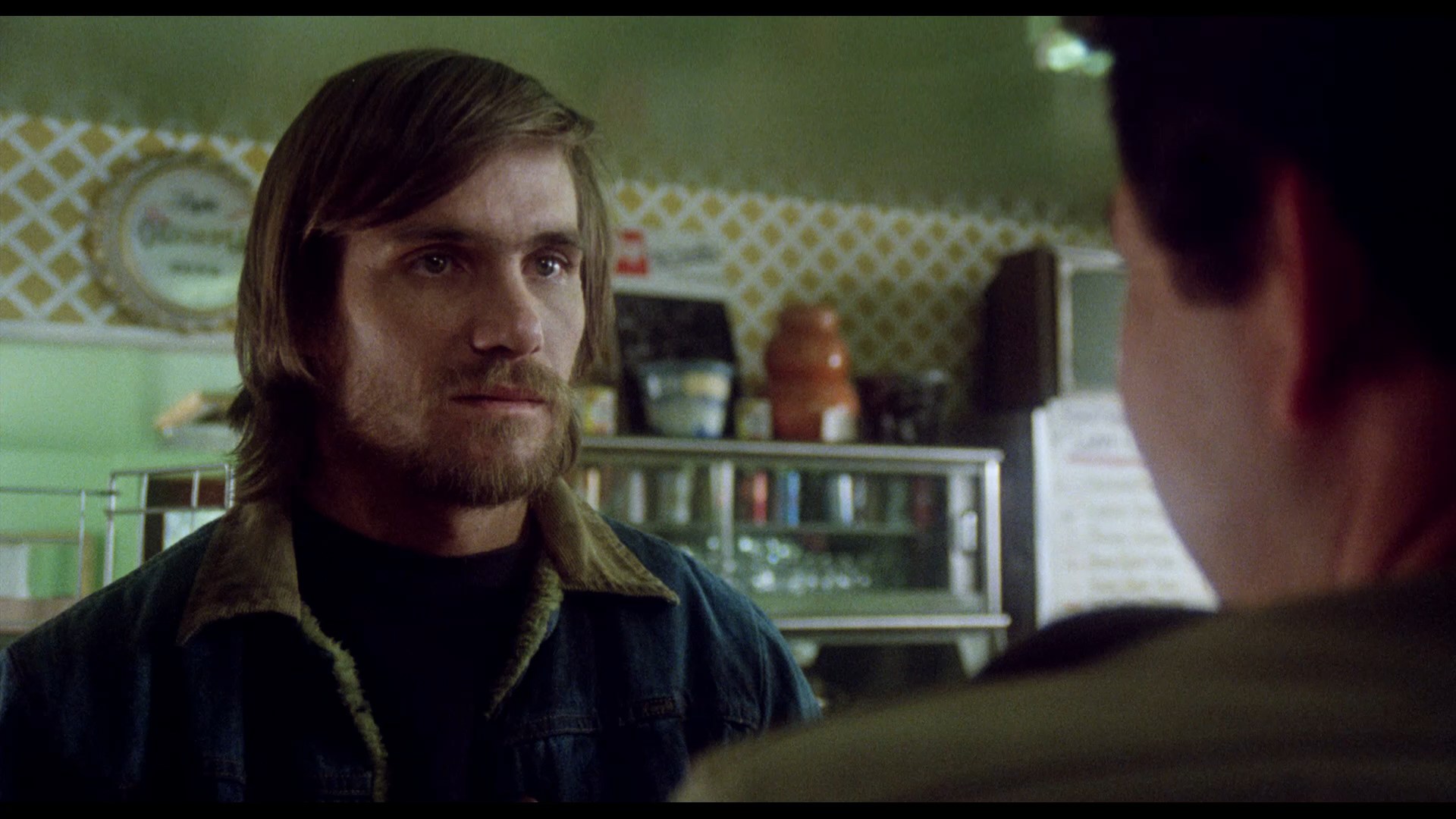
Pursued by the police 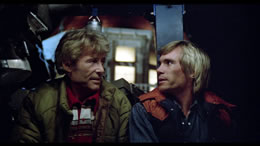 for an unspecified crime, paranoid and scruffy Vietnam vet Cameron (Railsback, fresh off his TV stint as
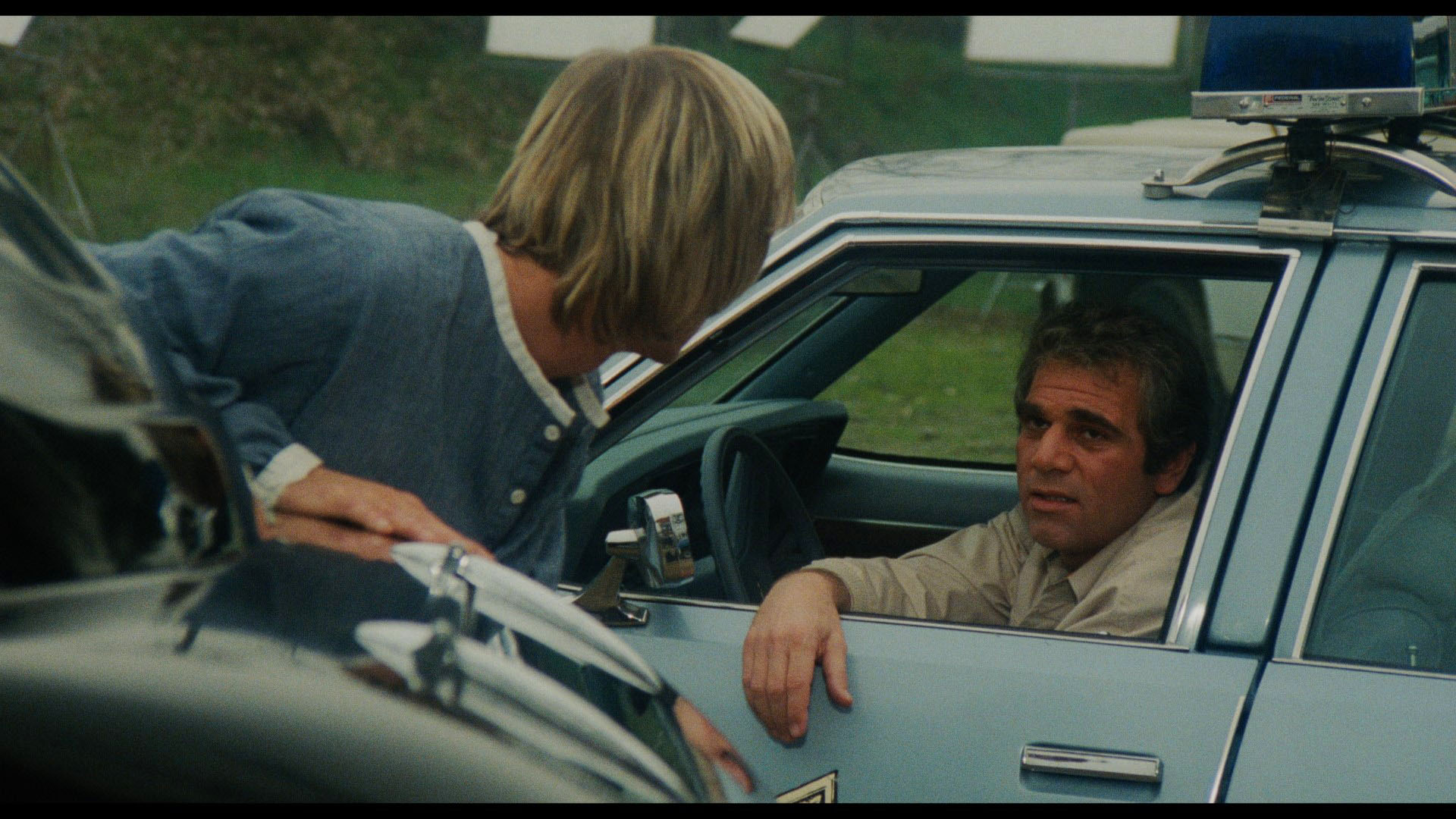
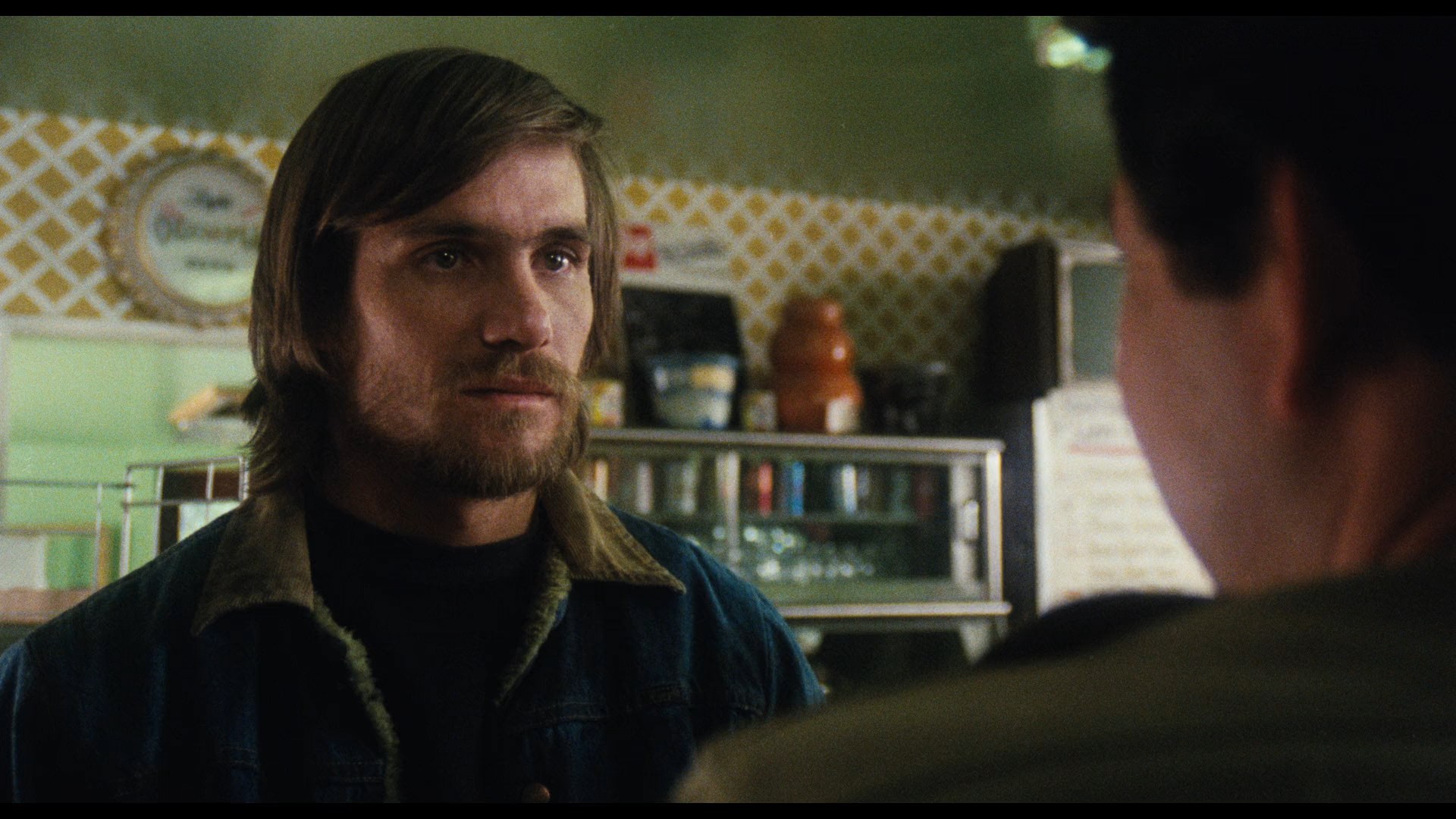
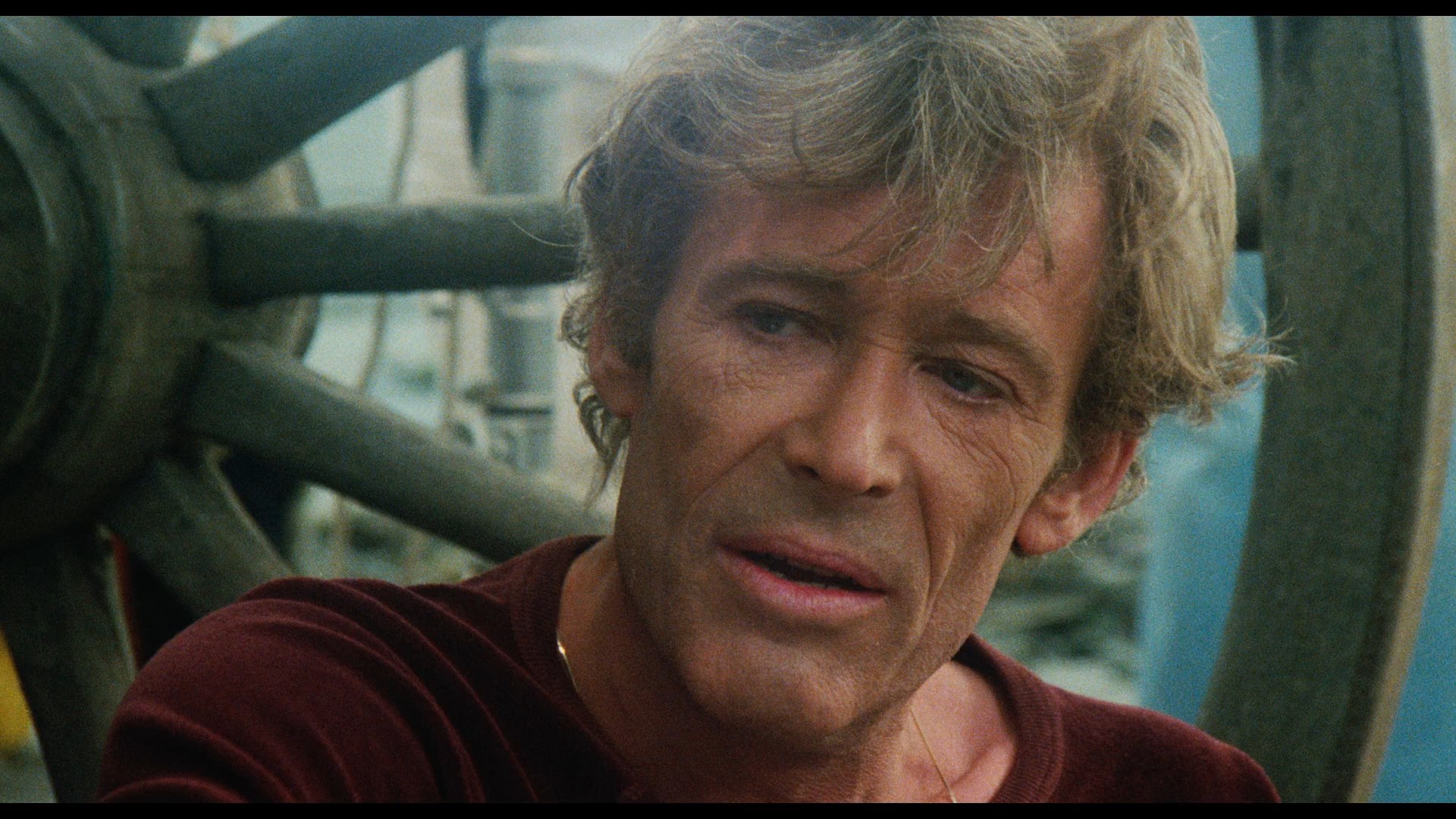
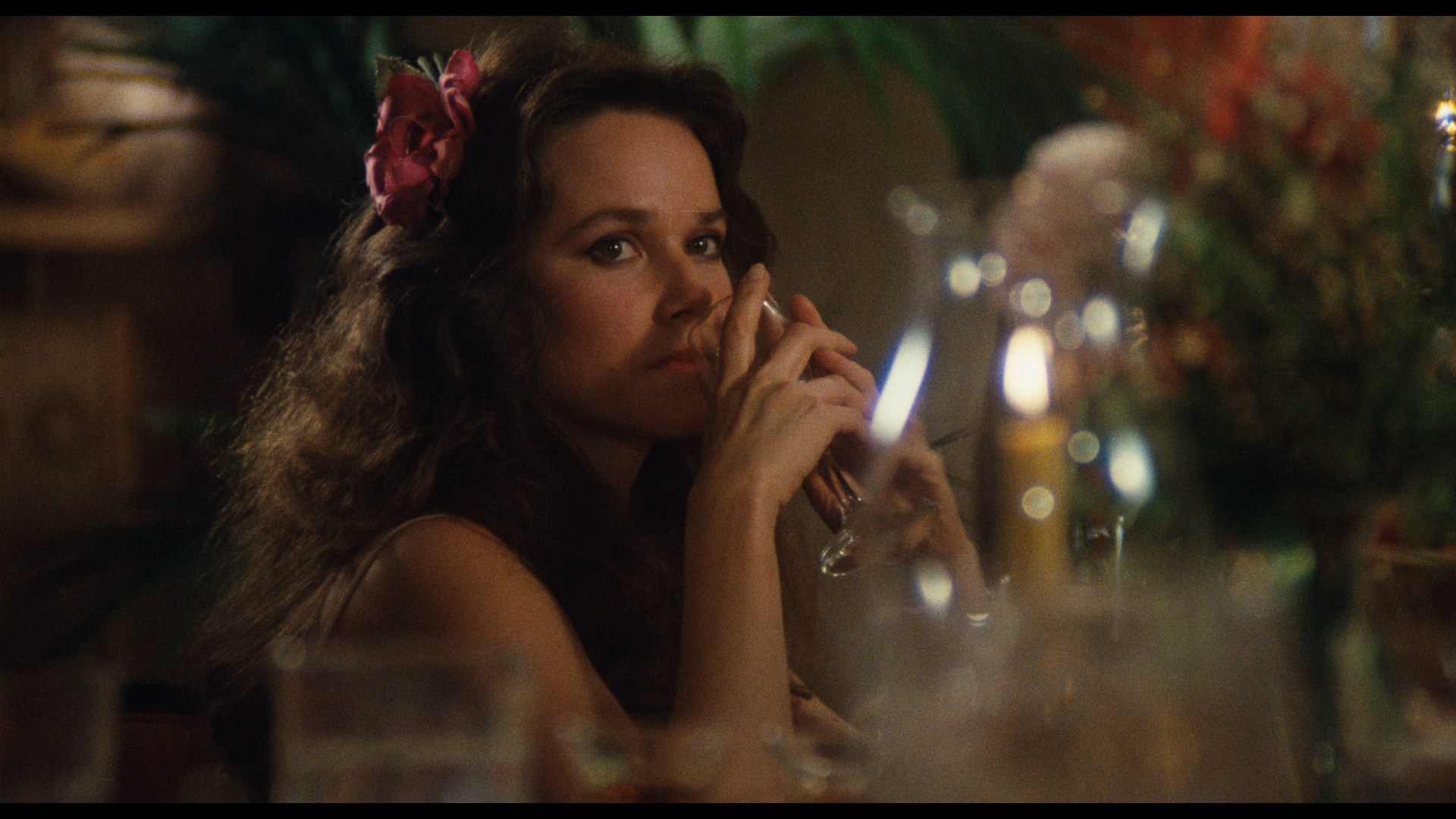
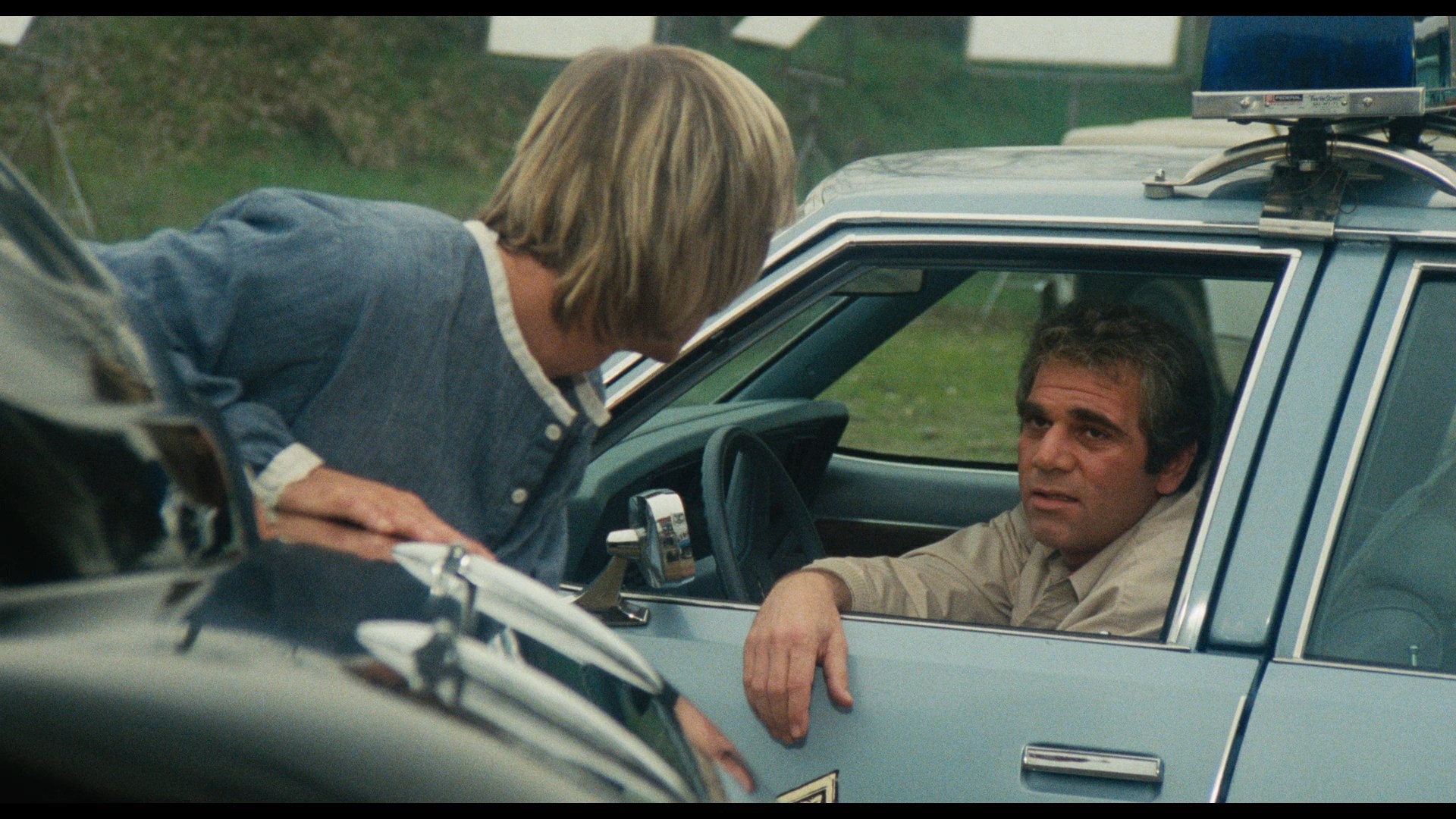
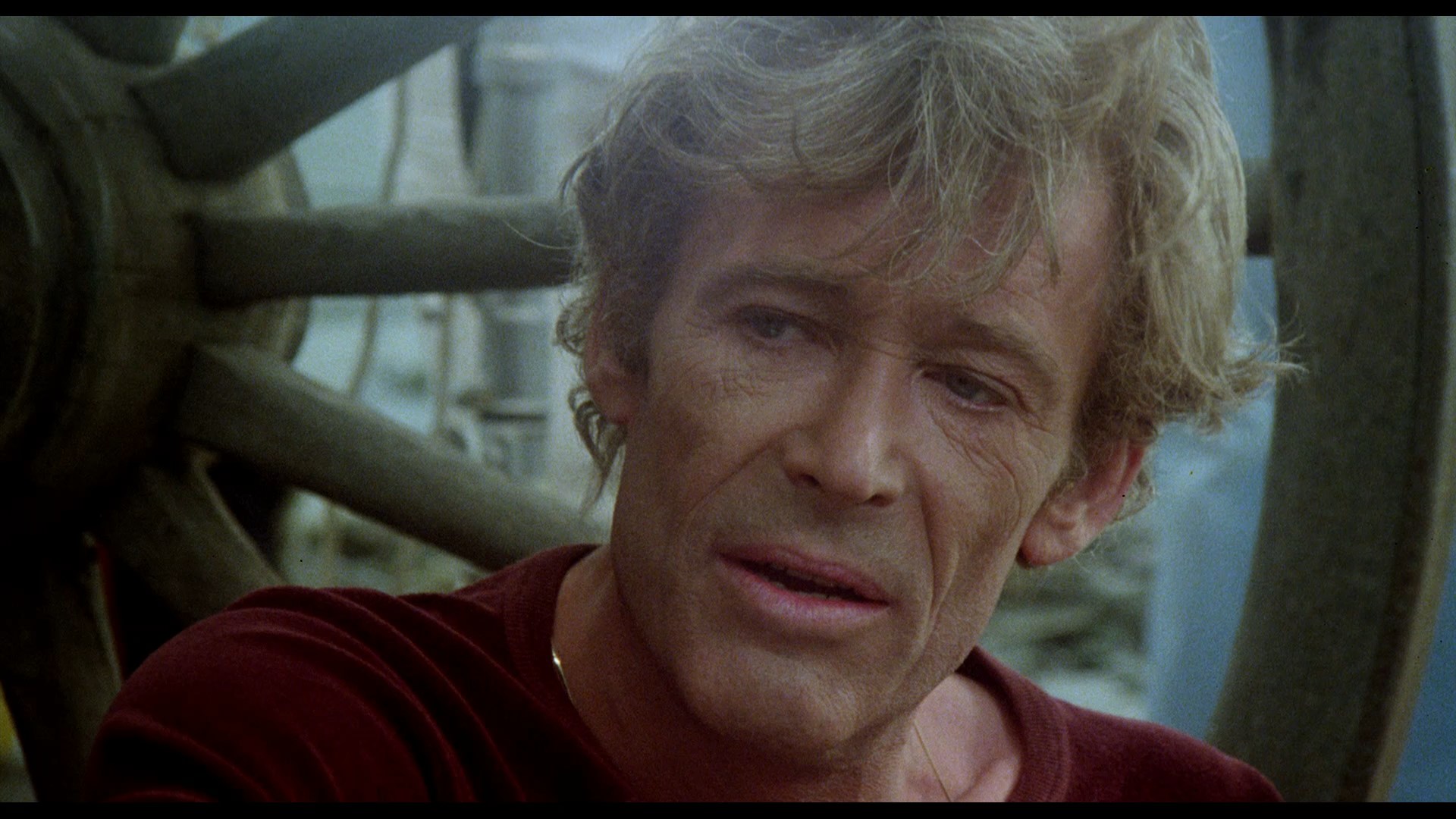
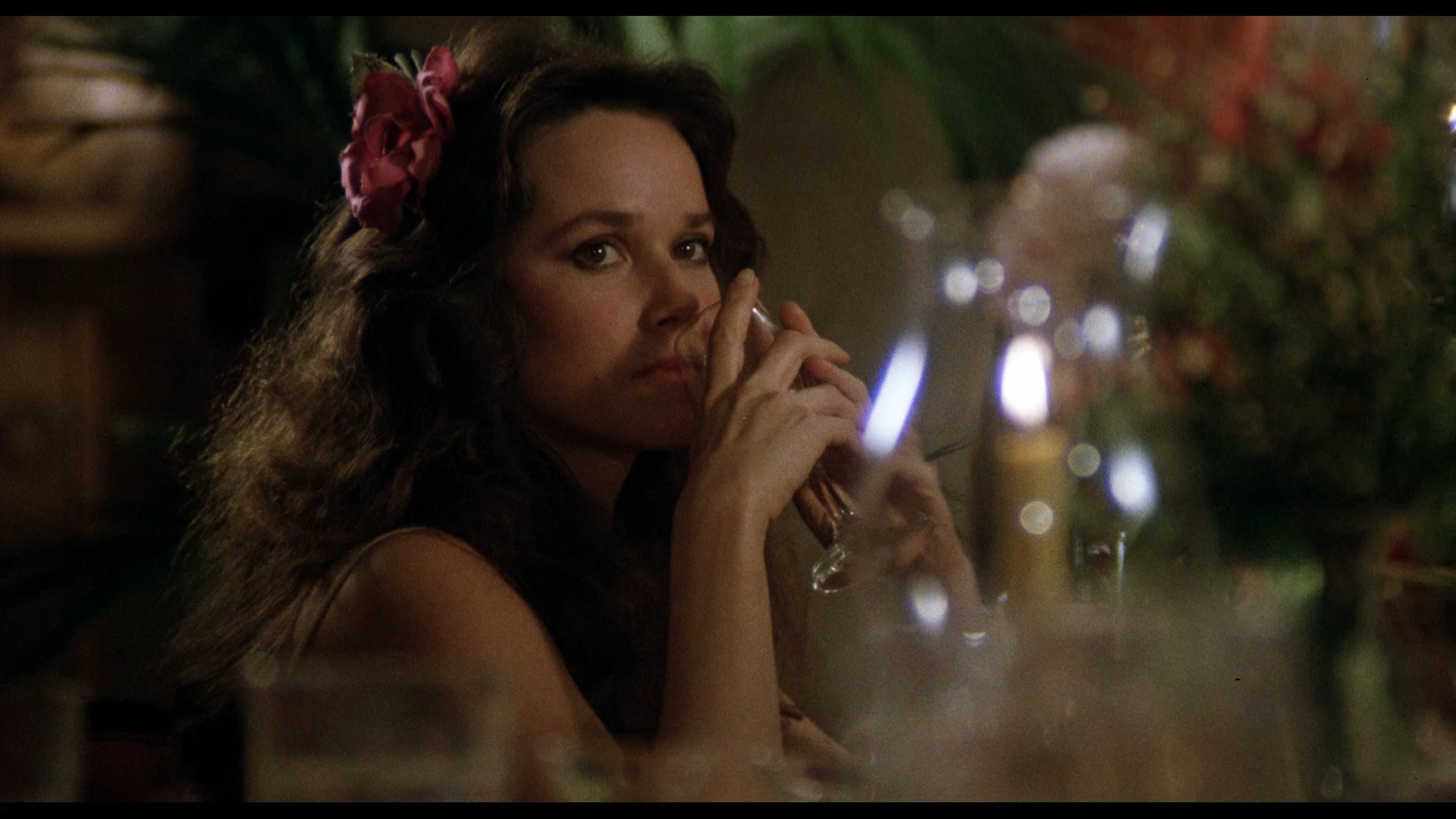
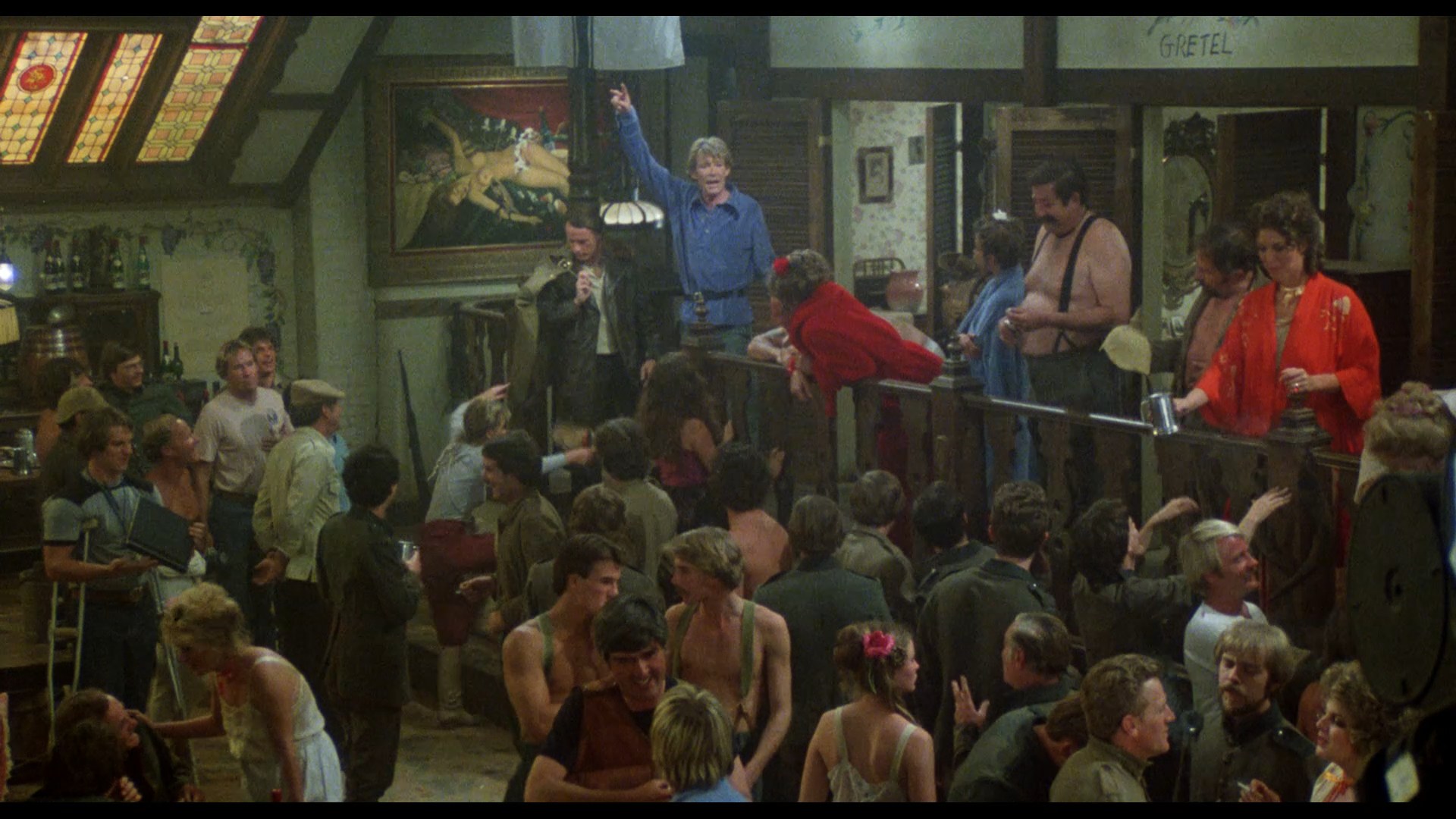
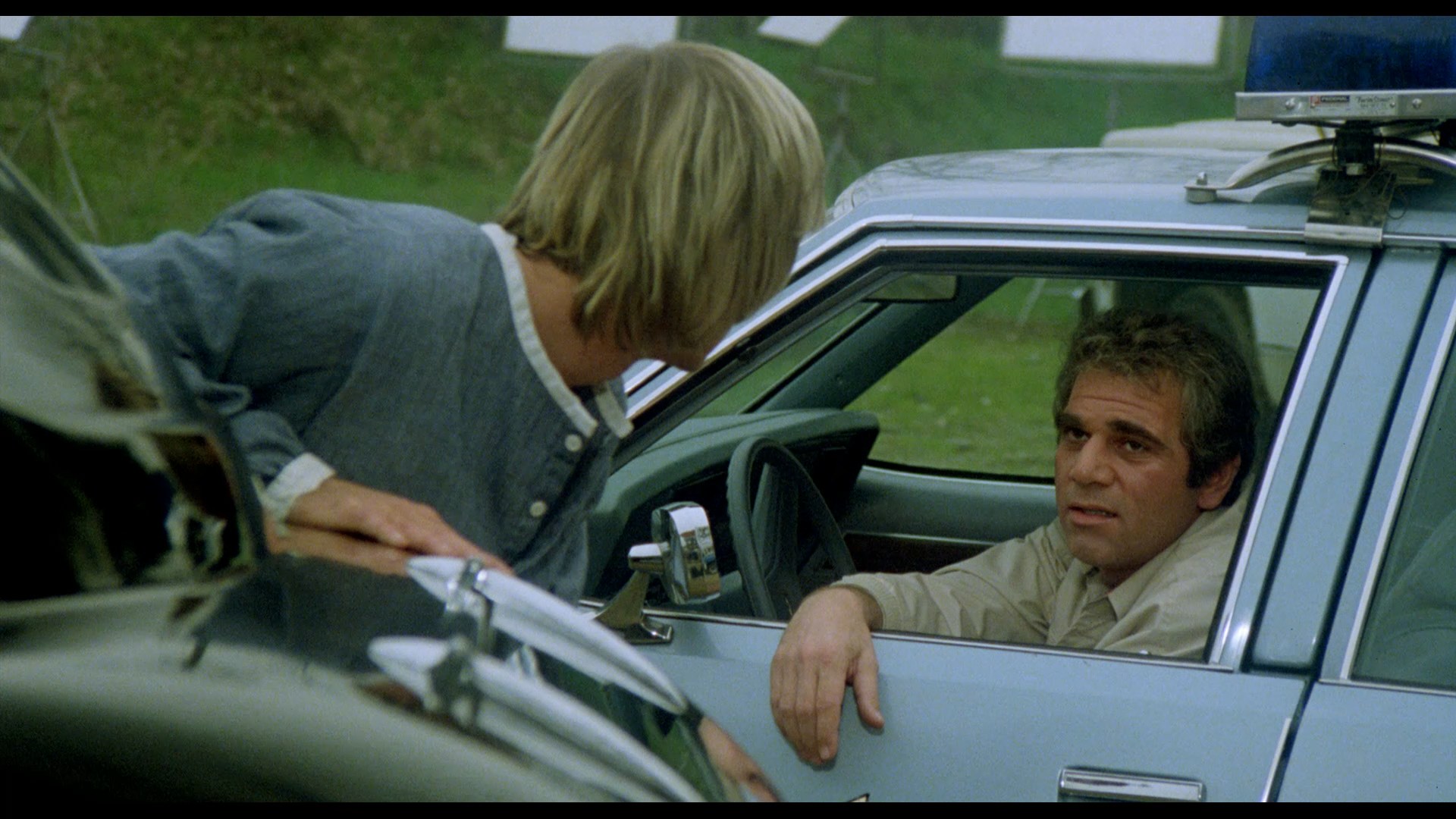
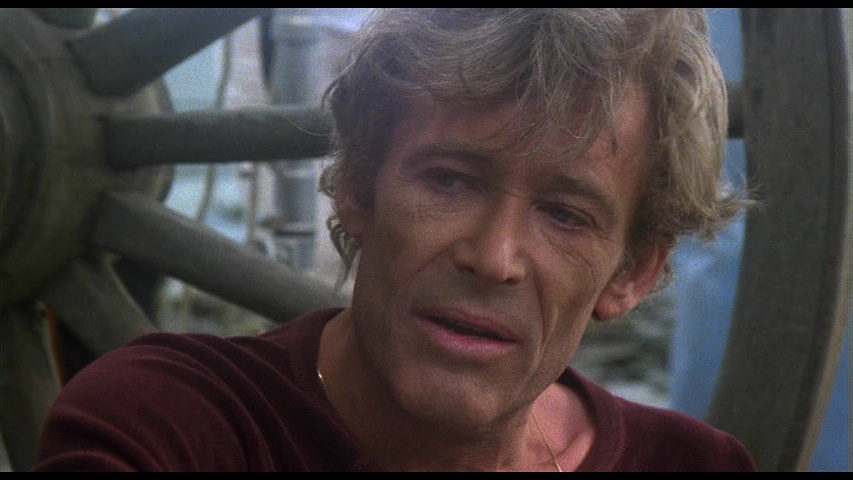
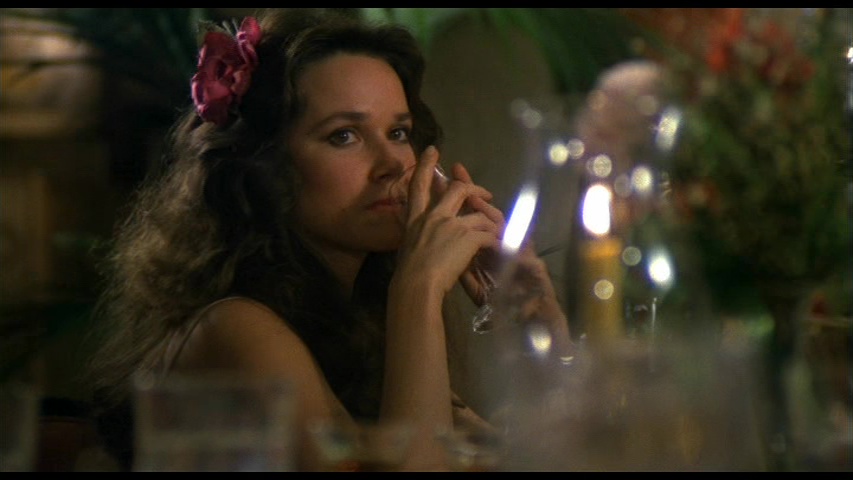
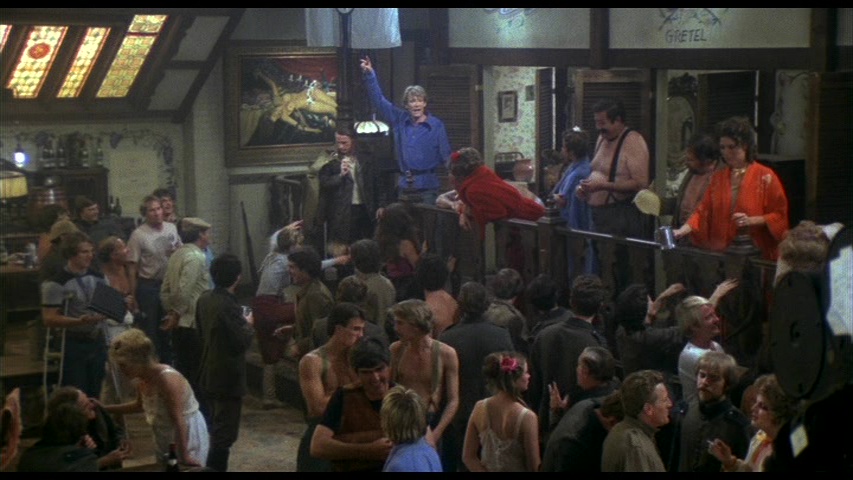
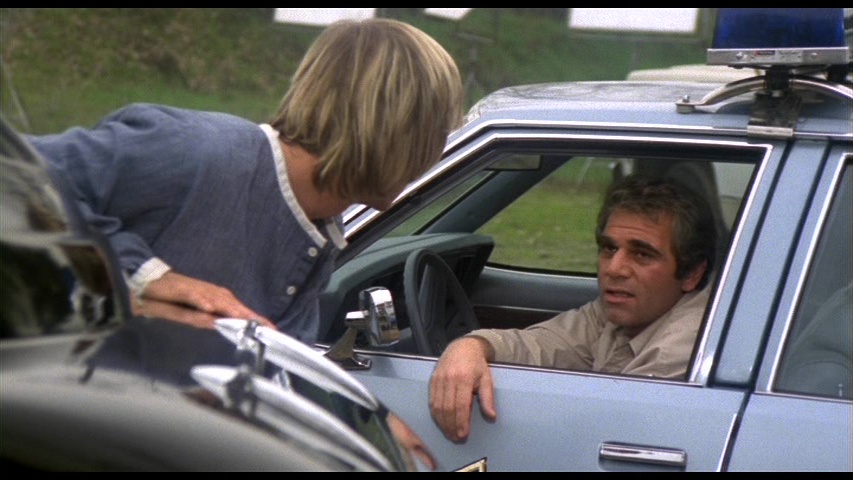
 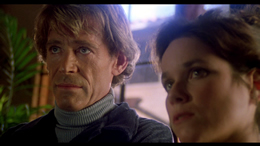 Charlie Manson in Helter Skelter) stumbles onto a bridge where he inadvertently causes a stunt driver to swerve off to his death during the filming of a movie. The director, Eli Cross (O'Toole, firing on all thrusters), conveniently avoids a nest of potential disasters by passing off Cameron as the dead stunt man, Burt, who now lies at the bottom of the river. During shooting Cameron's stunts become increasingly dangerous and bizarre, while Eli's attempts to wring some meaning of his cinematic war story begin to have eerie ramifications on the entire cast and crew. Complicating matters even further is the production's luscious star, commercial actress Nina (Hershey), who begins an affair with Cameron but may or may not have a few secrets of her own. Finally the day comes when Cameron must reenact the deadly stunt that started it all... and he and Eli reach a crossroads.
Adapted from a much darker novel by Paul Brodeur (whose nasty conclusion hits about ten minutes before the end of the film counterpart), The Stunt Man was shot in 1978 but took two years to reach audiences thanks to its completely unclassifiable nature; in fact, one isn't even quite sure what genre it falls into -- whimsical comedy? piercing character drama? The Wicker Man-style psychological horror? -- until the final credits roll, and even then you may doubt everything you've actually seen. The film grabbed a great deal of attention for O'Toole's flamboyant performance and the sheer gutsiness of its approach, which constantly knocks viewers from one "stunt" to the next where the transition from reality to "movie reality" is often impossible to discern. 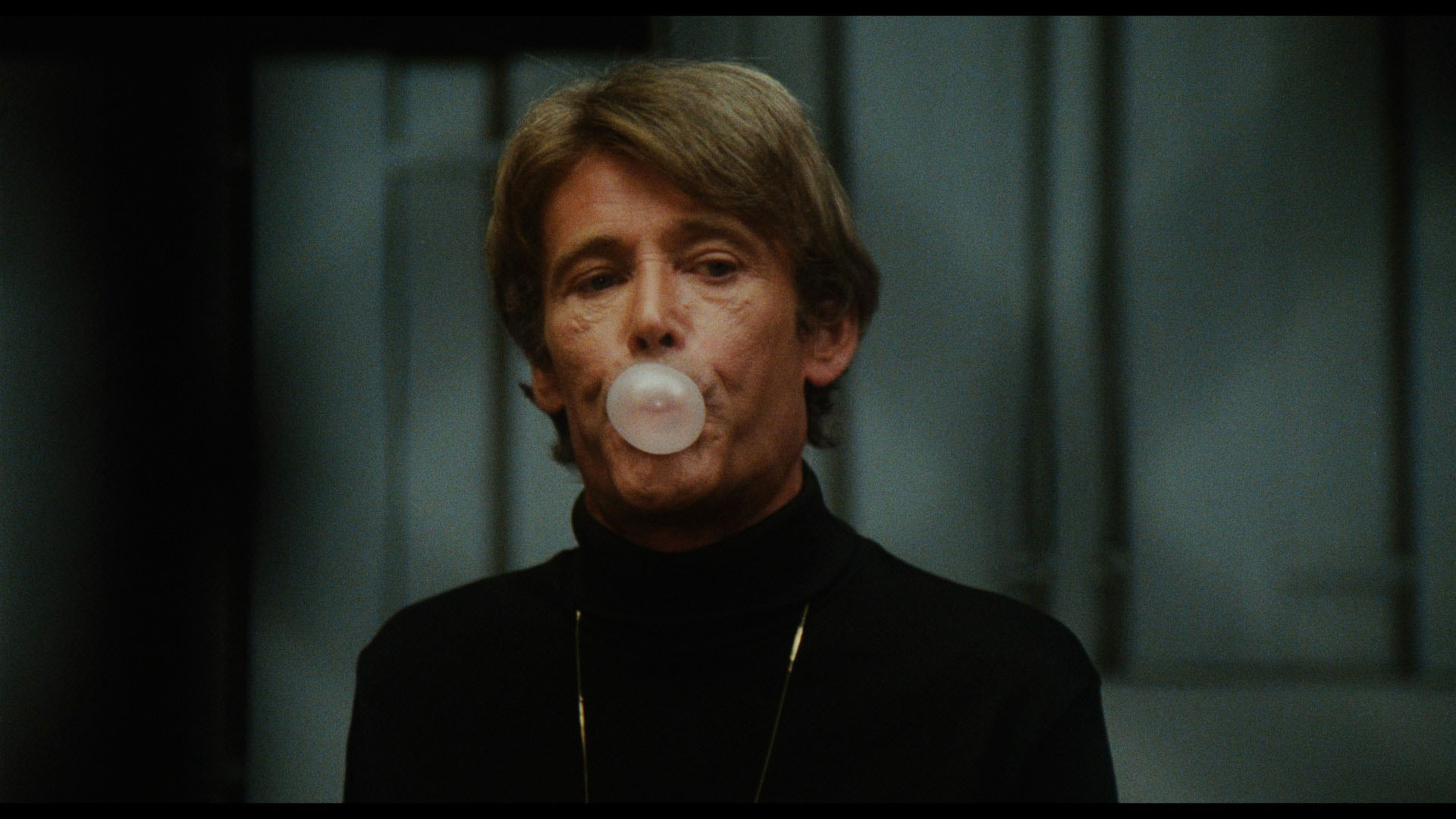 Regardless of how one reads the film,
 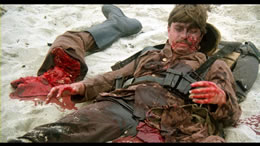 the characters are all etched quite skillfully and reach their own logical conclusions. Director Richard Rush's drive-in roots (including such fare as Psych-Out and Thunder Alley) serve him well as he proves his efficiency with telling a good, complicated story in the most direct filmic terms, and even running over two hours, the film features no real slow spots and rewards immensely upon repeated viewings.
Outside of Fellini films, The Stunt Man is arguably the final word on illusion vs. reality storytelling on the big screen, and its audacious twisting of genres has made it one of the most critically respected example of that slippery category, the cult film. In fact, Rush has built nearly an entire reputation on this single film alone, with only one subsequent feature (1994's outrageous Color of Night) even attempting to outdo this wild balancing act. Over twenty years later, The Stunt Man has lost little of its power (despite some very minor dated elements like Cameron's crazy 'Nam vet shadings) and remains a good example of how quality product can sometimes slip through the Hollywood system.
A visually varied film, The Stunt Man lurches from freewheeling handheld shots with obvious zooms to carefully modulated romantic visuals; this method played havoc with many home video releases including the widely available first DVD from Anchor Bay in 2001, which wasn't too substantial a leap over the previous full frame laserdisc. More dramatically improved on this DVD was the soundtrack, a carefully tweaked 5.1 remix which naturally integrates sound effects and Dominic Frontiere's playful score into a fully directional mix. Music remains mostly confined to the front speakers, while the explosions and flying objects swirl around the room with great regularity. The dialogue still sounds a little pinched in keeping with the original audio recording, but overall the results are fine and surprisingly natural. The disc for the movie itself includes a wealth of bonus material including the U.S. theatrical trailer, two 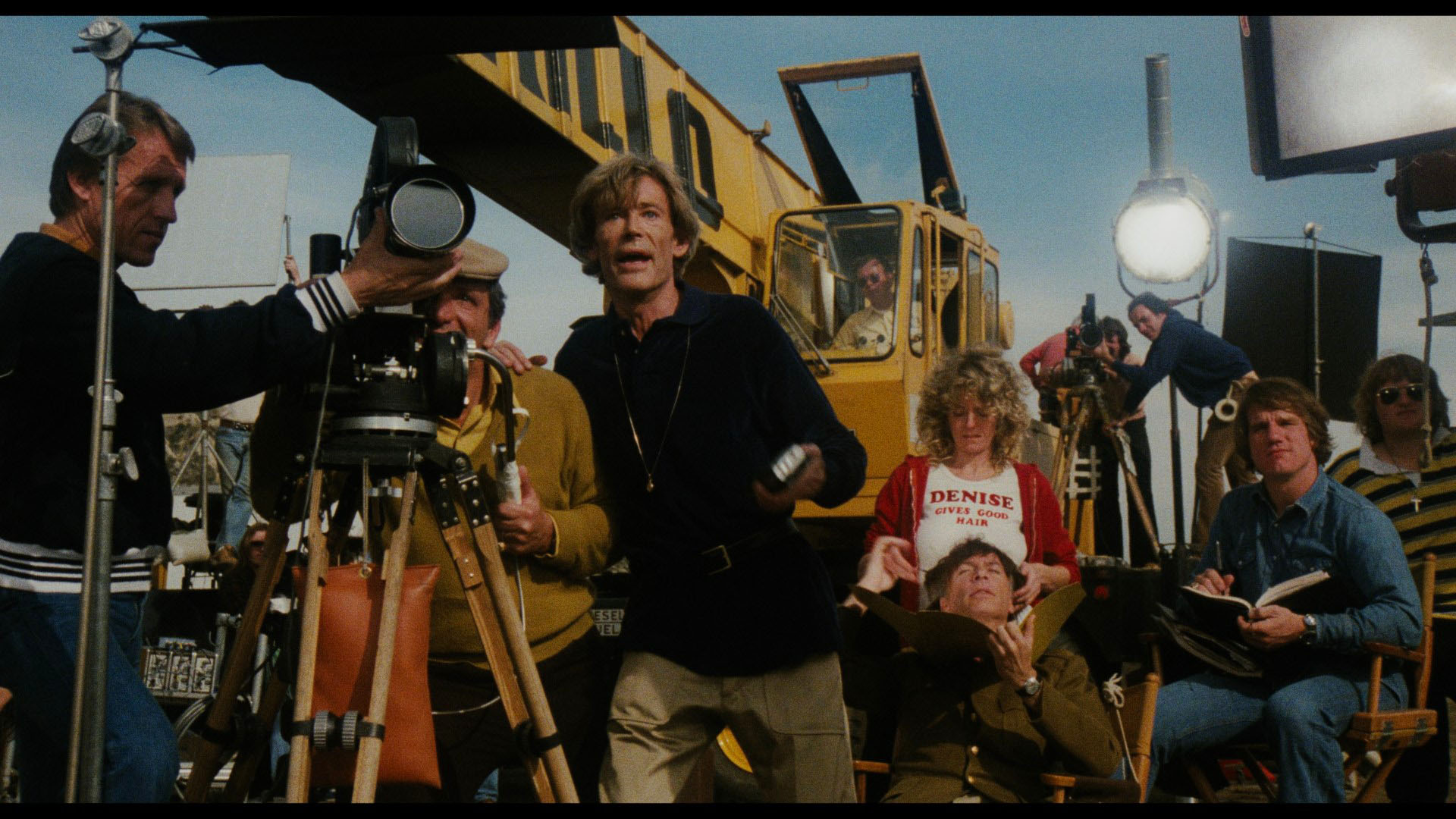 deleted scenes (one great bit between O'Toole and Garfield and one wildly misjudged comedy scene at a police station), a
 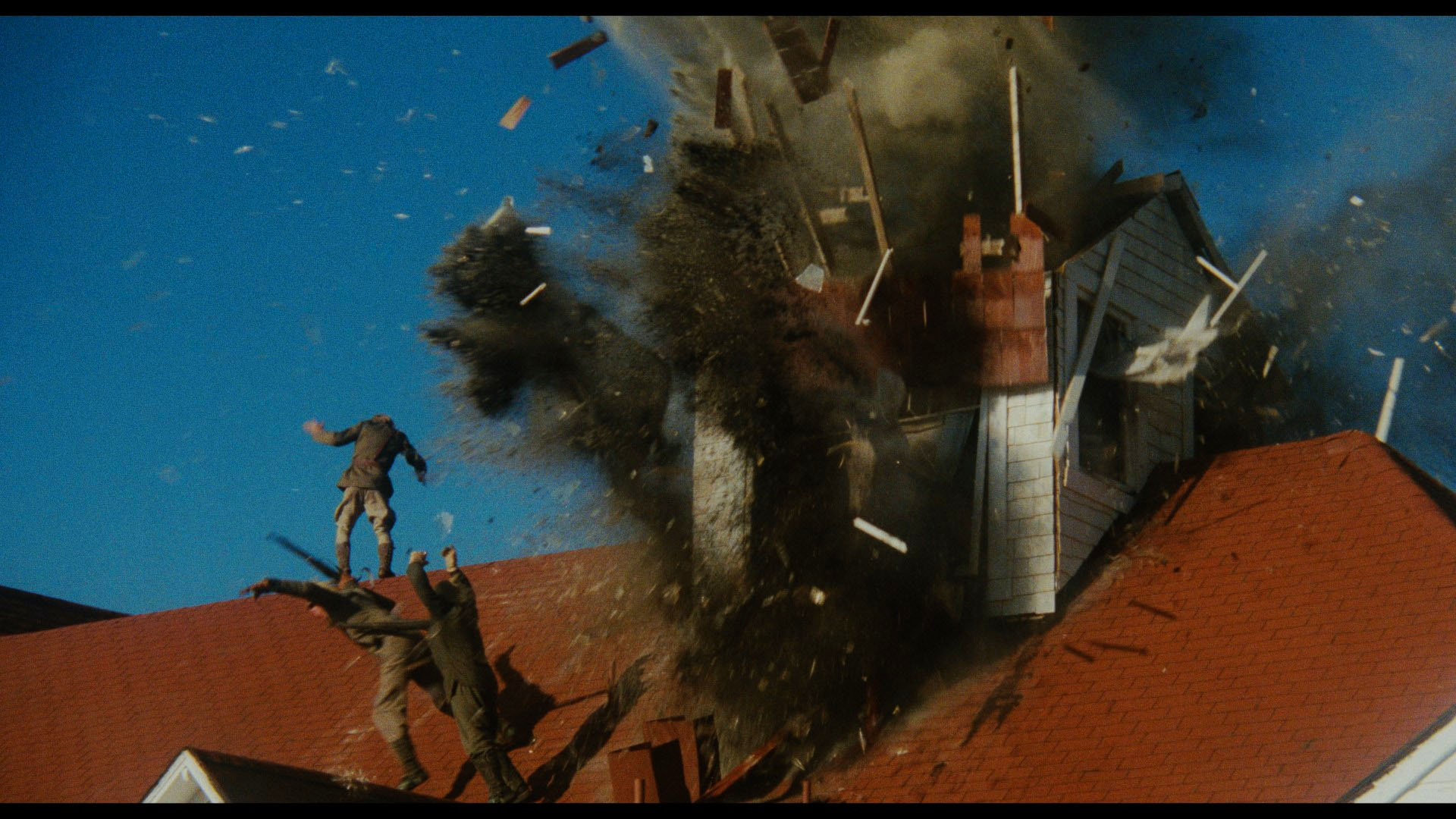 thorough gallery of stills and promotional art (including some nice preliminary drawings), filmographies, a DVD-Rom version of the screenplay, and a choppy but interesting commentary track which alternates between Rush (who gets the bulk of the running time), O'Toole (who sounds very subdued but offers a couple of good bits), Hershey, Railsback, Alex Rocco, Sharon Farrell, and real-life stunt man Chuck Bail who plays Railsback's mentor in the film. It's a good track overall, but perhaps splitting it into two could have resulted in a more consistent, immersive experience.
A two-disc limited edition from Anchor Bay also included Rush's 2000 documentary, The Sinister Saga of Making 'The Stunt Man' (available on its own disc as well, which is pretty ridiculous when you actually watch it). After Fox declined to release the film with this 110 minute companion piece, Rush and Anchor Bay saw that justice was done to this title. However, the documentary can be extremely difficult to take, especially with such a protracted running time. Rush is certainly enthusiastic and has a lot to say about the film, but like Cameron's own battle against windmills in the film, he seems to build an awful lot of drama where there doesn't really seem to be any. Shot on standard def DV, Sinister Saga also suffers from a huge overabundance of distracting video trickery which presumably intends to reinforce the theme of the film but instead comes off looking really tacky. Interview footage with all of the principals is seemingly edited with a Cuisinart, resulting in a constant state of narrative whiplash. Die hard fans will undoubtedly find some nuggets of information here, but be sure to keep some Dramamine handy. The opening 3m11s of Sinister Saga have also been appended to the movie itself, along with a note on the printed chapter listings stating that "The director urges you to watch the introduction before the film." Actually, first-time viewers at least would do well to bypass it entirely, as Rush spells 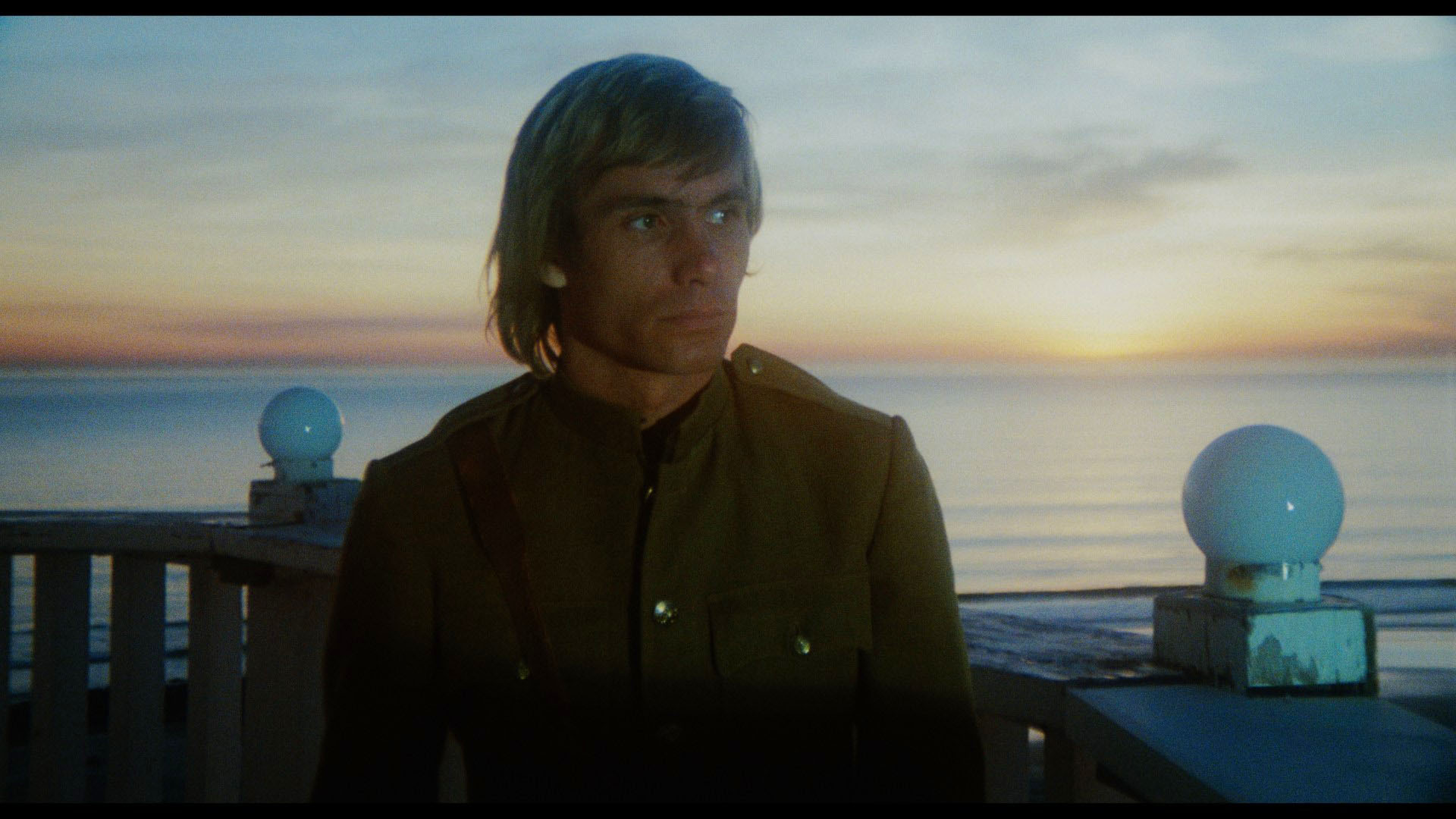 out the entire message of the film with a sledgehammer before viewers have a chance to discover it for themselves.
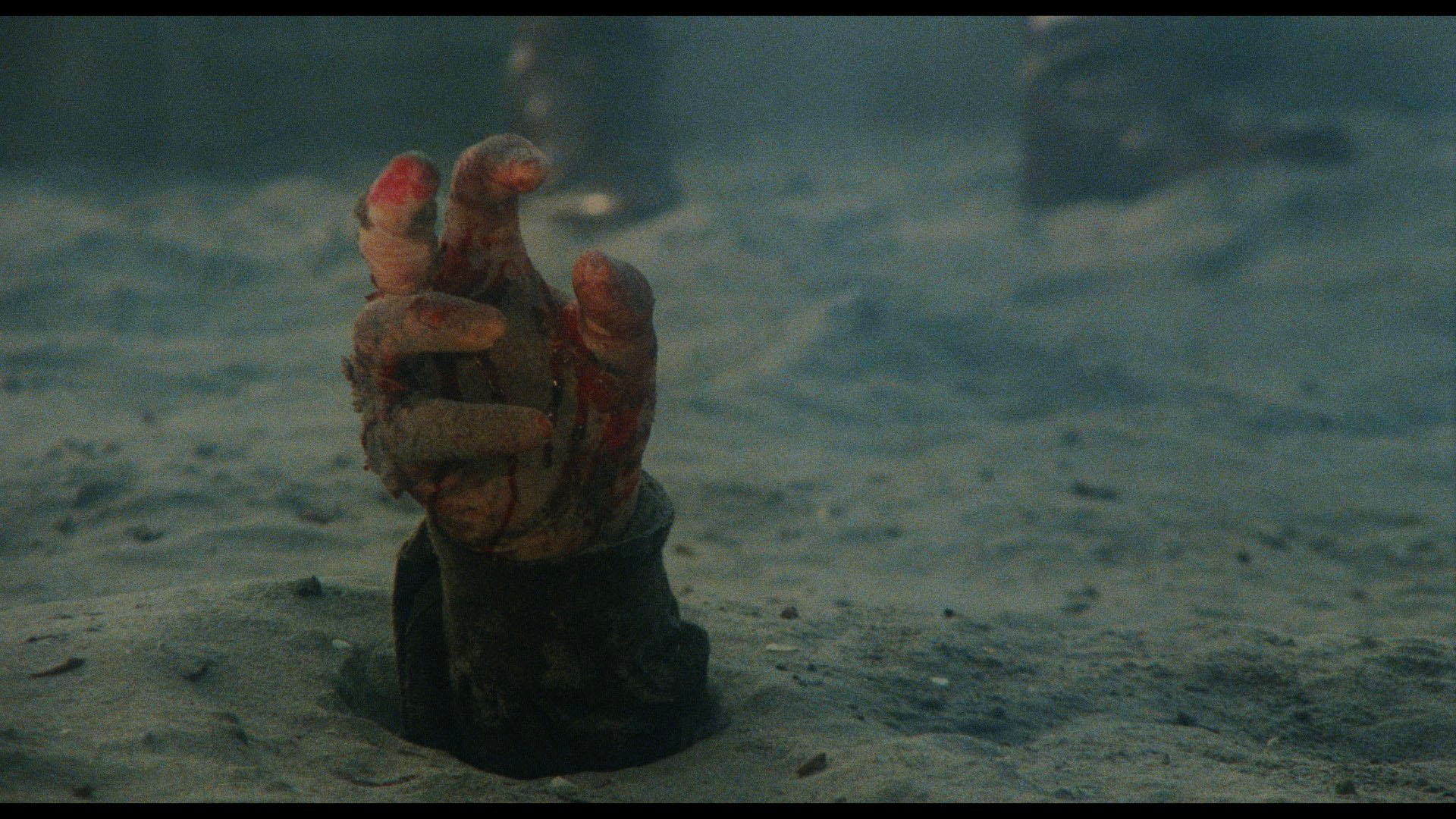
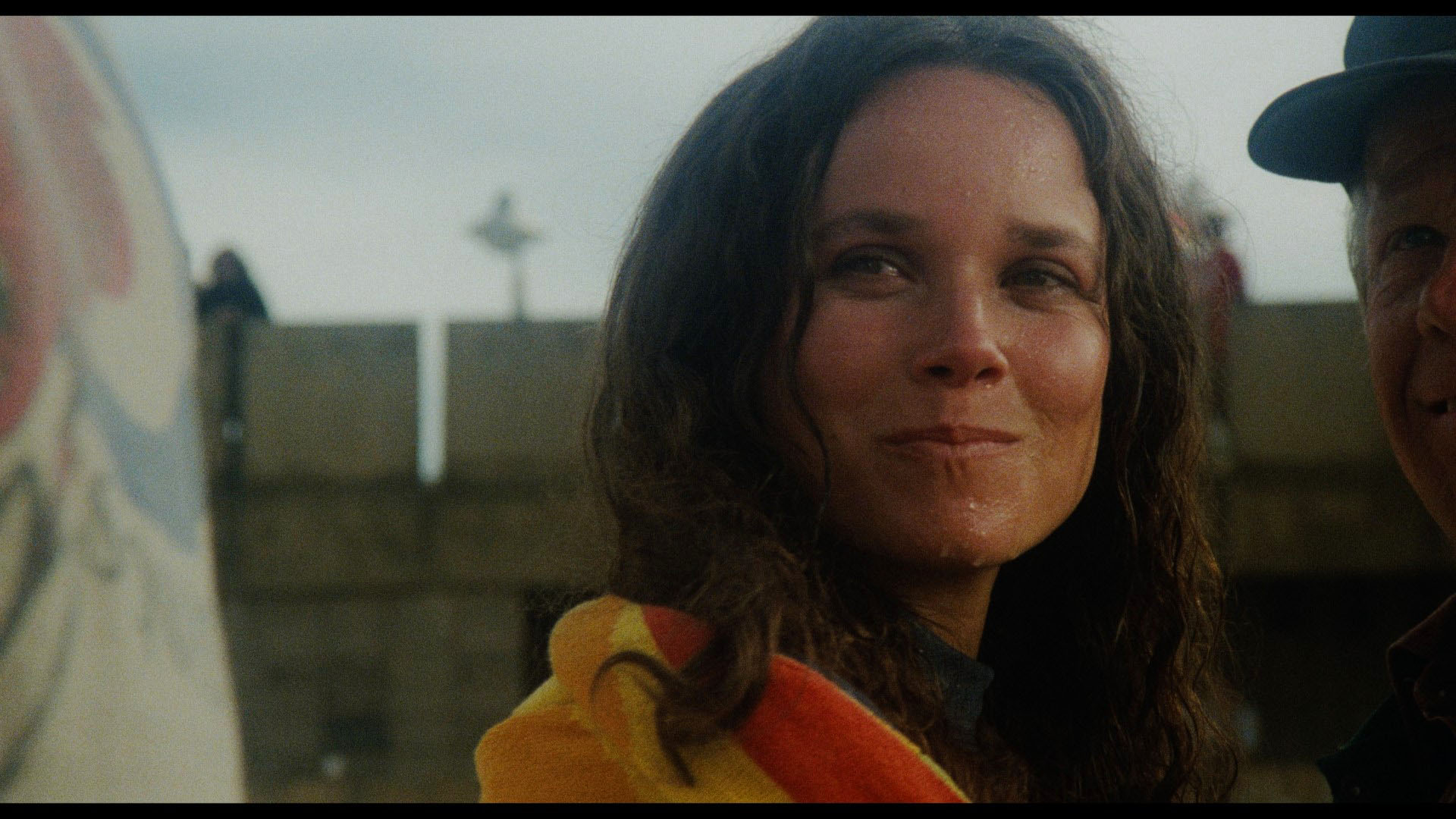
When Anchor Bay lost the rights, the film lingered in limbo for a while before being snatched up by Severin in 2011 for an updated, expanded release with a new HD transfer supervised by Rush himself. The DVD reissue is a fine choice, but more welcome is the Blu-ray upgrade which represents a substantial boost in visual quality on every front. Apart from some of the opening shots (which are naturally grainy and obviously shot with an extreme zoom lens) and some very minor print 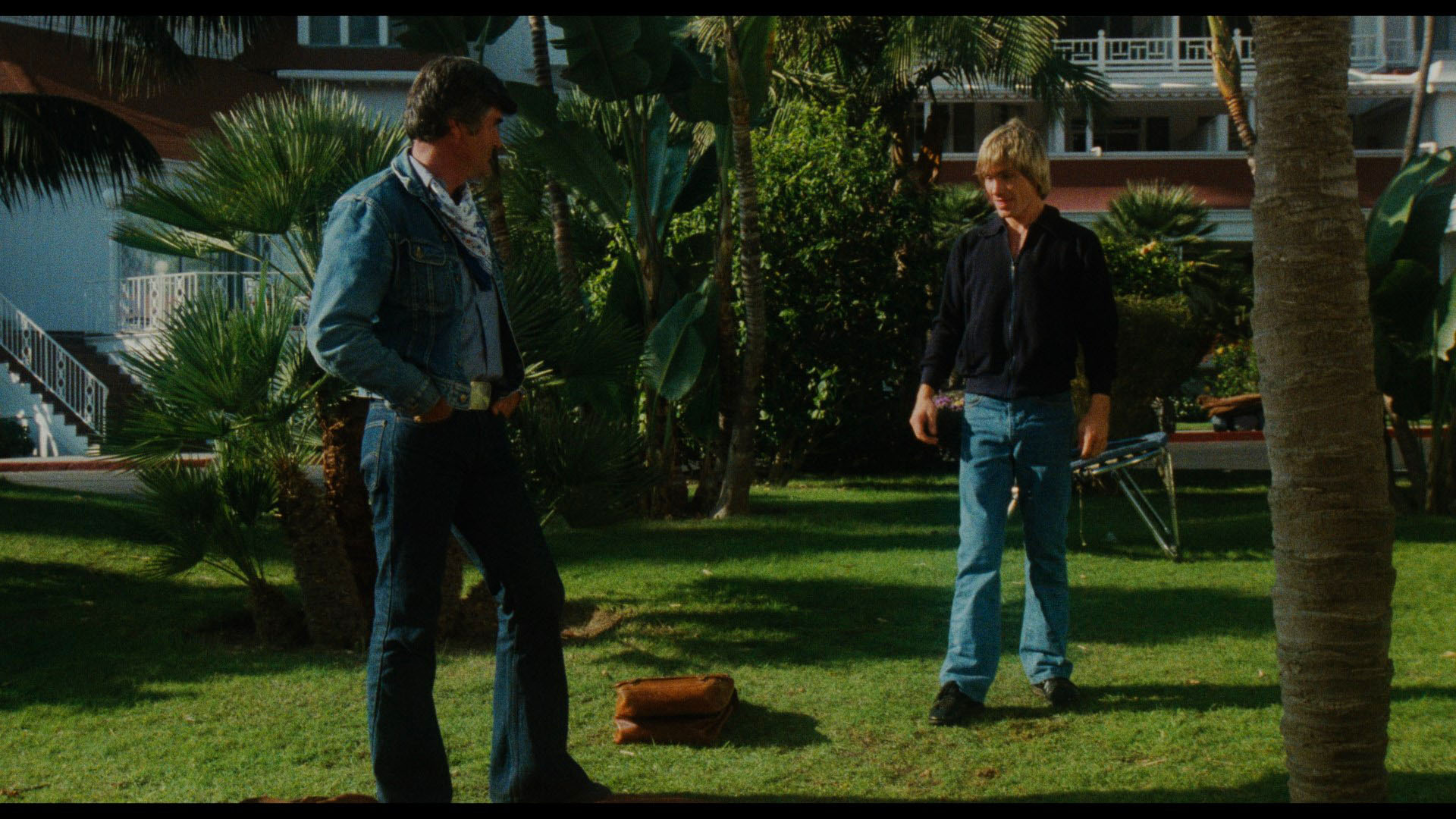 damage here and there, it's an attractive, very filmic presentation with much more detail including some nice details visible in the period clothing used for the film-within-a-film shooting. The audio is even better, with some marvelous clarity during some dialogue scenes which were often muddled in previous mixes (especially the crew dinner scenes). The immersive surround mix is similar overall to the Anchor Bay one with gunfire and music filling the rear speakers, and the DTS-HD 5.1 Master Audio just makes it even sweeter. The original 2.0 stereo theatrical mix is included as well, along with the audio commentary, Sinister Saga (still in SD for obvious reason), the American trailer, and deleted scenes. However, while you lose the screenplay and gallery, you get a barrage of newer and much more valuable material. "The Maverick Career of Richard Rush" (34m18s) is a video chat with the director in which he talks about starting at AIP, capturing the Haight-Ashbury scene as it started to turn nasty, making Getting Straight under odd studio conditions, and going through his final round of infamous producer head-butting over Color of Night. It's actually much more fun and lucid than his two-hour doc, so newbies may want to start here instead after the feature. "Peter O'Toole Recounts The Stunt Man" features the screen legend proudly recounting his thoughts and memories of the film (it's "very dear to me," he says, for reasons that fill up the 18m46s discussion), while "Devil's Squadron" (18m59s) is a funny, very loose (and feedback-filled) verbal tag team with Railsback and Rocco, who became buddies when they met during filming. "Barbara Hershey on Nina Franklin" (the only extra to contain a spoiler warning, for some reason) features the actress for a 14m23s overview of the film in which she talks about making the move from ingenue parts and her fondness for the script which had a more protracted casting process than usual. "The Stunt Man at the New
  Beverly" features a Q&A for a screening of the film in Los Angeles with Rush, Railsback, and Hershey doing a 17m18s panel discussion about the making of the film (mostly overlap in some form with the other extras, but it's great to see the trio together being so friendly). Watch out for the not-so-subtle plug for another Severin title on a prominent
  T-shirt during much of the discussion, too. The original teaser trailer and a nifty alternate Spanish trailer are included, too, along with cross-promotional trailers for Shopping, Santa Sangre, and Inglorious Bastards.
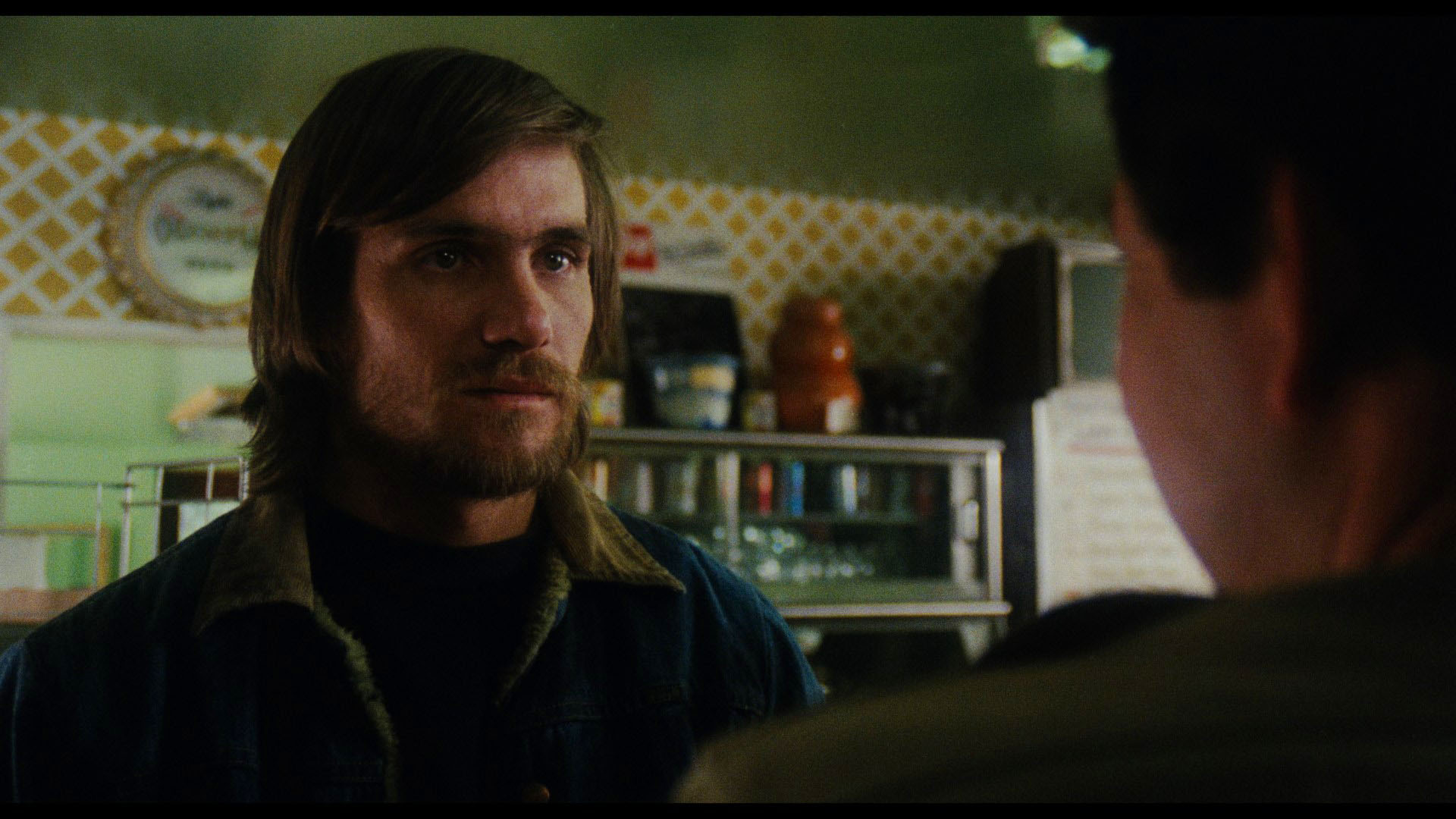
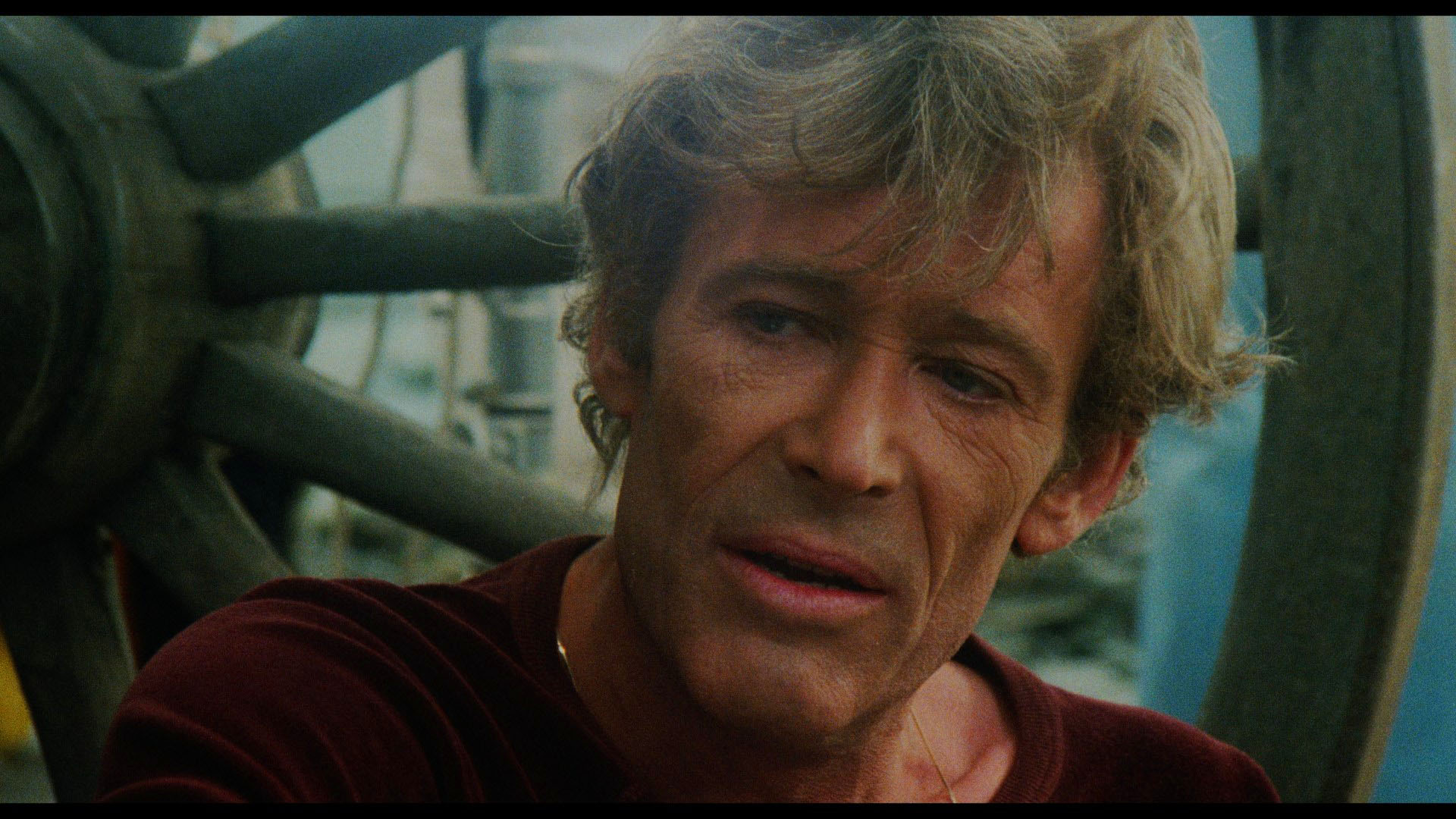
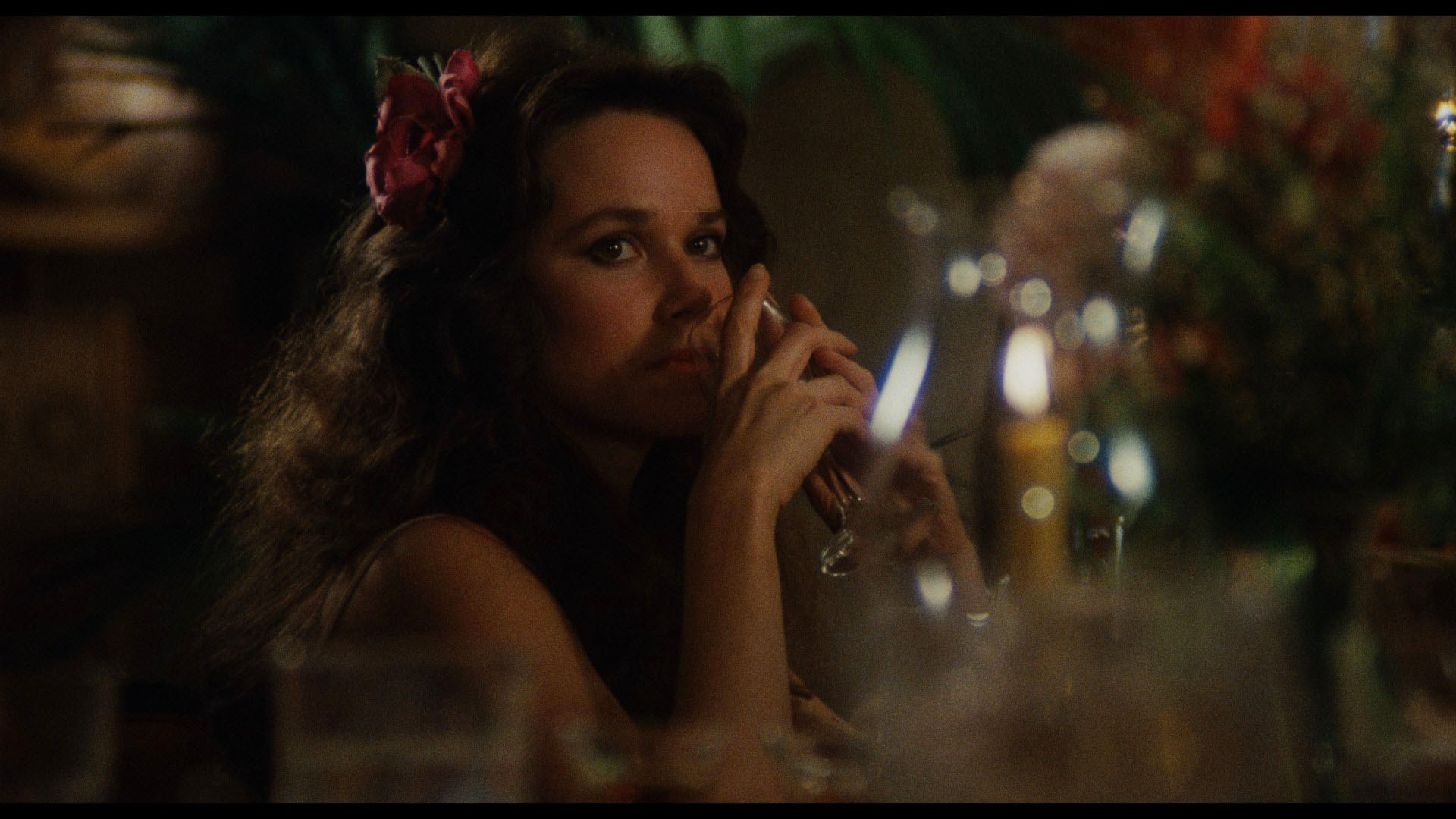
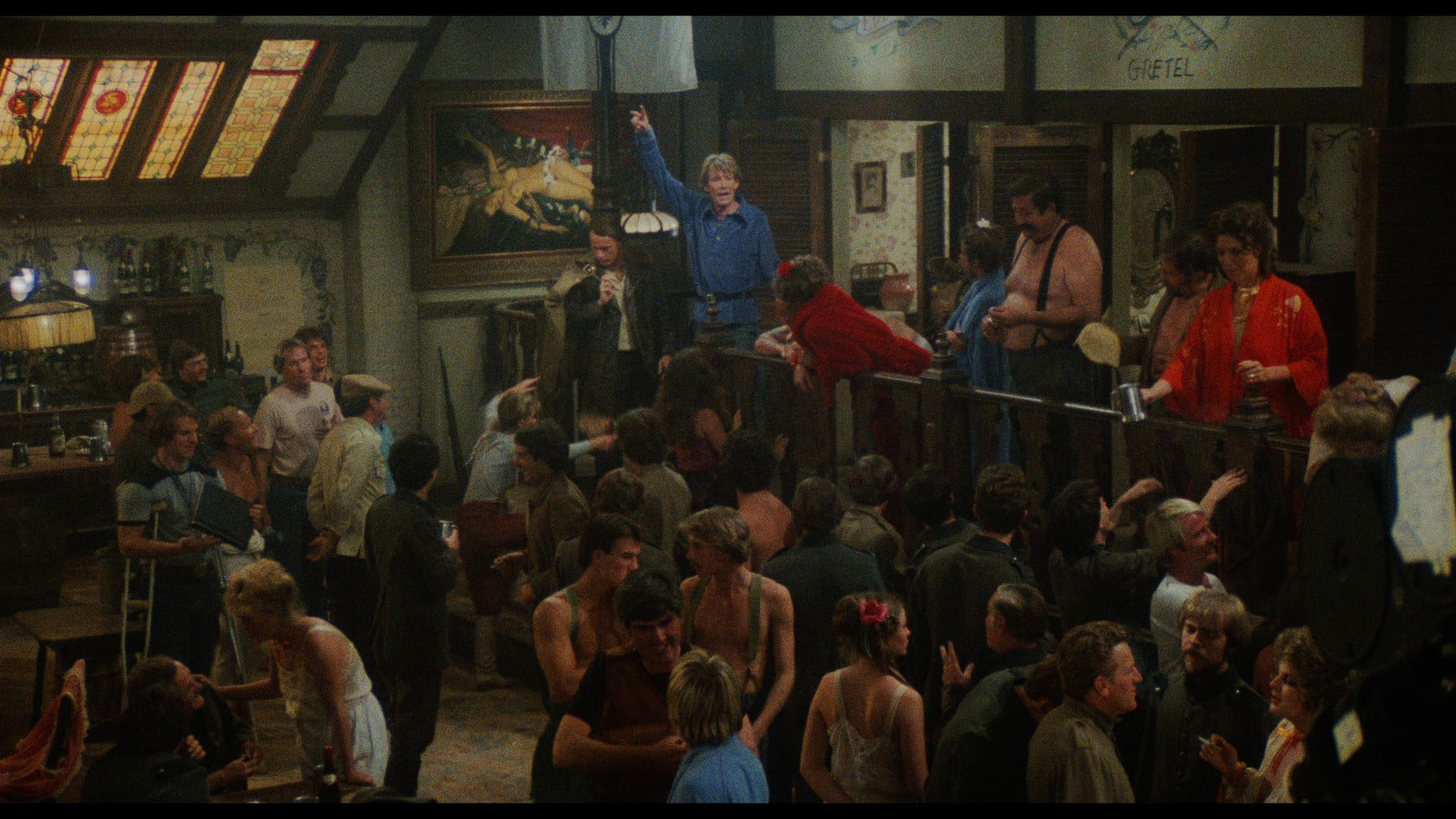
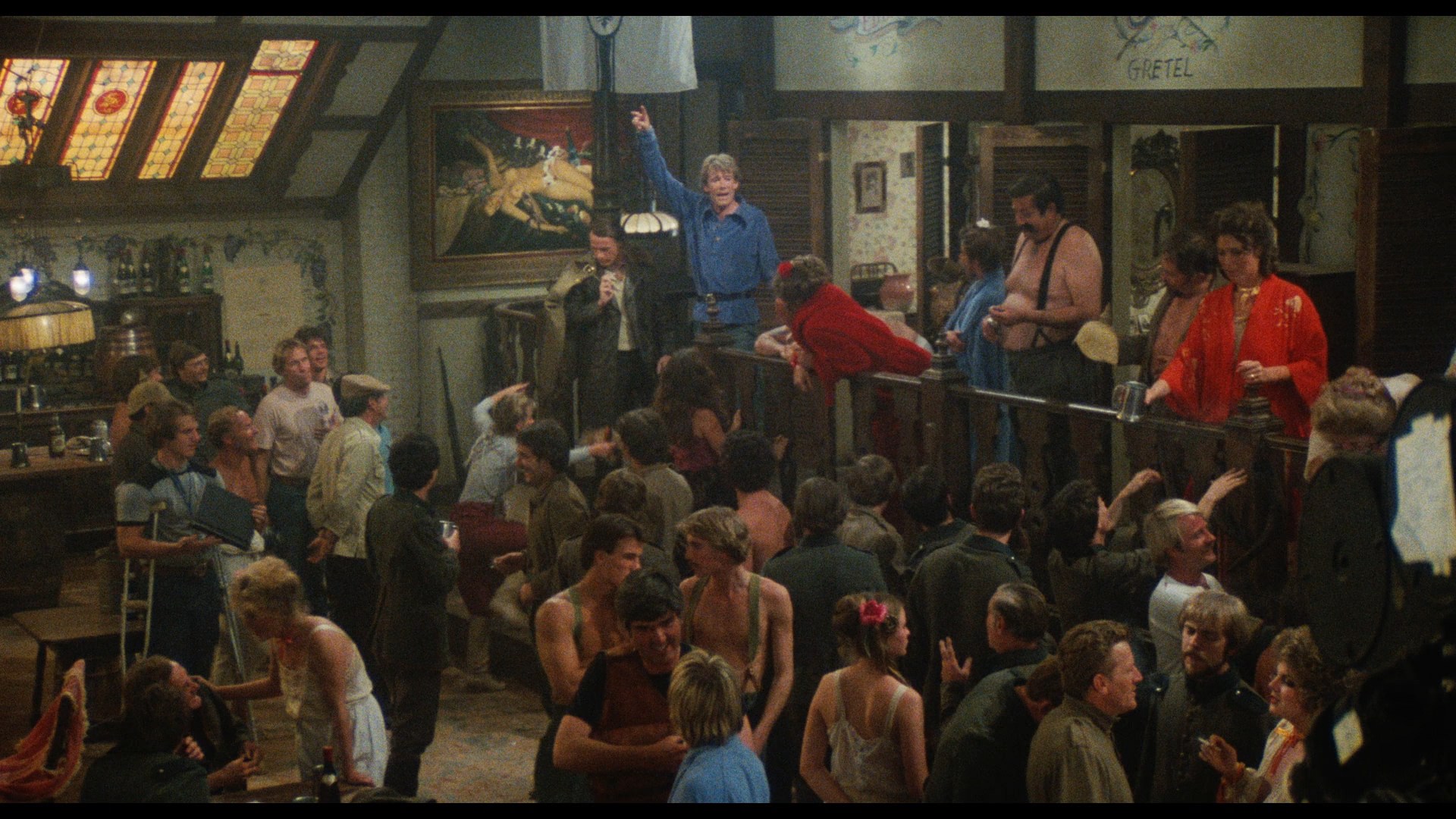
In 2026, Radiance Films sleeted The Stunt Man as the second release in its Transmission brand (following another 1980 film, Night of the Juggler) as an expanded UHD and Blu-ray region-free special edition. The new 4K scan from the original camera negative looks superb, retaining the inherent grittiness of the original cinematography while increasing detail and color fidelity with the UHD's HDR-compatible Dolby Vision grade looking especially rich. It also features a major amount of significant image info in the second half of the film, which was cropped to varying degrees in earlier releases (see comparison below). The DTS-HD MA 2.0 mono and 5.1 options both sound solid and come with optional English SDH subtitles. Ported over here are the original cast and crew commentary, Rush's intro, The Sinister Saga, the Rush intro, the New Beverly Q&A, the trailer, the deleted scenes, and the prior Blu-ray's Rush, O'Toole, Railsback-Rocco, and Hershey interviews. (It's a little jarring now to note that only two of them are still with us as of this writing.) A new audio commentary with critics Christina Newland and Monica Castillo does an enthusiastic job of parsing through the film's reality vs. illusion theme, the treatment of war trauma, the role of the score, the depictions of tyrannical film directors, and much more. Also new here is an interview with Bail (10m6s), shot before his death in 2020 for a documentary about Rush, chatting about his career as a stunt man, his memories of Rush and working in San Diego, and the working process of essentially playing himself as well as his favorite moments in the final result. The limited edition also comes with a pull-out poster, six lobby-card style postcards, and a 40-page book with new essays by Adam Nayman and Brandon Streussnig and an archival interview with Rush and Kenneth Turan.
Updated review on March 9, 2026