 only the most thorough of British '70s cinema
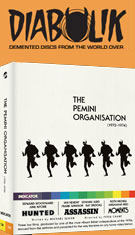
  scholars were in the dark when Indicator announced this two-disc Blu-ray set devoted to a very short-lived outfit that only released three films during its existence. As the packaging explains, "In the early 1970s, three ambitious friends – Peter Crane, Michael Sloan and Nigel Hodgson – combined the first letters of each of their names and set up the Pemini Organisation, a young and vital independent British film production company." Never released on home video before, the end products consisted of two full features and one mid-length title geared for supporting programming in theaters, featuring a solid cast and some sort of thriller angle to each of them. Essentially this feels like an unofficial successor to the heyday of the BFI's essential Flipside Series devoted to the more overlooked and distinctive side of domestic '70s films (no surprise since the man who instrumental to that line, Sam Dunn, is with Indicator now), so consider this one an essential purchase as well.
 fateful
  time approaches and she gradually gleans more information out of him, it becomes apparent that his plan could be far different than it appears. Both actors (the only speaking roles ever seen on the screen) do excellent work here
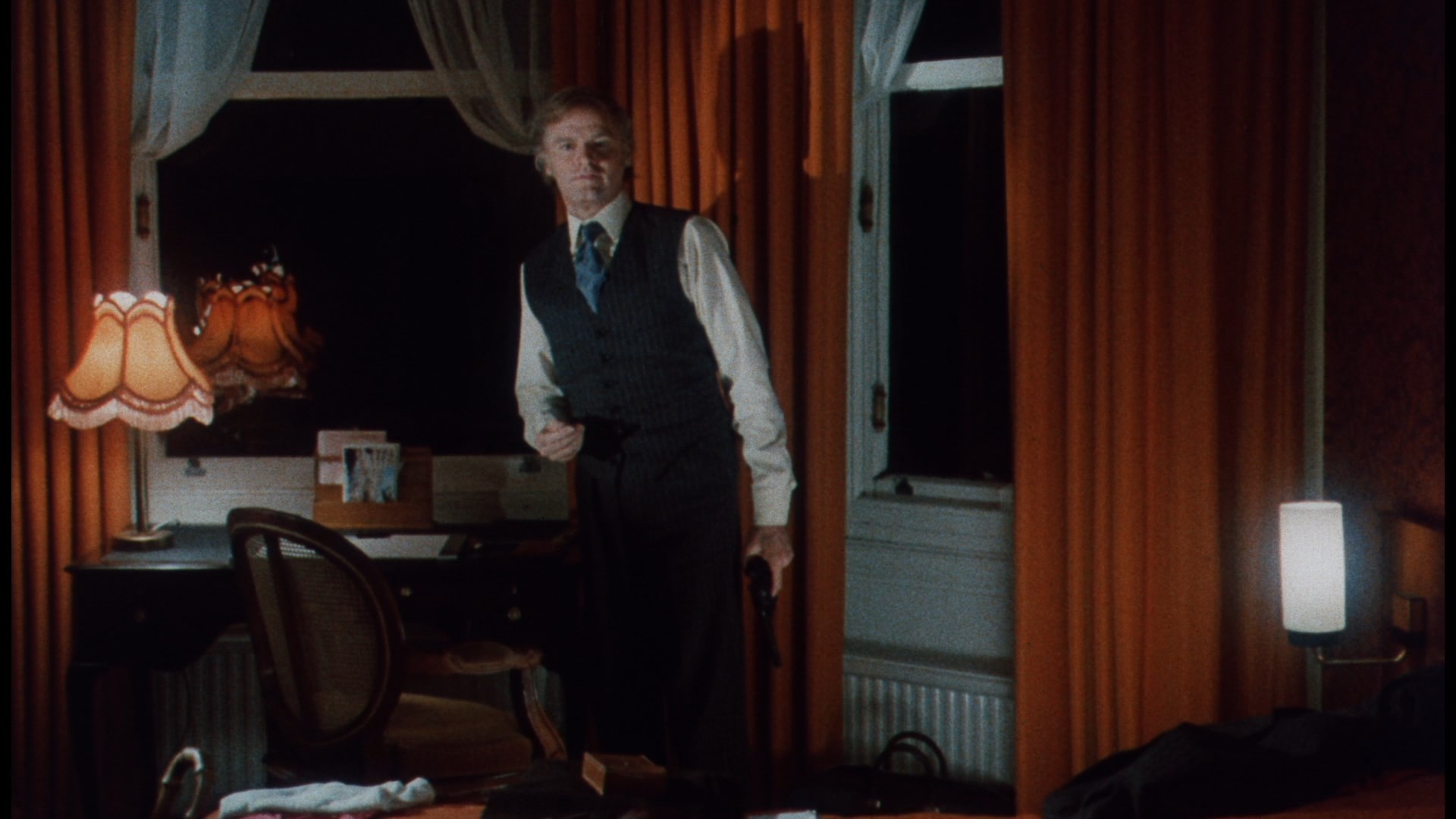
 who's flown in for on an elaborate mission to research and carry out a hit for the government on someone who's been
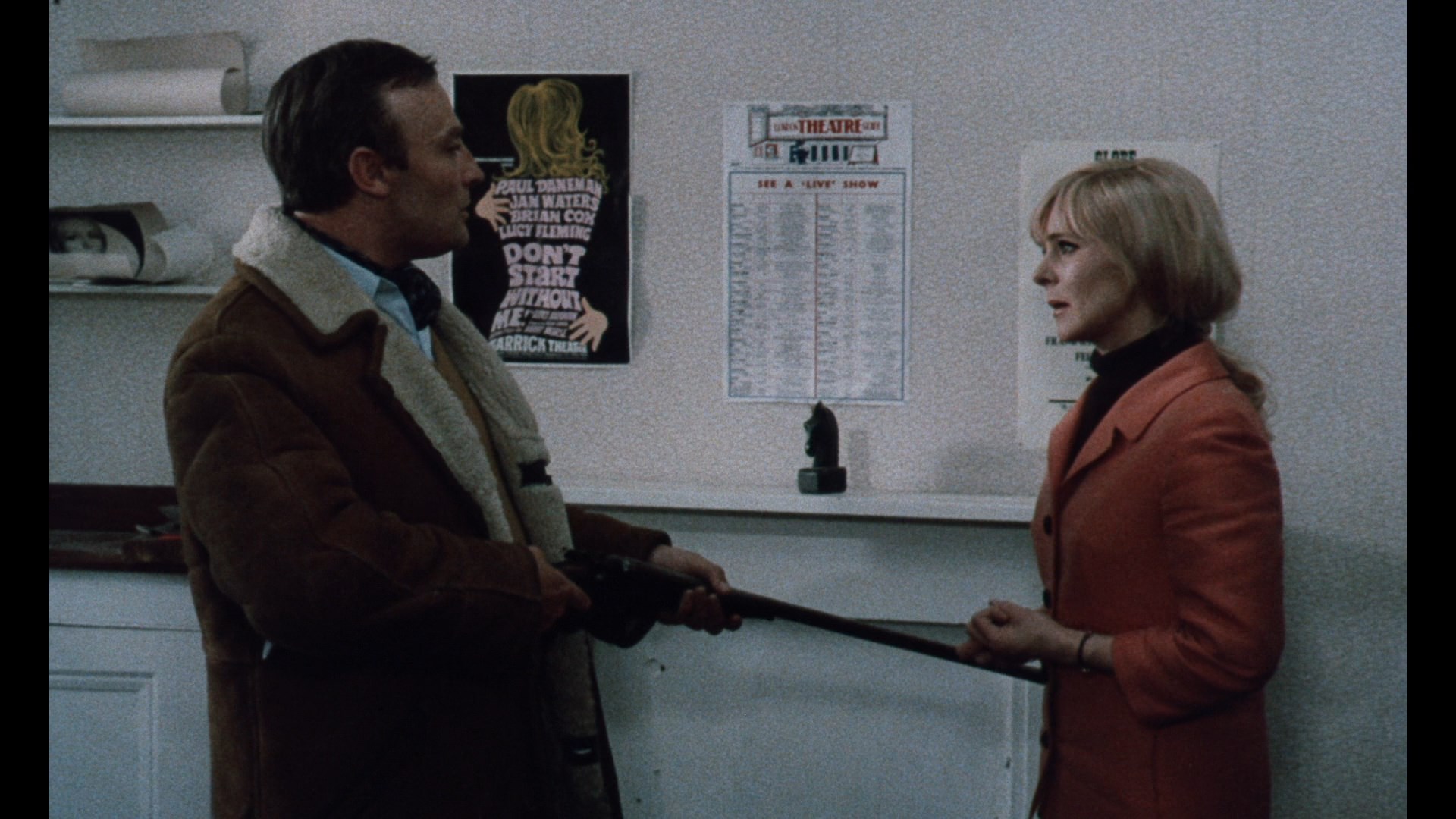
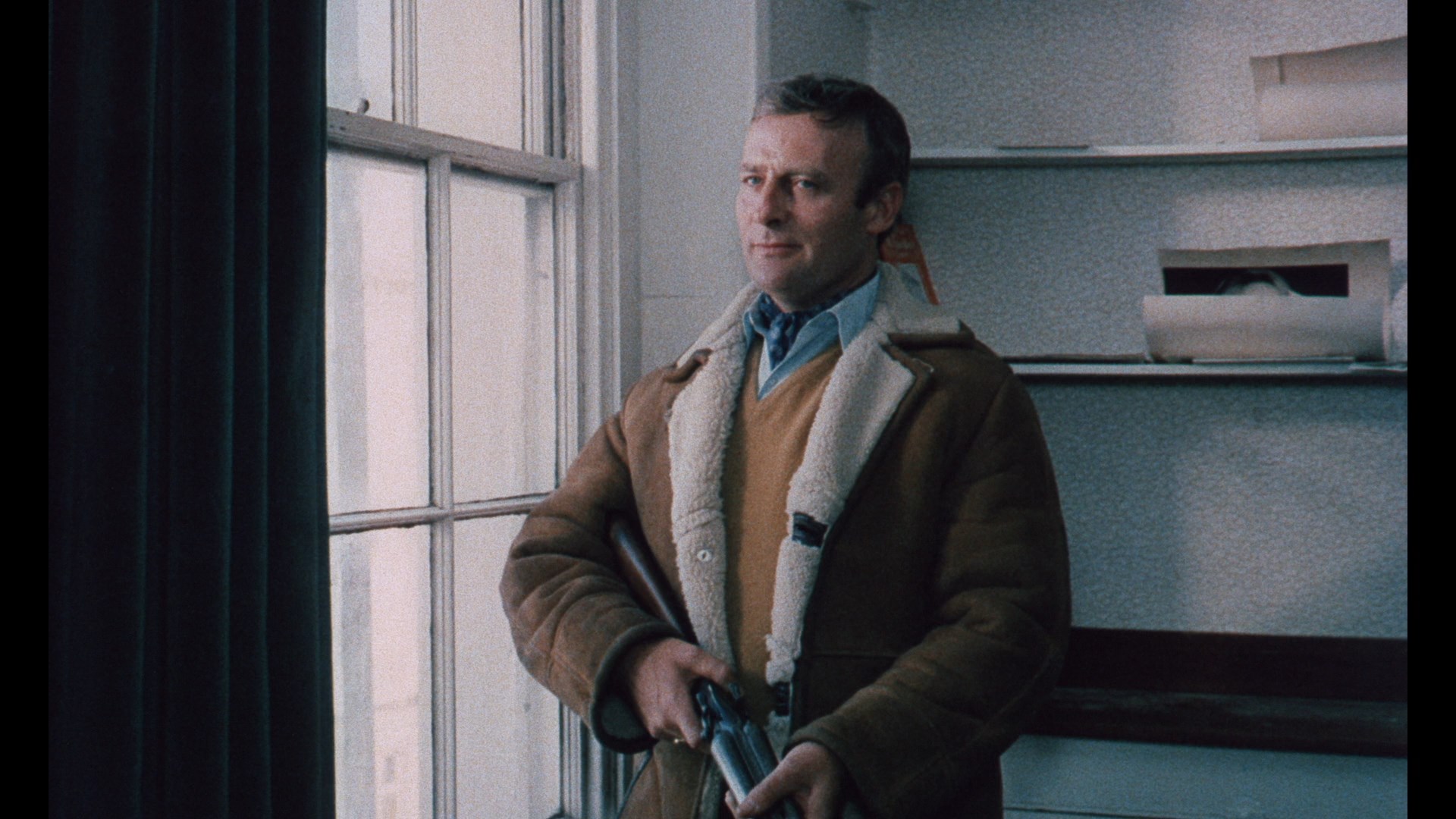
  leaking state secrets within the Ministry of Defence. His client doesn't care if the killing looks like an accident (saying blame will go to "the other side"), but Hendry has his own personal code about killing within the machinery of government that could throw a major wrench into the works. Along the way we meet other government officials who decide to send in a pair of backups in case things go wrong. There's very little dialogue here, with the use of sound effects and stylized photography (as well as a funky score that incredibly got a minuscule vinyl release) carrying across what feels like a mixture of gritty '70s U.K. crime thriller (think Get Carter, Villain, etc.) with an austere art film. The commentary for this one is especially valuable as it goes into the production issues caused by Hendry's much-noted alcoholism that was already in full force by this point (with the actor finding crafty ways of getting booze on the set under everyone's noses), as well as the plans for Pemini at the time and the commercial demands of the era. His performance can't be faulted though, and he's supported here by a great supporting cast including Edward Judd (First Men in the Moon, Island of Terror, The Vault of Horror), Frank Windsor (Sunday Bloody Sunday), and Ray Brooks (House of Whipcord, The Flesh and Blood Show). Of course, this being a 1973 film means it has a cynical, downbeat ending, very much in keeping with the era and actually making an interesting narrative choice during the climax that you won't see elsewhere very often.
 to
to  overlook. The LPCM 1.0 mono English tracks are also in pristine condition and feature optional English SDH subtitles. In "Organising Principles" (31m39s), Crane gives a more general overview of the academic crisis that led him to film, the company's history and his subsequent industry career in L.A., and memories of his fellow founders. In "An Amazing Time" (6m24s), Sloan (who wrote the films and was also an actor) gives his own perspective on the period which he found to be very creatively fruitful. Finally third partner Hodgson gives his take in "Good Chemistry" (29m1s) noting how the recruiting of veteran actors was a daunting challenge, Assassin marked a foray into the world of union productions, and everyone chipped in as much as they could to pull off a solid final product. "A Group of Friends" (13m53s) features Ritchie recalling her experience acting in Hunted and performing opposite Woodward during a pivotal point in her career (hot off a gig on The Persuaders), while "Scoring with Gerry" (12m3s) features musician and composer Graham Dee looking back at his time working with Gerry Shury on the scores for Hunted and the student project In Search of Lebanon (including the role of that Yankee Doodle restaurant that gets referenced a lot on this disc). In "The Life of My Memories" (21m47s), assistant director Martyn Chillmaid shares his own tales from all three Pemini productions which kicked off while he was still in college. Hendry gets the spotlight in "Assassin's Creed" (22m1s) with biographer Gabriel Hershman offering a good thumbnail sketch of the actor's tumultuous personal life compared to his excellent abilities and presence on the screen including several significant film and TV roles. Also included are a gallery for Hunted (101 images) and three galleries for Assassin consisting of promotional material (81 images), behind the scenes (212 images), and the shooting script (26 images), plus a quick 4m45s look at the restorations of both films from 35mm prints at the BFI National Archive.
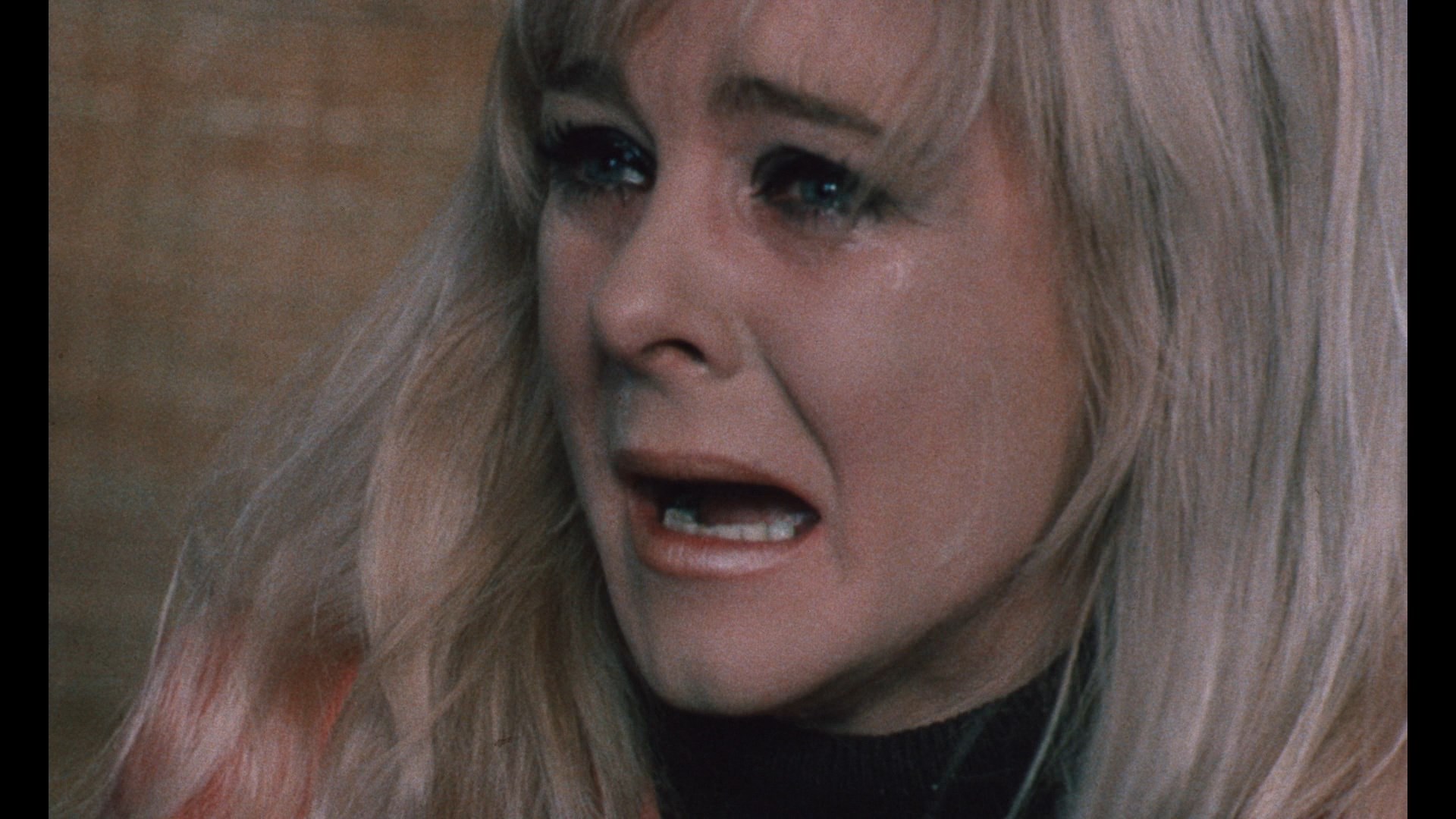
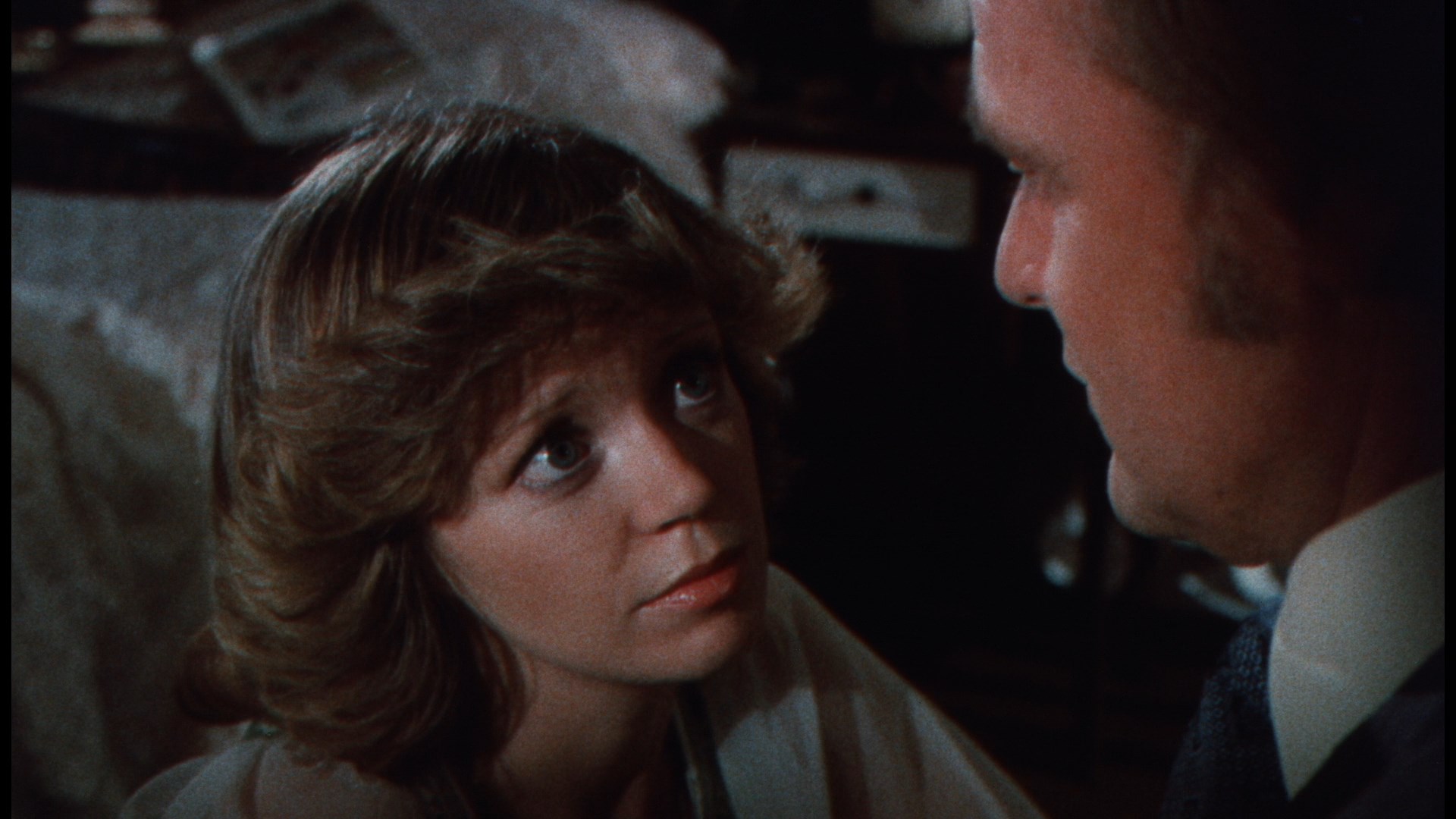
  to a two-hander for its stars. Traumatized by the deaths of his wife and daughter, businessman Peter Samuelson (Murder, She Wrote's Michell)
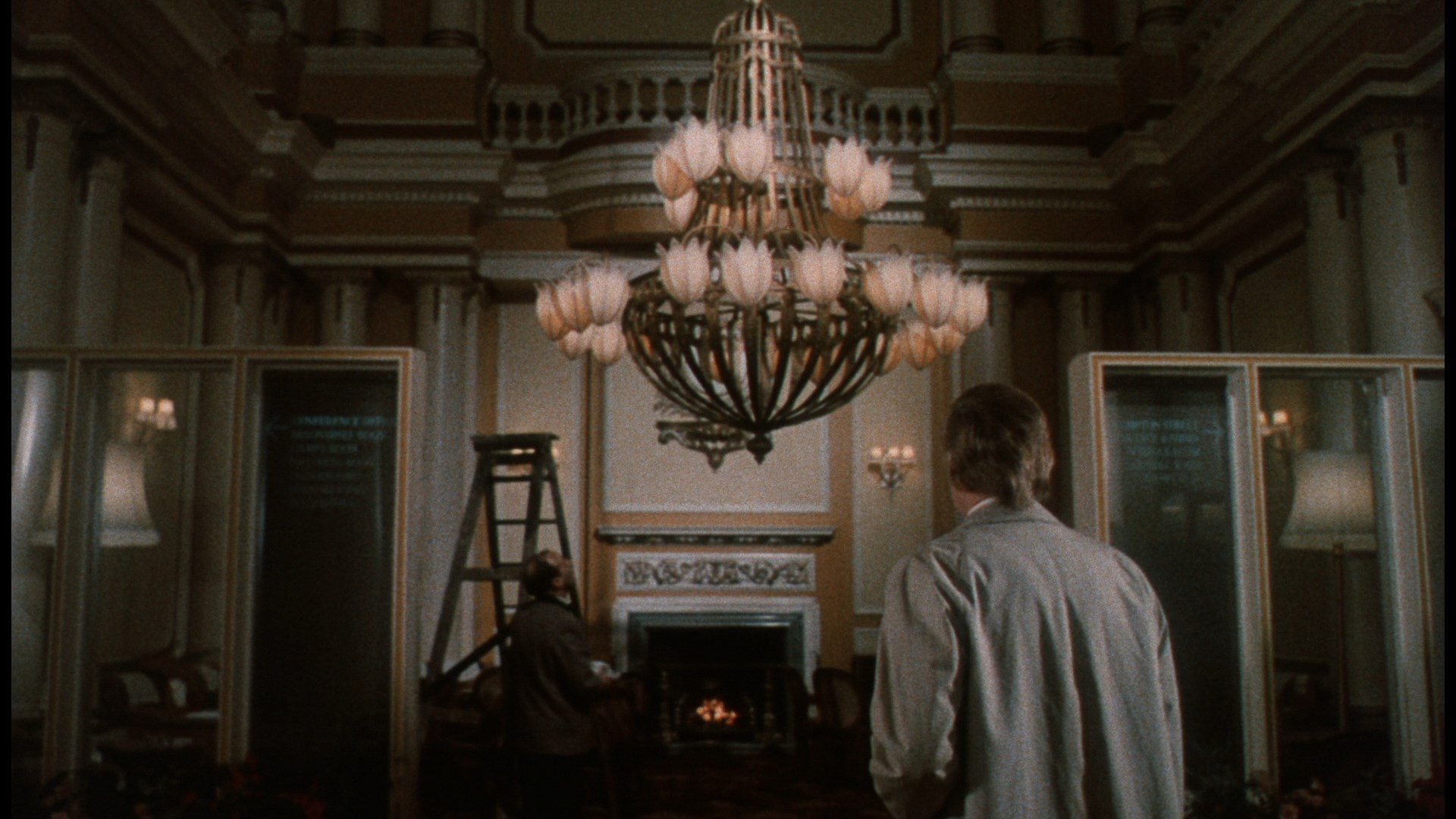
 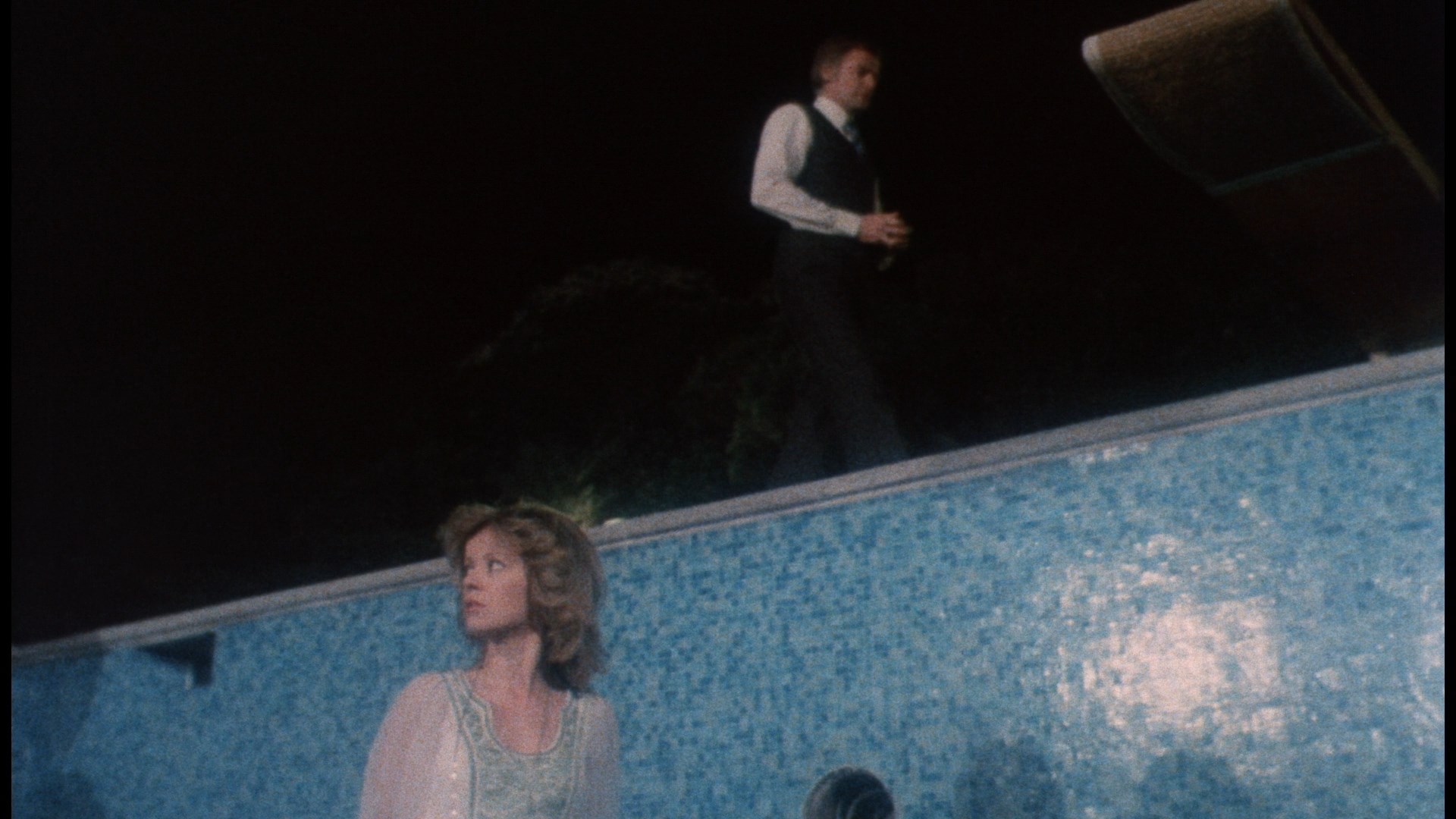 takes a train to a seaside hotel where he had some happy memories from childhood. Finding the place largely empty off season, he reunites with the porter who's aged considerably in the ensuing decades. That first night he pulls out a gun with clear intentions of committing suicide, but he's interrupted by another guest, Chrissy (Hands of the Ripper's Rees), an energetic spirit who's having trouble with the gas line. The two manage to strike up a rapport that eventually extends outside the hotel, which awakens feelings of tenderness and possible romance... with a twist.
  surviving film element, this time apparently intact and nicely cleaned up to pristine condition. On the video end you get a section with six cast and crew interviews: "Moments in Cannes" (7m35s) with Crane recalling a vivid experience involving walkouts during an
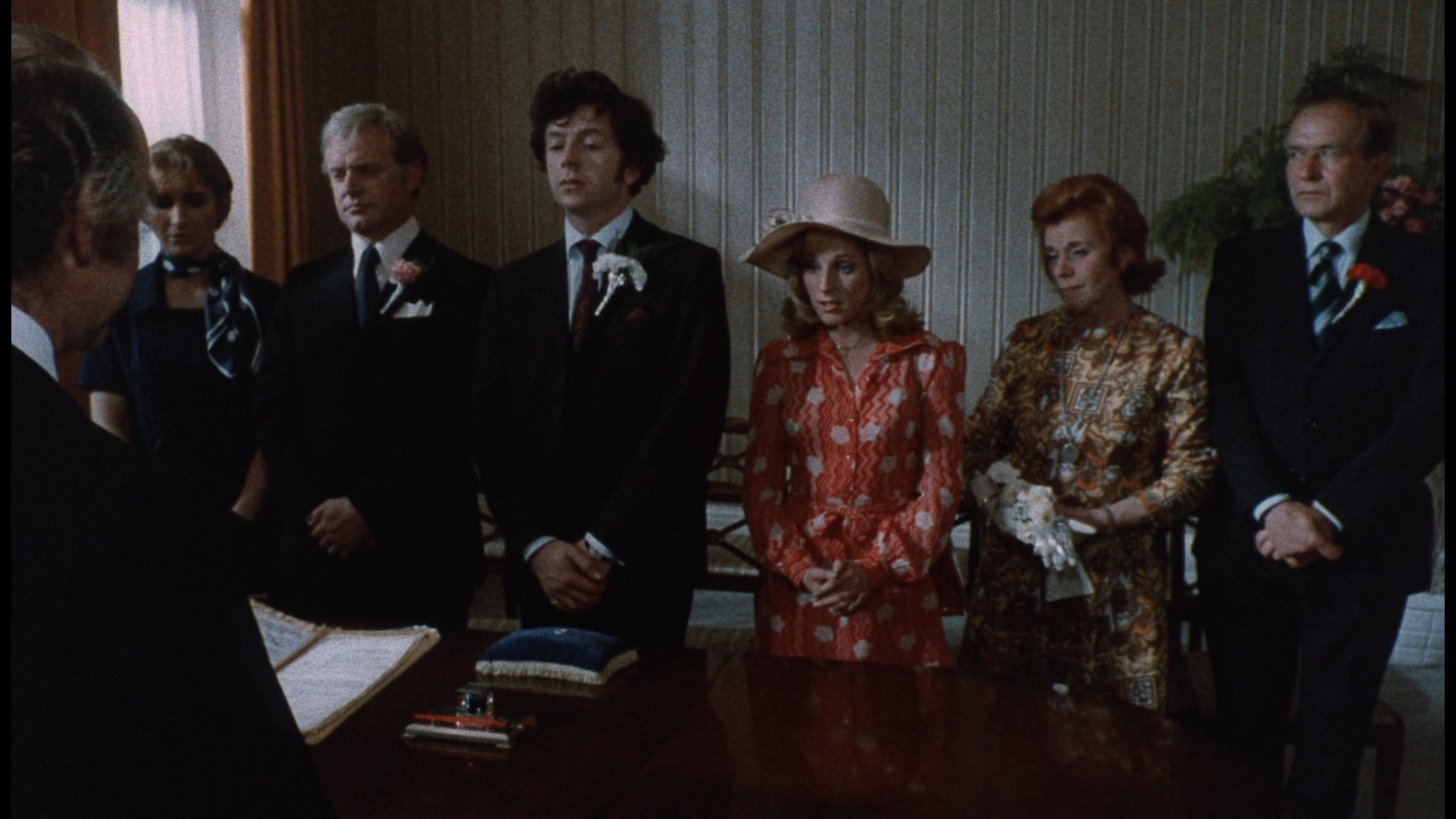
  exhibitor screening as well as the tragic IRA bombing that destroyed the film's financial prospects; "A Present Out of the Blue" (6m15s) with actress Valerie Minifie recalling her limited but pivotal role in the film; "Reality and Non-reality" (13m42s) with composer John Cameron (Psychomania, Kes) noting how he approached the score with a very non-Hollywood approach and left plenty of space for the sound effects to fill out several scenes; "Shooting with Mr. Su" (10m28s) with gaffer Bill Summers chatting about his positive memories of working under Suschitzky after their work together on TV commercials; "Nothing's Going to Stop Us" (15m9s) with production designer Bruce Atkins going through his history of working with Crane on all of the Pemini features; and "A Family Affair" (21m42s) with Crane's cousin, James Partridge, telling the story of how he worked as an assistant on Assassin in multiple capacities and went on to Moments and the added American material for Hunted, plus stories about how their families wove into the films' histories including a big wedding. In "The Whole Story" (16m23s), Vic Pratt gives a very handy and informative overview of the entire Pemini history from genesis to dissolution, using Edward Woodward as a motif to bring it full circle and making a case for the company as a significant chapter in local movie history. A reel of deleted scenes from Moments (13m33s) is an interesting addition with material from an analogue U-matic tape copy with bits of footage dropped from the distributed version. There's a comparison with the final release version here so the extra scenes are actually pretty short, with the most significant being a flashy montage that would've appeared near the end. A gallery features 46 stills and promotional items, followed by a restoration featurette (5m1s) showing the process of resuscitating the one existing print at the BFI. Finally you get that entire 1970 In Search of Lebanon (11m20s) student project by Crane and Hodgson with on-location footage and narration tracing the country back to its mythological origins. The U.S. and U.K. limited edition set (6,000 units) also come with an 80-page book featuring essays by Crane about Pemini's history and reproductions of press coverage and promotional material, while five replica production stills are also included.