

 sexploitation, Russ Meyer was half a decade out from his vibrant color nudie cutie The Immoral
  Mr. Teas when he shifted gears to something darker and more dangerous: the black-and-white roughie. Toning down the overt nudity but mixing sexuality with rough and tumble violence, his hits Lorna and Mudhoney fit in with the public's desire for more psychologically complex and disturbing material. In the process he also started to create more dynamic and even superhuman female leads who were a far cry from the one-dimensional objects of desire in his early pinup-style fantasias. All of that led to another shift of sorts with two films often seen as companion features, Motorpsycho and its immediate successor, the legendary Faster, Pussycat! Kill! Kill!, both starring his most recent discovery and one of his most beloved cult icons, Haji, who would go on to appear in three more of Meyer's later color films. Another success for Meyer, Motorpsycho has often been overlooked in favor of Pussycat but makes for a perfect co-feature with its escalating sweaty, dusty mayhem in the desert.
  Southwest is safe from a three-man gang of brutal bikers who get their kicks terrorizing,
  raping, and murdering anyone in their path. The leader of the pack is unhinged Vietnam vet Brahmin (Oliver), while his cohorts are the more moderate and randy Slick (Scott) and airhead Rufus (Owens). However, they may have stepped too far by going after Gail (Winters), whose tough veterinarian husband Cory (Rocco) is incensed when the law (including a cameo by Meyer himself) claims its hands are tied. Then they kill the husband of Cajun Ruby (Haji) and leave her for dead, and when Cory rescues her, they embark on a revenge-fueled mission to take down the thugs who ruined their lives.
 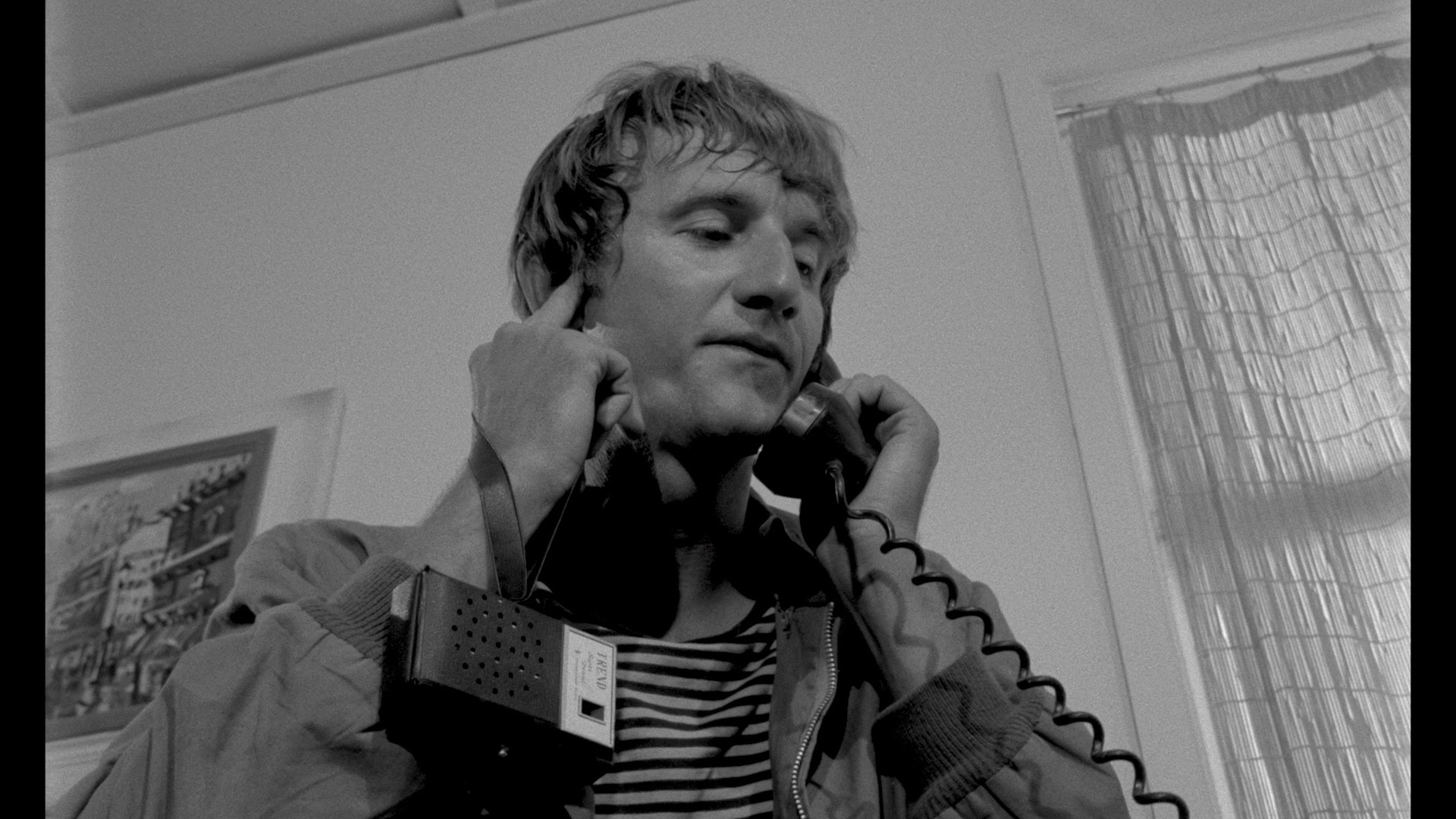 though Haji really takes the spotlight here once she shows up. The three baddies can't help but pale in comparison, but as has often been noted, this did
  break some ground as the first significant film with a traumatized Vietnam vet character (albeit not in the most sympathetic light). The violence quotient here is about on par with other desert crime films of the era (a la The Sadist), but the addition of flagrant sexual imagery gives it a perverse spin that climaxes during the notorious, still insane snakebite sequence you have to see to believe.
 negative courtesy of the Museum of Modern Art. As with most of Meyer's pre-1970 output, this one works best framed at 1.66:1 and is presented as such with dead-on framing that improves substantially over the awkward, asymmetrical compositions on the old tape transfer which was opened up far too
  much at the top. The DTS-HD MA 2.0 English mono track sounds faultless and comes with English SDH subtitles, and a new audio commentary by Elizabeth Purchell and Zach Clark packs in a ton of material as they size this up next to its more famous companion film, note the use of whip pans, work through the experimental nature of the music in tandem with the editing, assess the importance of Haji in Meyer's work, comment on the handling of sex and violence at the time, study the impact of John Waters on Meyer's legacy, cover the military-style running of his sets, and more. The trailer is also on both discs, while the Blu-ray adds "Desert Rats On Hondas" (21m16s) featuring separate archival interviews with Haji and Rocco looking back at how they first encountered Meyer and ended up making the film under DIY conditions in the desert contending with bugs, their very different acting backgrounds, the value of Leonard Nimoy as an acting teacher, and a hilarious bit about Rocco's realization of how the "Suck it, suck it!" scene really played.
 SEVERIN FILMS (Blu-ray)


ARROW VIDEO (DVD)


