MADNESS
Color, 1993, 90 mins. 39 secs.
Directed by Bruno Mattei
Starring Monica Carpanese, Emy Valentino, Fausto Lombardi, Gabriele Gori, Monica Carpanese
BUGIE ROSSE
Color,
1993, 92 mins. 36 secs.
Directed by Pierfrancesco Campanella
Starring Tomas Arana, Gioia Scola, Natasha Hovey, Lorenzo Flaherty, Gianfranco Jannuzzo, Alida Valli, Barbara Scoppa
MURDER IN BLUE LIGHT
Color, 1991, 89 mins. 13 secs. / 94 mins. 51 secs.
Directed by Alfonso Brescia
Starring
David Hess, Florence Guérin, Rik Battaglia, Riccardo Parisio Perrotti, Sonia Topazio
Vinegar Syndrome (Blu-ray) (US R0 HD) /
WS (1.66:1) (16:9)
It's no 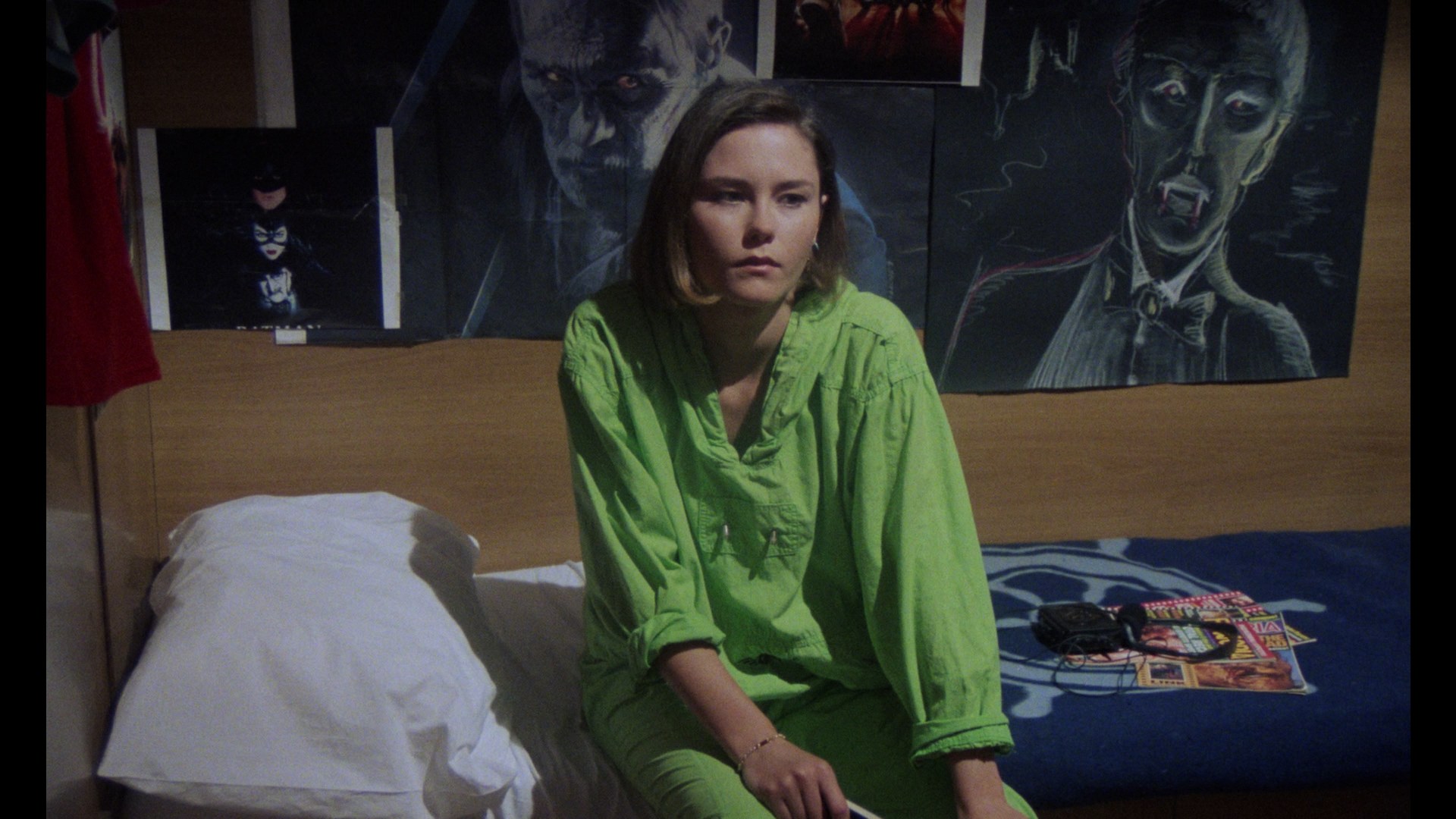 secret that Italian genre films had lost much of their luster by the time the '90s rolled around, with an evaporated
  international market and declining budgets leaving many filmmakers high and dry just as fan interest abroad was really taking off. For the ninth entry in its ongoing Forgotten Gialli Blu-ray series, Vinegar Syndrome gives the U.S. home video debuts in any format to a trio of films from the early part of the decade, two from industrious, ultra-frugal directors known for their ability to spin sleaze into gold.
First up is Madness (or Eyes without a Face as the on-screen title reads, or originally Gli occhi dentro in Italian), one of several late-period gialli by Bruno Mattei (Hell of the Living Dead, Rats: Night of Terror) who didn't even really dabble in this arena until 1990's Night Killer. Here we have a furor erupting over a comic called Doctor Dark created by Giovanna (Carpanese) who, along with her writer Nico (Gori), is targeted by an irate public when this "violent, sub-cultural trash" seems to inspiring the copycat murders of babysitters in the area. The modus operandi includes carving out the victims' eyeballs, which start turning up in Giovanna's apartment and putting a major damper on her love life. Nico encourages her to put her work to rest, much to her objections, but after those eyeballs and some breathy voicemails, she decides to get away from the black-clad maniac for some R&R in the boonies and later some idyllic boating. Of course, the real mayhem is only just beginning...
Blatantly inspired by Tenebrae down to some very similar dialogue and set pieces, this still feels light years removed just a decade later with far less resources or talent involved in every aspect. That isn't necessarily a bad thing, of course, since Mattei has a charm 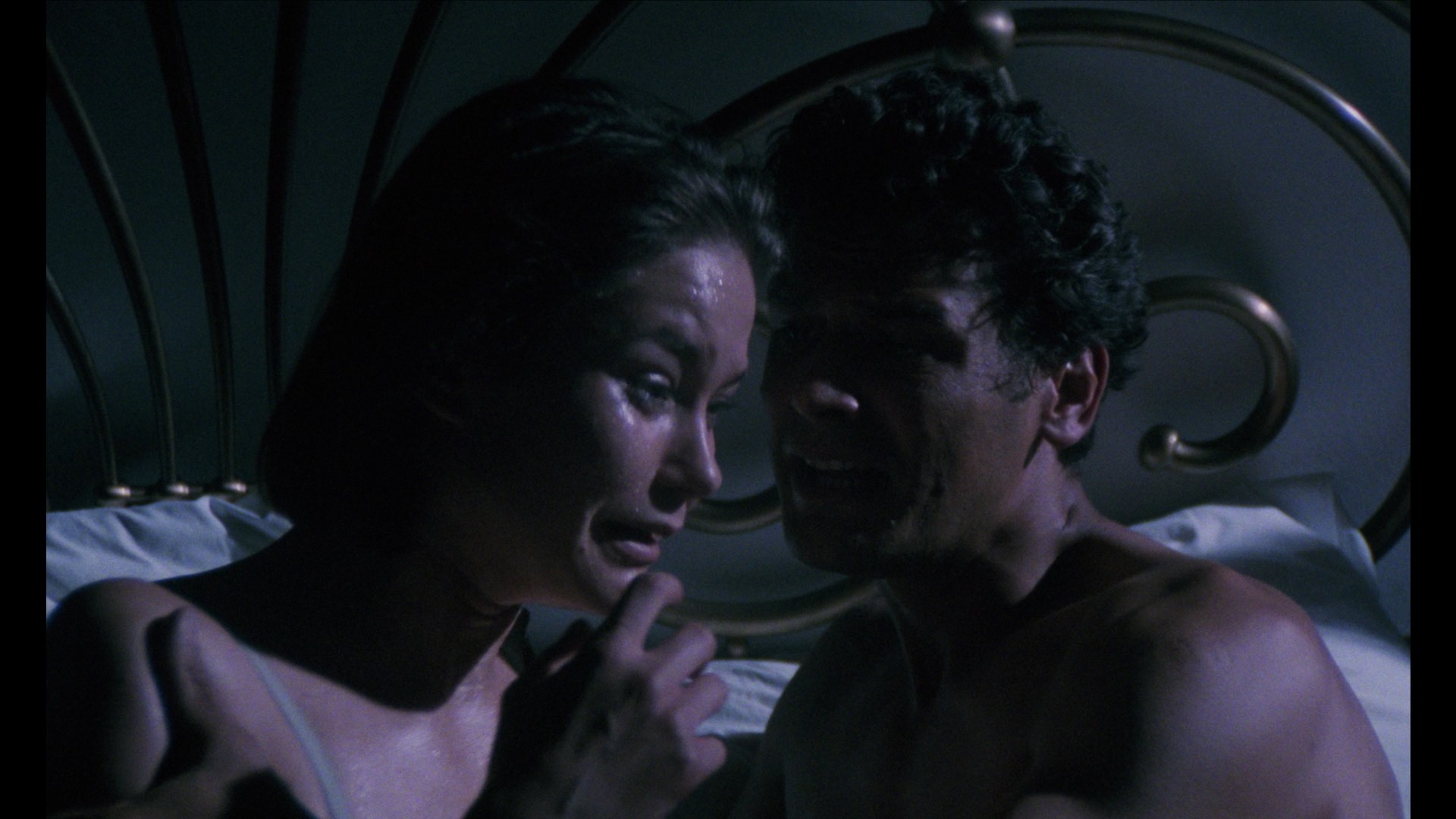 all his own with that familiar
 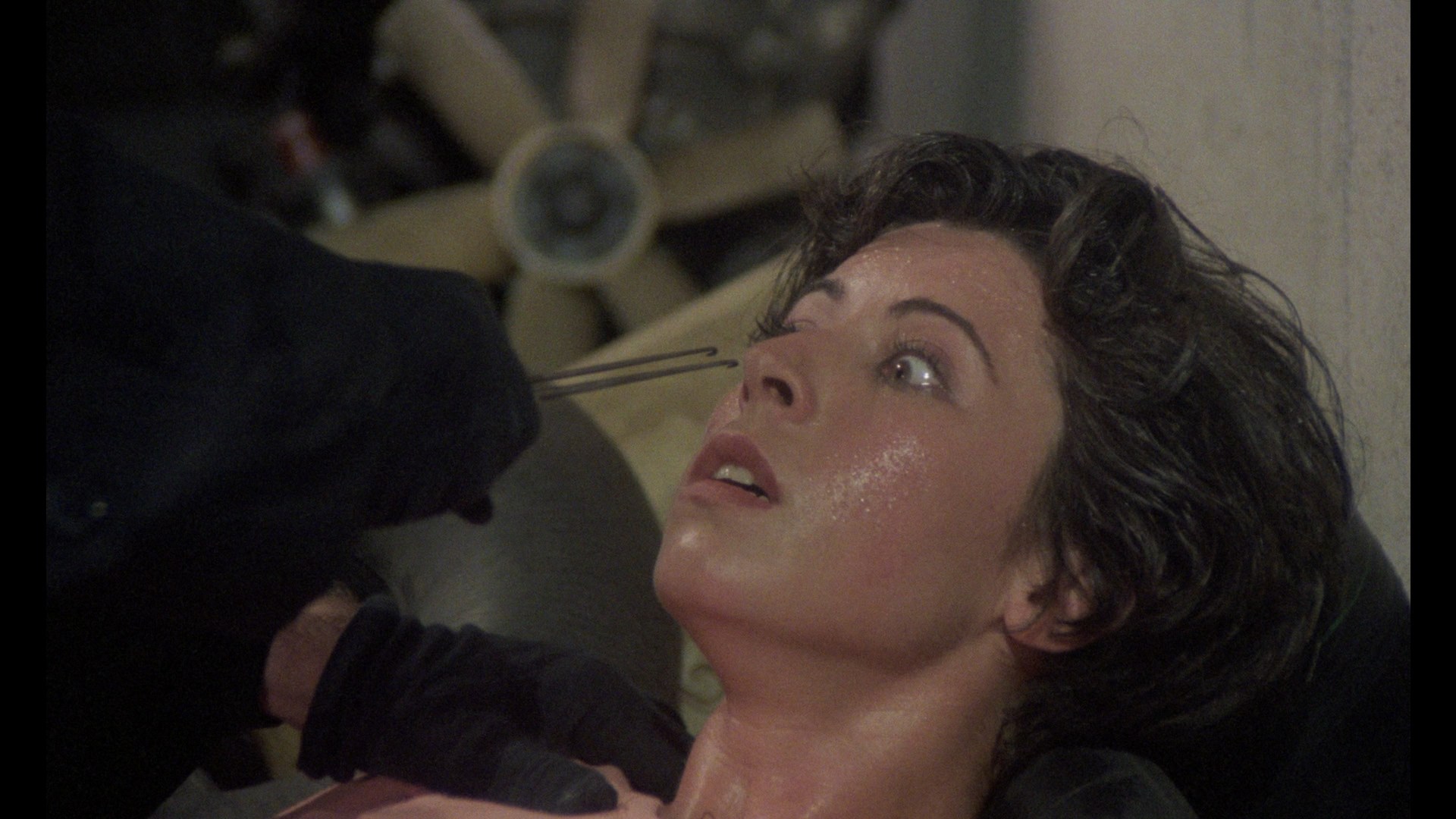 grubby atmosphere, daffy dialogue, and insane plotting. The gore level here is lower than you'd expect apart from some stabbing and a little eye trauma, and the stock music score is, not surprisingly, a hodgepodge of titles made many years before. The nostalgia factor is kicked in even further with the killer's appearance, sporting a fedora and a black coat a la Blood and Black Lace. By this point most of these films were being made for the export market (especially Japan), though this one barely got released on VHS and ended up being bootlegged in very low-quality editions over the years. The Blu-ray marks the first really reasonable edition of this one, which was shot in English but with the dialogue dubbed very badly with endlessly amusing results. It's always sounded lousy, and the limitations of that original mix are what you get here with the DTS-HD MA 2.0 English mono track (with optional English SDH subtitles). The new 2K scan from the 35mm negative looks great given that we're talking about a Mattei film here (the rarely-seen ship epilogue end credits included here are sourced from video), and you also get a new audio commentary by the always entertaining gang at The Hysteria Continues who note the numerous similarities to the Argento film, the state of the giallo and the slasher film in the '90s, Mattei's career, and Italian filmmaking around this time. "Through the Eyes of Madness" (12m38s) with Carpanese covers her first meeting with the "fatherly" Mattei, the lessons she learned from him to become a producer, their work together on the film Dangerous Attraction made right before this, and her thoughts on the demands of the role. Finally in "Seeing Madness" (19m48s), producer Gianni Paolucci recalls the long partnership he and Mattei had starting with Strike Commando, Mattei's skills as an editor, the use of scenes from A Blade in the Dark in one version of the film, and the creation of this film with costs
  shared with Dangerous
  Attraction.
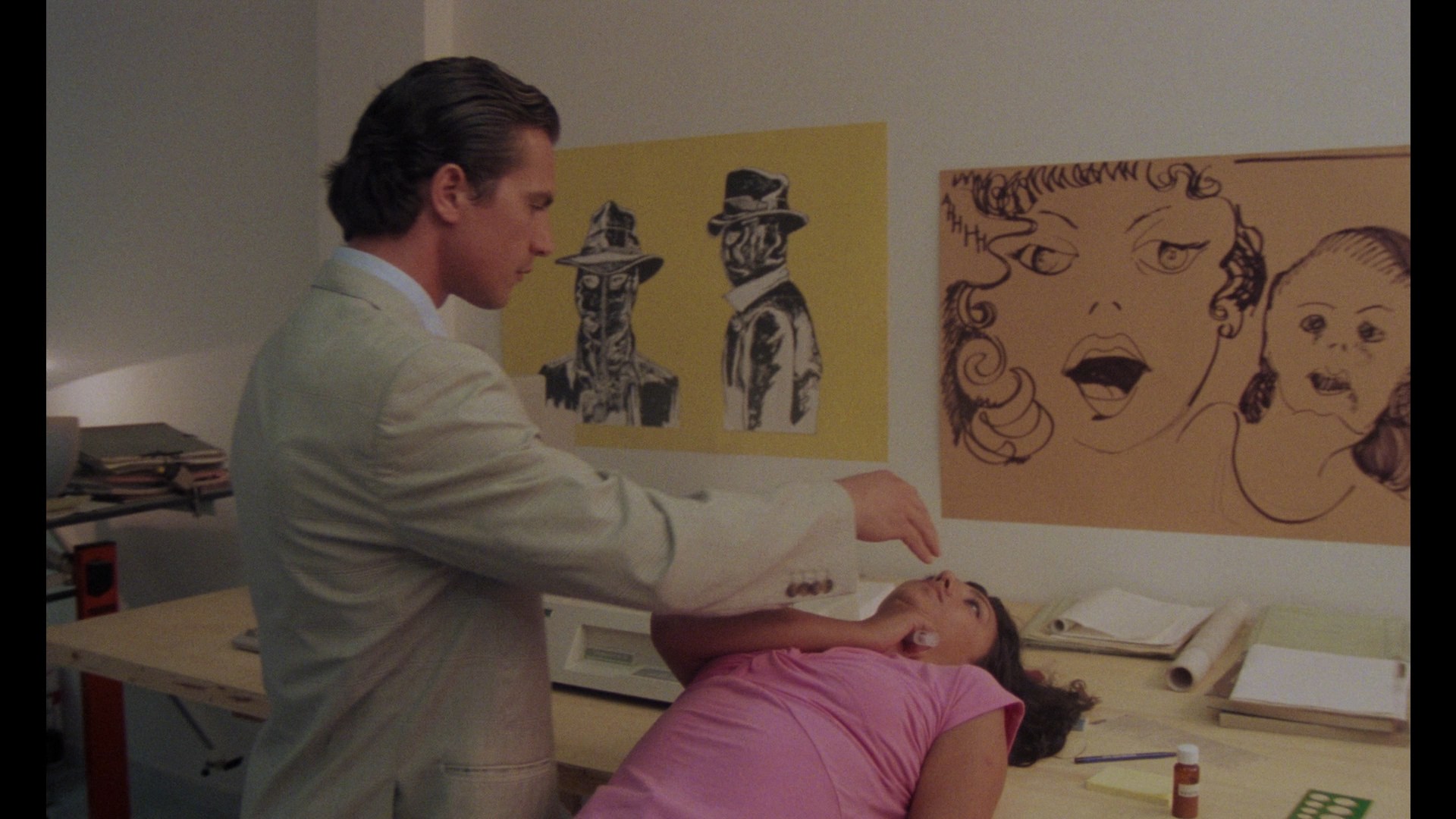
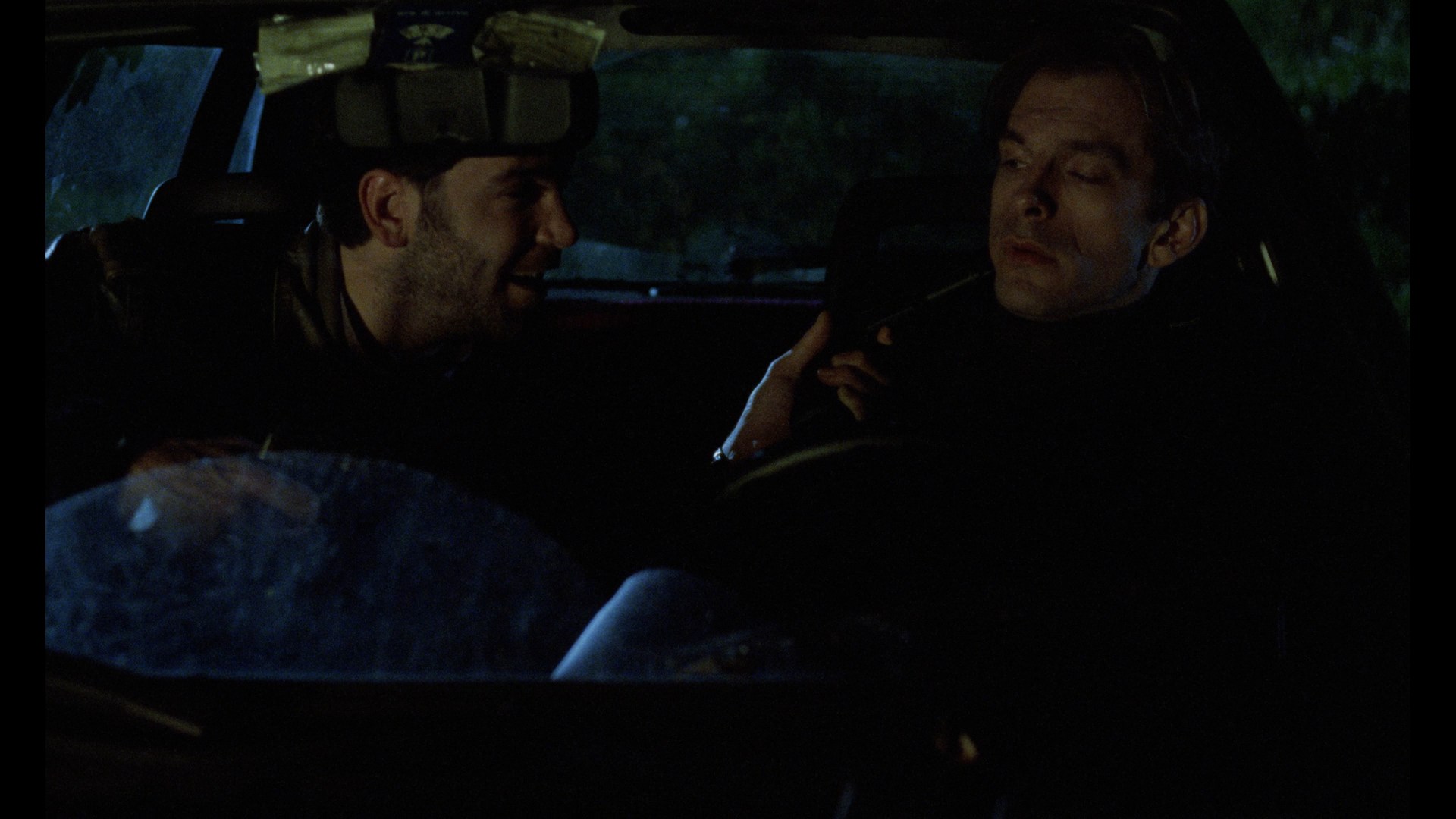
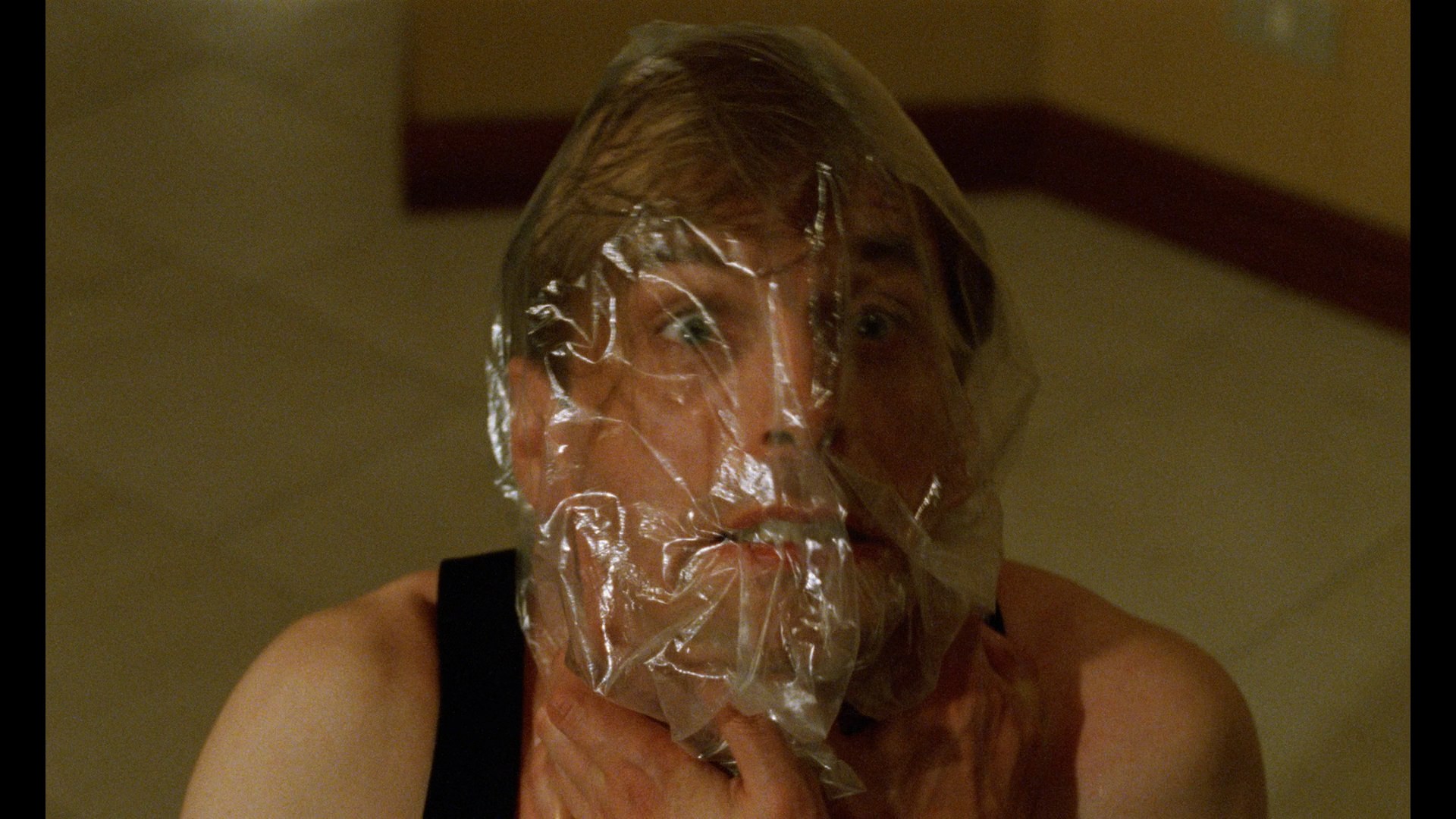
Next up is by far the most obscure film in the set, Bugie Rosse (which translates as Red Lies), also solicited to English markets under the title The Final Scoop. Its star, Tomas Arana, had just appeared in one of the strongest of the '90s gialli, Body Puzzle, and gets dropped here in a surprisingly rich, music video-era sort-of riff on Cruising (or Partners if you want to really go off the beaten path). With his wife Adria (Obsession: A Taste for Fear's Scola) frequently jetting off as an airline hostess, reporter Marco (Arana) puts all of his energy into getting his next big scoop and not encouraging a coworker crushing on him, Marina (Scoppa). In fact, that major story turns out to be going on computer message boards and driving around the nearest park late at night to explore the local gay scene in all its many varieties. That tactic goes awry when he gets robbed and knocked out at gunpoint in his car at the same time a potential interview subject he chickened out on gets bludgeoned to death. An incriminating cigarette left at the dead man's place turns out to be just one of the problems Marco encounters when his journalism intersects with what turns out to be a serial killer with six victims now under his belt-- and a preference for using a knife-equipped umbrella on his victims. With Adria secretly still in town to keep an eye on him, Marco gets to work on a much bigger story than he planned with another reporter, camera-hauling Lucia (Demons' Hovey), secretly on his heels. At a nightclub Marco gets close to likable escort Andrea (Flaherty) who beguiles him with Baudelaire and raises questions about our hero's orientation. When the evidence starts to point to Marco as the killer, he has to resort to extreme measures to clear his 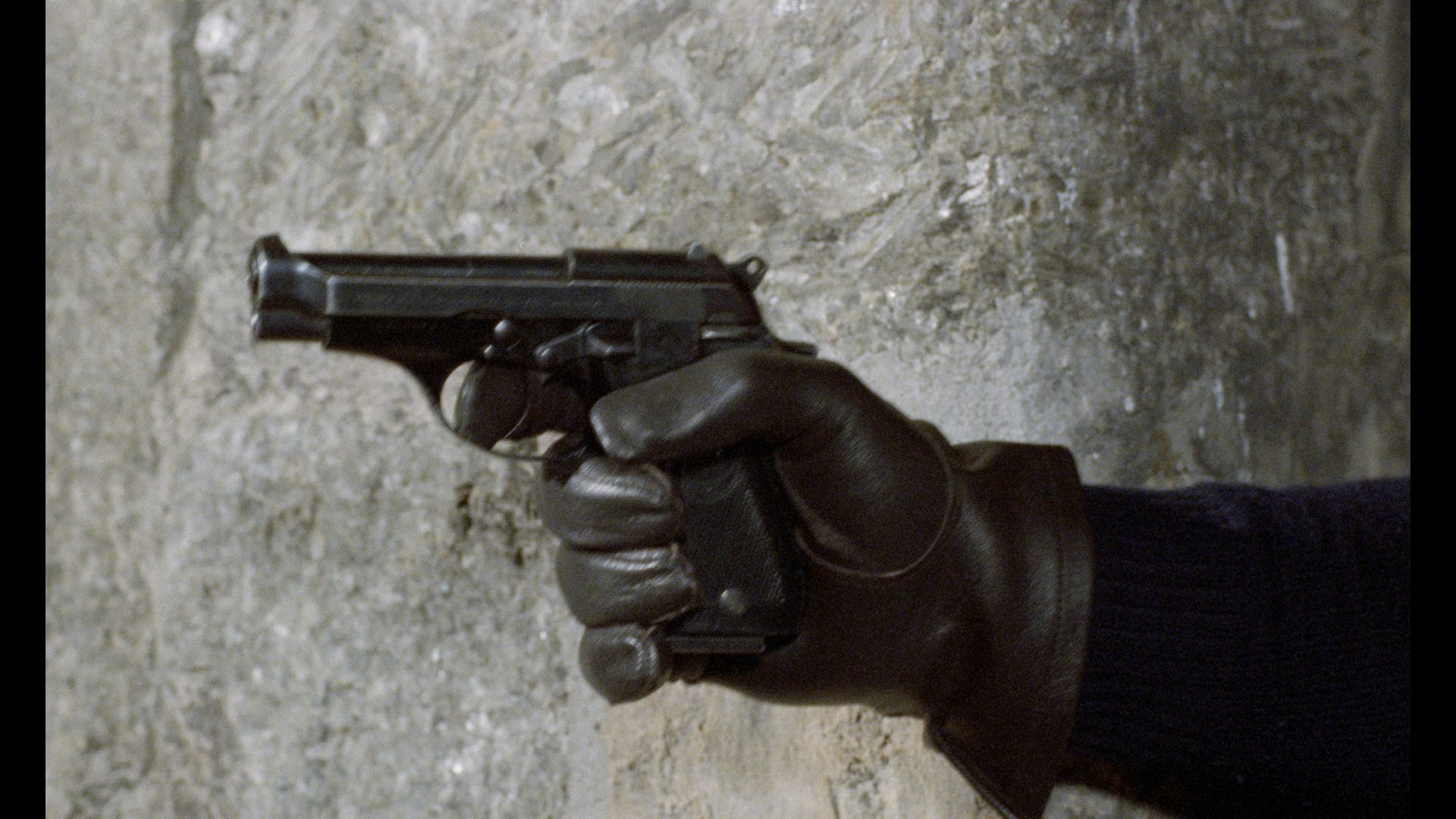 own name and deal with the complex desires emerging within
  him.
him.
A fascinating film, Bugie Rosse isn't for those coming to this set for outrageous sleaze; a trio of Skinemax-style straight love scenes are about as far as it goes, and though the murders get fairly bloody, they aren't all that flamboyant or extreme. Instead this is a more thoughtful, stylish thriller with really excellent turns by Arana and Flaherty as well as a killer soundtrack highlighted by some '90s Euro-dance tracks and a sax-heavy score by pop music legend and regular Pino Donaggio orchestrator- conductor Natale Massara. For old time's sake you even get a glorified cameo by Alida Valli as the mother of Marco's best friend, Roberto (Jannuzzo). The film also has a welcome sense of humor including an extremely funny scene at a cruisy adult theater, as well as a hammy peeping tom who pops up a few times. Tough to see after its contentious Italian release unless you managed to get an iffy bootleg copy, the film looks great here in its much-needed Blu-ray debut with a fresh 2K scan from the negative. The DTS-HD MA Italian 2.0 mono track sounds excellent and comes with solid optional English subtitles; it looks like Arana at least did all of his dialogue in English, but a final mix in that language doesn't seem to exist. There's no commentary for this one (unfortunate as it has a lot of material to go into) but you do get five substantial new video interviews. In "Red Heat" (29m24s), director-screenwriter Pierfrancesco Campanella discusses the real-life murder that inspired the script, the success of Basic Instinct that kicked off a new market for films like this, the casting of Arana after seeing him in The Bodyguard, the tragic fate of one of the actors, the "minor tension" he felt on the set, and the original scripted ending that was nixed by the powers that be. In "Naked Lies" (11m57s), Scola looks back at her first meeting and friendship with the director, her role as a producer on the film, and her thoughts on how the story was ahead of its time. Then it's Arana's turn in "The Last Temptation" (13m38s) looking at his very positive response to the script, his awe at doing a movie with Valli and Jannuzzo, the challenges of filming love scenes in front of technicians, some of the challenges dealing with the production company, and the baffling stories of protests against the film. In "Lady in Red" (13m46s), Scoppa covers her career starting off primarily doing theater work, her friendship with Campanella, the filming of her one "intense" scene here, and her work with other filmmakers like Lamberto Bava. Finally in "Red Eros" (18m13s), also the title of his CD compilation, Massara talks about his music background, his longtime friendship with Campanella, his thoughts on electronic compositions, and the process of eliciting emotional effects using tricks going back to Bernard 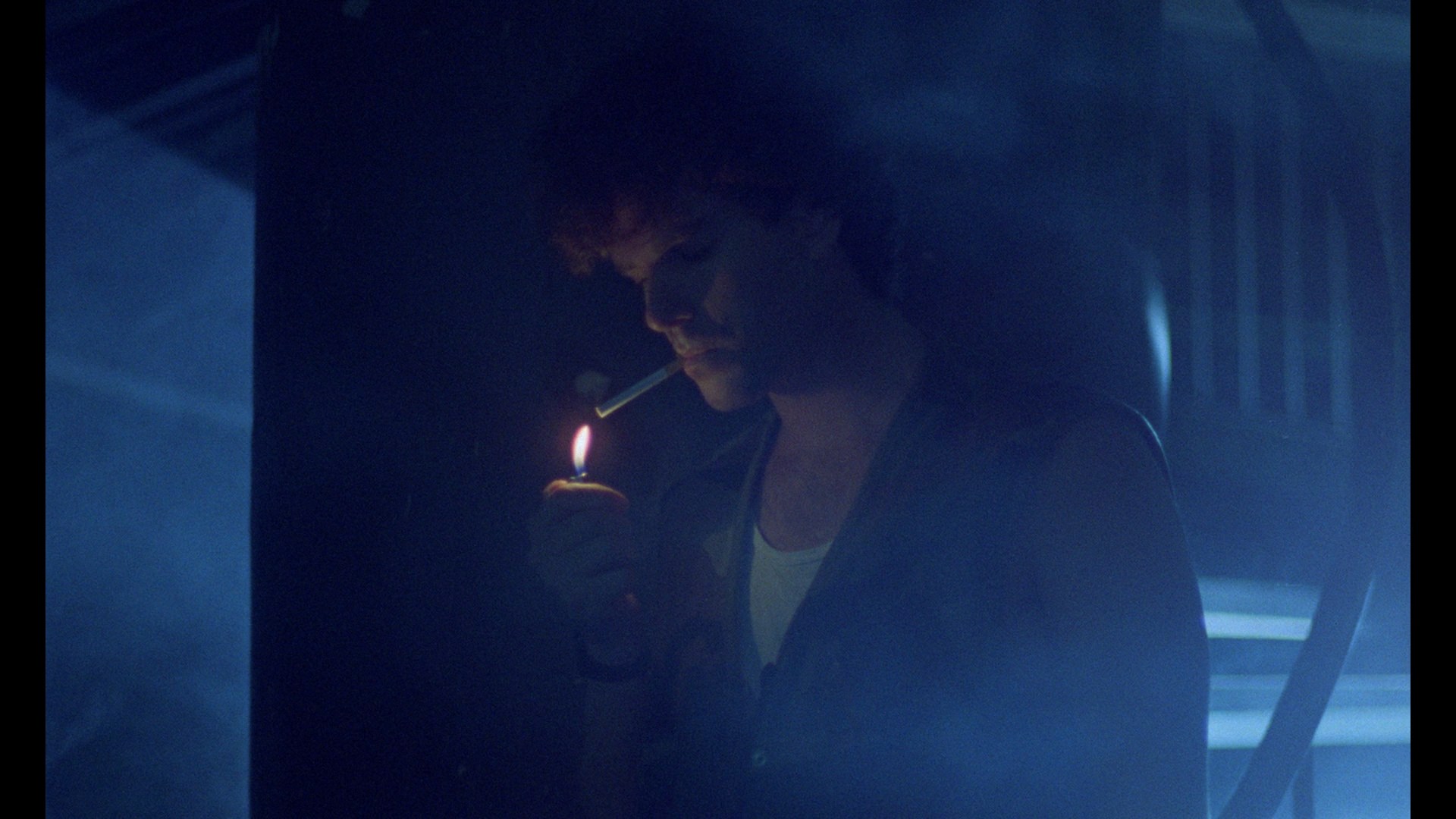 Herrmann.
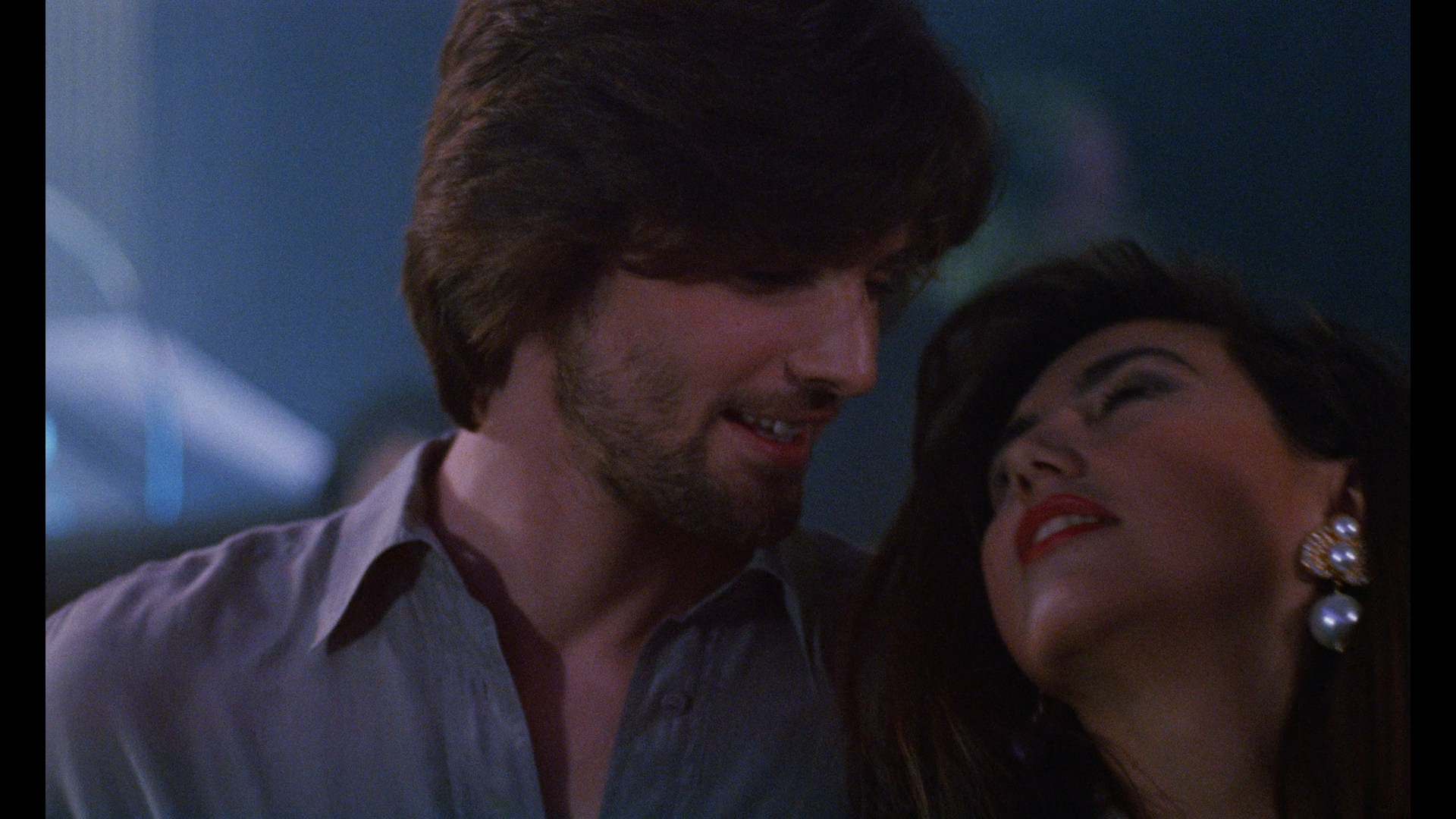
 The third and last film in the set, Murder in Blue Light (Omicidio a luci blu), is the penultimate film by Alfonso Brescia, the maniac who gave us Iron Warrior, Beast in Space, and Super Stooges vs. the Wonder Women, as well as the golden-era gialli Naked Girl Murdered in the Park and Your Sweet Body to Kill. If you want a film that recaptures the distinctive feeling of an '80s giallo, this would be the one complete with its extensive New York City filming and a starring role for David Hess during his bizarre years-long Italian period that also included Jonathan of the Bears, Body Count, and the prestige miniseries Ocean.
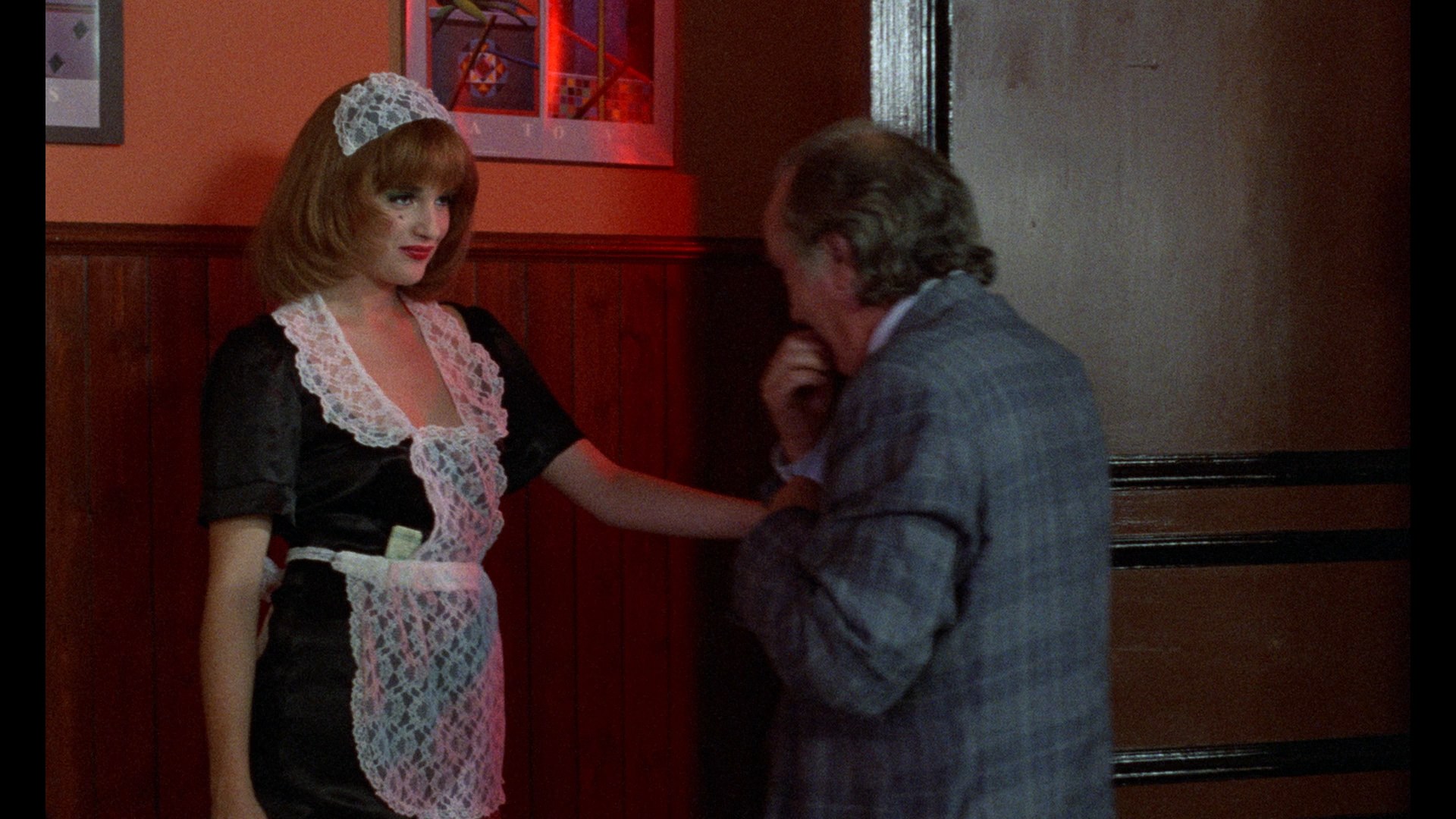
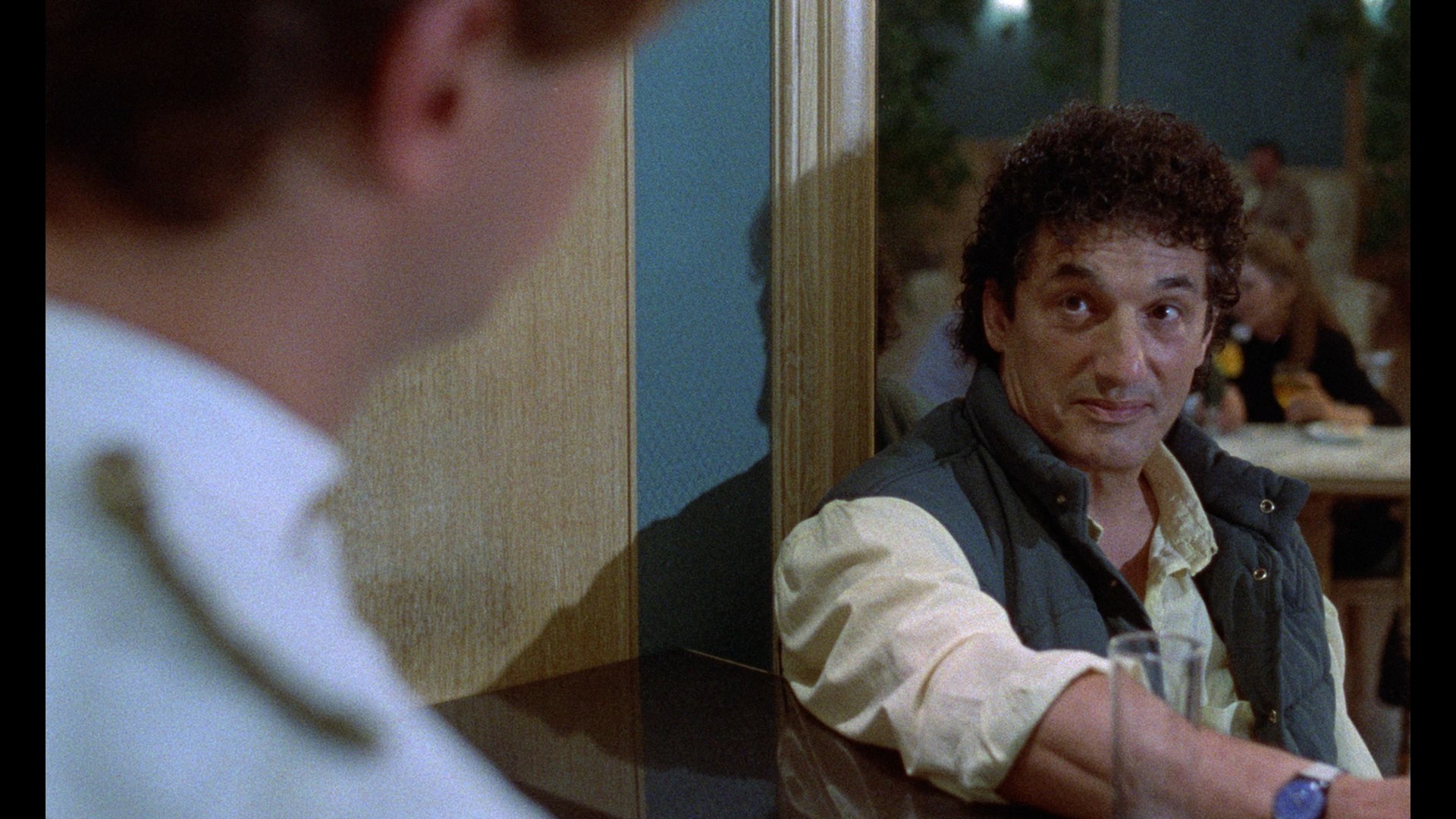
A psycho dressed in a cop outfit and a Clockwork Orange-style mask is wreaking havoc in New York city, murdering military veterans late at night while whistling "Greensleeves" and leaving fake grenades at the scene of the crime. Veteran cop Flanagan (Hess) refuses to play by the rules and feels like he's fumbling in the dark with an escalating body count, all while dealing with various public nuisances. Meanwhile model Starlet Dubois (Guérin) is going undercover for personal reasons as a streetwalker named Sherry engaging in scenarios that could have stepped out of Crimes of Passion or a Tinto Brass film, including playing a strict spanking schoolteacher and a naughty maid. When the cop and pseudo-hooker's paths cross, a dangerous plan is hatched to catch the killer.
This eccentric entry in the sexy giallo cycle isn't focused all that much on the murders, but it has plenty of nutty plot twists including an outrageous steal from Nighthawks you have to see to believe. Brescia directs with a bit more style and conviction than usual for this period in his career, including some atmospheric studio street shots, and the thumping 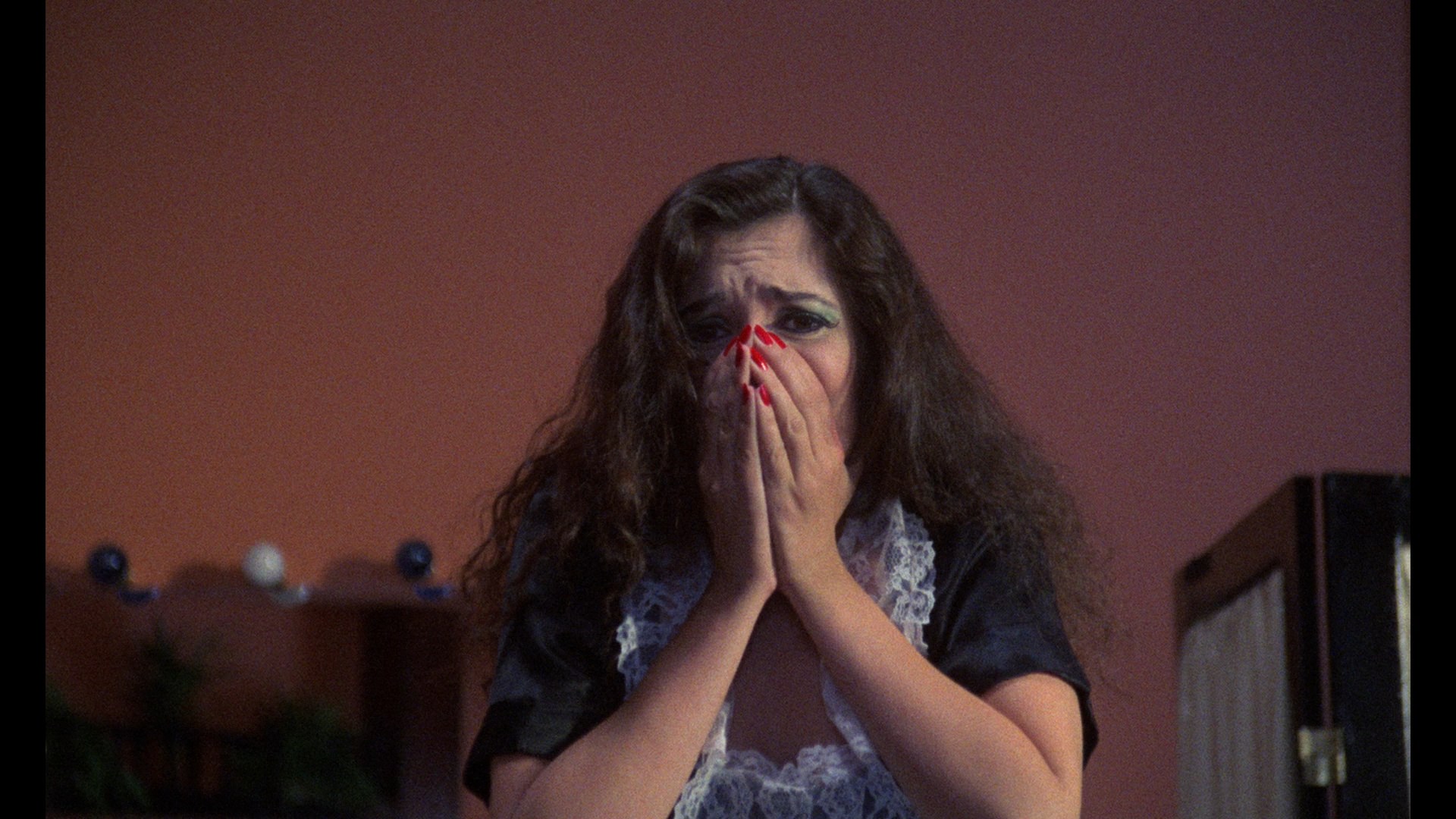 '90s dance-friendly soundtrack is a big plus. Is it actually a good movie? Well, by Brescia standards it's in the upper tier, with his gaudy blue and red lighting as well as the location shooting giving it some visual punch. It's definitely not one for newbies, but those looking for odd deep cuts at this point in the Blu-ray series will find a pretty good time
  here.
here.
The initial Italian home video version of the film was apparently an alternate early cut with some deleted footage stuck in to pad out the running time, though film elements for that cut are apparently no longer in existence. That 94-minute version is thrown in as an extra in all its fuzzy glory if you want it, while the 89-minute camera negative is the primary viewing option here in Italian DTS-HD MA 2.0 mono with optional English subtitles. It's too bad an English track was never created given Hess' distinctive voice and the potential here for some really outrageous dubbing. Image quality is excellent as expected, and you get a new audio commentary track with Eugenio Ercolani and Troy Howarth who assess the film's pluses and minuses, Brescia's oddball career, the backgrounds of the main players, and the very peculiar state of the giallo at a time when it wasn't really being exported much at all. In "Florence, Ma Chérie!" (21m57s), a very cheerful and funny Guérin talks about her entry into show business, her warm welcome making films in Italy, the miscarriage she suffered during the production, and various memories from the luminaries she met in the industry's heyday. Then in "Blue Light Topaz (31m33s), actress Sonia Topazio discusses working for Joe D'Amato and Mauro Bolognini, her experiences on the professional attitude on this film, her impressions of Guérin, and her relationship with Dario Argento despite not being a horror movie fan which including shooting her legendary one-scene appearance in The Stendhal Syndrome. Last up, "The Highly Dependable Mister Bradley (25m43s), Ercolani gives an informative look at Brescia's overall status as a director including his survival of the Italian cinema collapse at the end of the '80s despite his lack of interest in getting into TV like most of his peers.
Reviewed on April 22, 2026
