Color, 1981, 102m.
Directed by Jean Rollin
Starring Laurence Dubas, Christiane Coppé, Marianne Valiot, Louise Dhour, Nathalie Perrey, Brigitte Lahaie
Redemption (UK R0 PAL, US R0 NTSC) / WS (1.66:1)
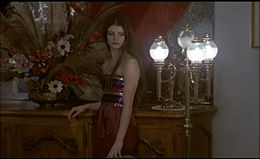

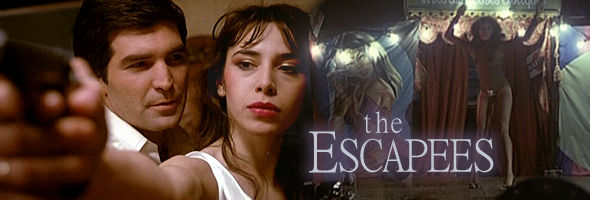
Withdrawn asylum inmate Marie (Coppé) finds her daily routine of sitting outside in a rocking chair disrupted with the arrival of Michelle (Dubas), who decides to drag her along on an escape attempt into the woods. In the outside world they hook up with a traveling circus called “Maurice and His Exotic Dancers,” become entangled with a gang of bikers, drink wine and have sex with a bunch of social dropouts on a ship, mingle with some lesbian sailors and a lesbian Brigitte Lahaie, and finally meet their violent destiny on a rain-soaked pier. Hey, it could happen to anyone.
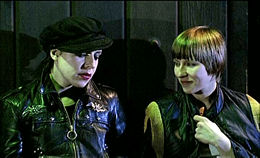

As director Jean Rollin himself admits in the supplementary interview to this DVD, The Escapees (original title: Les paumées du petit matin) had few commercial prospects since it’s not a horror film and doesn’t quite qualify as erotica either. However, it is a Rollin film through and through, which means dreamy pacing, tender and tragic emotional bonds, and frequent imagery involving theatrical performers and the ocean. The film features most of the same technical team from his peak period in the early ‘80s, and the film definitely shares a similar mood to The Night of the Hunted and Fascination with regular composer Philippe D’Aram contributing another lyrical electronic-tinged music score. Anyone unfamiliar with the director’s work will be completely baffled, but Rollin junkies seeking a fix of his unique poetic style will find plenty to appreciate.

Redemption’s release transferred from the original negative is about on par with their prior Rollin releases, presented in a slightly letterboxed, interlaced non-anamorphic transfer that looks a bit dated and rough at times but is certainly watchable. The only really substantial extra here is a new 32-minute Rollin interview in which he discusses the film in depth, saying “enough with the vampire films” at the time as he wanted to do a “real film with a real story.” However, he wound up working with two different scripts put together and had to adapt severely along the way during shooting, particularly with the haunting ice rink scene which was “terrible” on page but wound up being the best moment in the entire film. A stills gallery and additional, unrelated Redemption trailers fill out the rest of the disc.


Color, 1993, 90m. / Directed by Jean Rollin / Starring Tiki Tsang, Frederique Hayman, Jean-Jacques Lefeuvre, Karine Swenson / Redemption (US R0 NTSC, UK R0 PAL)


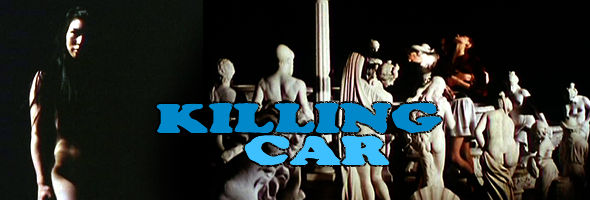
If you ever wondered what might happen if Jean Rollin decided to make an erotic action film on a budget of about five francs, Killing Car, also known under the far more appropriate title of La femme dangereuse, is the baffling answer. Shot on low-grade film sometime in the '80s and evidently finished in post-production on video in 1993, it's a strange, maddening, and sometimes beautiful dream piece revolving around a mostly silent, alluring female assassin (one-offactress Tsang), who wanders around the seedy wastelands around Paris killing various people. Along the way she also dances in a small nightclub, stalks her prey through a garden of statues, jaunts off to New York and wafts around a ferryboat, and becomes involved with the modeling industry, all the while observed by a pair of less-than-enthusiastic police officers.
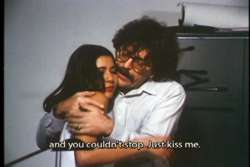
Rollin fans are really the only ones who will find rewards in this little oddity, which trades entirely on the surface appeal of the beautiful and rather captivating Tsang; she can model clothes and slip off sunglasses like nobody's business. Along with the commerically-mandated but rather innocent injects of nudity and blood, Rollin also throws in some amusing nods to his previous films, mainly through prop cameos related to his past vampire projects, and of course the melancholy finale features the heroine crying directly at the camera. Basically a goofy little trifle as far as Rollin films go, it's still unmistakably his work and merits a peek for the Euro-horror completist.

Unfortunately the production history of Killing Car means that, barring someone going back to the negative and rebuilding the film from scratch with new edits and credits, there's no way it will ever look better than the video master that's been circulating for the past few years. Salavaton’s release looks about as dated as you might expect, with burned-in subtitles and very weak contrast. It's still watchable if you don't mind watching something a step or two above VHS, but don't expect any visual fireworks here. The packaging labels it as Dolby Digital Stereo, but it sounds for all the world like mono to these ears. Rollin fans will certainly be happy to see that this release contains the complete Erotika! UK TV episode devoted to him, and for once all the film clips appear to be intact for this video edition. It's a great intro to his work and, in a just world, would be included on all of his releases to lure in the uninitiated.


Color, 1970, 85m. / Directed by Jean Rollin / Starring Olivier Martin, Caroline Cartier, Maurice Lemaitre, Ly Lestrong, Jean Aron / Redemption (US R1 NTSC) / WS (1.66:1)


Following the nearly plotless black-and-white gothic mayhem of his first film, The Rape of the Vampire, director Jean Rollin returned to bloodsuckers again for a far more visually extreme variation that still stands apart from the rest of his filmography. Though his trademark obsessions with beachscapes and aesthetic nudity are still in evidence, the ultra-saturated color schemes and mad scientist motifs instead feel like some sort of unholy mash-up between Barbarella and The Diabolical Dr. Z (and almost never like a traditional horror film). The film kicks off with a group of hooded scientists doing something nefarious with their Bunsen burners and brightly-colored beakers, while others in their cult run around in animal masks and chase passing pedestrians. During all of this mayhem, young Pierre (Martin) is captivated with a scantily-clad woman (Cartier) who winds up apprehended by the sect, which turns out to be a more sinister and deadly group than they first appeared. Visitors commit suicide, blood drinking is involved, and as usual, it all winds up with haunted characters wandering a beach as their mortality comes back to bite them in the, uh, neck.

Though the pacing of The Nude Vampire is still recognizably Rollin-esque, this film may prove easier for newcomers to swallow as its story veers from one oddball element to the next. Leopardskin fabrics, party masks, and lots of teasing partial skin shots set this one firmly in 1970, and as a mod French art film gone berserk, it's plenty of fun. Rollin mixes the sci-fi and gothic elements together without really trying to scare anyone, but his poetic touch keeps the entire enterprise from becoming a nasty collision of contrasting styles. The actors aren't required to do much beyond wandering around and acting as clotheshorses, but the limited Martin makes a reasonable enough protagonist whose past causes him to slowly unravel as the film unspools.

Among all of Rollin's horror films on home video, The Nude Vampire has easily suffered the rockiest history. Decent video prints have been hellishly difficult to obtain, and even the DVD era has proven wildly erratic. A non-anamorphic Spanish DVD contained the dubbed English track (which is a disappointment, but the film only contains about 10-15 minutes of dialogue at the most), and reputedly the French-language British disc with English subtitles isn't much of a visual improvement. For some reason, Redemption's North American DVD fudges the release by including only the English dub again, and the transfer's non-anamorphic, which is quite bizarre at this stage in the digital game. (The film's negative was in Redemption's possession, so there has to be more a story behind this.) That said, colors look bold and bright, and the framing appears accurate enough if you don't mind zooming in a bit on a widescreen TV set. The English dialogue doesn't sound particularly well-mixed, often fluctuating wildly in volume compared to the music and effects track.

As far as extras, you get both the French and English theatrical trailers, a plotless and artsy early short film from Rollin ("Les Amours Jaunes") centered around the beach (of course), stills galleries for the feature and short, and the usual Redemption cross-promoting trailers and book promo. Flaws aside, it's still an obvious must for Rollin fans who've been reluctant to shell out stupid amounts of money for import version.


Color, 1973, 86m. / Directed by Jean Rollin / Starring Françoise Pascal, Hugues Quester, Nathalie Perrey / Redemption (US R1 NTSC) / WS (1.66:1) (16:9)


A fascinating transition film in the career of director Jean Rollin, La rose de fer (entitled The Iron Rose for its American video debut) arrived after a quartet of colorful, surreal, and highly unrealistic vampire films. Instead of sexualized, comic-inspired tableaux, Rollin switched gears to generate a methodical, eerie film poem about a romance among the damned, a conceit which continued to haunt all of his films to come. The plot is simplicity itself; a young woman (Pascal) and man (Quester) meet at a very strange party, where he catches her eye by reciting a morbid poem. The next day they decide to go bicycling together and wind up at a creepy, desolate cemetery, where he encourages her to break in so they can make out in one of the tombs. Unfortunately as night approaches, they find themselves unable to escape...

Though it eschews any obvious monsters, The Iron Rose is still usually classified as a horror film due to its overwhelming gothic atmosphere and the morbid nature of its imagery. Imagine the trapped-in-a-cemetery scene from Dario Argento's Four Flies on Grey Velvet spun out as an entire film with a little more eroticism, and you'll get the idea. The film's greatest assets are its lilting score by Pierre Raph and the presence of two surprisingly mainstream performers in the leads; Pascal became a reputable TV and international cinema actress, while Quester went on to diverse roles in high-profile art films including Three Colors: Blue and, most unforgettably, as Joe Dallesandro's deranged boyfriend in Serge Gainsbourg's Je t'aime moi non plus. Frequent Rollin actress Mireille Dargent also pops up as yet another of Rollin's beloved female clowns.

Rollin's first major financial failure upon its initial release, The Iron Rose became nearly impossible to see for decades. When Phil Hardy's influential horror encyclopedia jump-started worldwide interest in Rollin's films, the tantalizing description of this elusive title encouraged eager cultists to seek it out, mostly in vain. Eventually an English-subtitled release turned up in Germany from X-Rated Kult, in a colorful but problematic anamorphic transfer with artificial sharpness, a distracting sackcloth-style texture over the entire image, and woeful motion blurring throughout. Though taken from what appear to be the same pristine film elements (with identical framing), Redemption's release fixes these problems and is much more attractive throughout. (It's still interlaced, though, so set your player accordingly.) The optional English subtitles appear to be a different, more streamlined translation than the PAL release as well. While the German disc only contained a trailer, the Redemption releases piles on some additional extras, most importantly Rollin's 1965 short film, "Les Pays Loins" (also available on the three-disc French DVD release of Les Demoniaques). It's an appropriate companion piece as it follows a young couple during an odd night out on the town, drifting through various nocturnal haunts (most memorably a jazz club). The short is presented in 1.78:1 anamoprhic widescreen; the framing looks a bit tight, but it's workable. Unfortunately the video goes to black for the last two minutes, so you'll have to piece it all together through the audio and subtitles (or just watch the import if you can afford it!). Also included is a stills gallery for both the main and short features, additional Redemption trailers, and a promo for the Redemption-related book, Blood & Dishonour. Incidentally, this release marks Redemption's opening salvo as an independent into the American DVD market, which explains the peculiar flag-waving imagery of the cover art and opening company logo.


Color, 1999, 91 mins. / Directed by Jean Rollin / Starring Cyrille Iste, Thomas Smith / Shriek Show (US R1 NTSC) / WS (1.85:1) (16:9)


A virtual catalog of the images and themes which marked his 1970s vampire films, Rollin's La Fiancée de Dracula (The Bride of Dracula, regrettably translated for DVD as Fiancée of Dracula) is a more confident and typical outing for the director than the intensely personal Two Orphan Vampires. The grandfather clock from Shiver of the Vampires, those omnipresent beach and cliffside scenes, copious nudity, and a romantic sense of melancholy clearly indicate Rollin has lost none of his artistic obsessions over the years, and while it's strange to see his trademark imagery carried over into a milieu outside of the '70s, his surrealist sensibility remains a force to be reckoned with.

The film opens in a graveyard, of course, where a vampire expert professor (Jacques Régis) instructs young Thibault (Thomas Smith) in the ways of bloodsucker surveillance and destruction. In a serial-style narrative, the disciples of the presumably deceased Count Dracula lead the mean to a nearby convent where the sultry Isabelle (Cyrille Iste) seems to be held in the sway of a diabolical power related to the still-living Dracula (Thomas Desfossé), Meanwhile a number of other supernatural entities roam the countryside. Scheming, devilish nuns hold sway at the convent, while a man-eating ogress (Magalie Aguado) scarfs down her prey in a nearby cave. And let's not forget the malefic jester dwarf, a horseback-riding vampiric aide (Brigitte Lahaie), and a handful of witches for good measure. The smitten Thibault attempts to stop Isabelle for going to meet her betrothed, who pops from one location to another through a magical clock, before the characters finally face off at dawn for a beachside finale.

Guaranteed to provoke bewilderment from newcomers, this film is best recommended to those already well-versed in all things Rollin. The actors behave in a typically somnambulist fashion, and while the story produces an occasional romantic frisson, this isn't meant to be a particularly terrifying film. The low budget shooting is more of an inconvenience than usual in Rollin's films; the glossy sheen present in even his earliest, unpolished efforts has been dulled somewhat by flat, 1990s-style cinematography. However, his eye for unusual and psychologically piercing visuals remains intact, with the melancholy finale offering a nice updated twist on his aquatic resolutions from Shiver of the Vampires, Lips of Blood and The Demoniacs.

Shriek Show's transfer is a considerable improvement over the misfire of Two Orphan Vampires, though the limited lighting and filming conditions don't result in the most ravishing visual experience. Some compression artifacts are visible in dark scenes but overall it's a pleasant enough presentation. Mercifully the only option is the original French soundtrack with optional English subtitles. Apart from the usual gallery of Shriek Show trailers, the only extra is a nine-minute interview with Rollin in which he discusses his influence and the casting procedure for the film.


Color, 1997, 98 mins. / Directed by Jean Rollin / Starring Alexandra Pic, Isabelle Teboul / Shriek Show (US R1 NTSC) / WS (1.85:1) (16:9)


Loosely inspired by a series of pulp novels penned by director Jean Rollin, Two Orphan Vampires marked a comeback of sorts for this idiosyncratic lover of nubile vampires wafting through the night. Retaining the melancholy poetry which marked his '80s films like Night of the Hunted and The Living Dead Girl, Rollin concocts a modern fairy tale revolving around his favorite image, a pair of blonde bloodsuckers who remain oddly innocent even when they're feasting on the throat of an unlucky passerby.

Blind teen orphans Henriette (Isabelle Teboul) and Louise (Alexandra Pic) follow the orders of the nuns overseeing their orphanage, and though a kindly doctor attempts to solve what appears to be a case of psychosomatic blindness, he has yet to find a cure. However, at night their sight mysteriously returns, and they flee the orphanage to mingle-- sometimes perilously-- with the local populace. Occasionally they also lounge around in bed, reading history lessons to each other and speculating about their supernatural hertiage. A medicinal trip to Paris with the doctor doesn't seem to help matters, either. In between excursions through the local cemetery, the girls encounter a peculiar menageries of characters including an ill-fated circus worker (Rollin staple Brigitte Lahaie), a forlorn flesh-eater (Tina Aumont), and even a female werewolf (Nathalie Karsenty).

Though cheaply shot and hampered by an overreliance on artificial filters, Two Orphan Vampires retains many of Rollin's strengths as a director and thematically fits snugly with the rest of his supernatural output. Arguably his most "tasteful" film in ages with nudity and gore kept to an absolute minimum, this is probably not the best place for newcomers to start but certaily a goldmine for Rollin diehards. Times have been hard for straightfaced horror films since the 1980s, and therefore Two Orphan Vampires oftens feels like a product made in a completely different era where childish innocence and naive faith in the magical are qualities to be cherished.

The foggy, soft focused appearance of this film would be a nightmare for any DVD compression facility and already resulted in a number of hellish VHS transfers. Unfortunately Shriek Show's DVD cannot overcome the challenges of the source material and, alas, is also plagued by motion artificating with distracting ghosting present in every scene. Luckily the characters tend to sit or stand still for long stretches, but it's a crippling flaw in a colorful transfer that should have been stronger. One major plus is the inclusion of the original French track with optional subtitles; the English dubbed version (to which the disc defaults for some reason) is a laughable, ear-shredding abomination to be avoided at all costs. The audio is crisp enough, though the film itself is hampered by a muddy synthesizer score which greatly diminishes the poetry of the proceedings.

Extras include a pair of interviews with the lead actresses, both of whom are charming and enthusiastic despite some very odd, deep suntans (ironic indeed considering their pallid characters onscreen). The disc also includes the entire original score (previously available as a bonus with the highly recommended Rollin book, Virgins and Vampires) and a photo gallery, as well as a handful of other Shriek Show trailers.


Color, 1978, 84 mins. / Directed by Jean Rollin / Starring Marie-Georges Pascal, Felix Marten / Synapse (US R0 NTSC) / WS (1.66:1) (16:9)


Between his stylish vampire fantasies and less personal sex films, Jean Rollin pushed the French horror cinema in a new direction by introducing two new elements - zombies and explicit gore - to which he would return later with the vastly inferior Zombie Lake and the more poetic Living Dead Girl. The most traditional of his walking dead trilogy, The Grapes of Death (Les raisins de la mort) retains his slow, dreamlike pace while jolting viewers with unexpected bouts of bloodletting.

The episodic plot follows the misadventures of young Elizabeth (Marie-Georges Pascal) journeying through the French countryside by train. Her companion falls prey to a bloodthirsty zombie, while she barely escapes with her life and dodges an undead shambler with a penchant for bashing his head against car windshields. She finds shelter in a nearby farmhouse inhabited by a man and wife, but alas her safety is short-lived when the farmer takes a pitchfork to his spouse on the kitchen table. Apparently their consumption of wine for the local vineyards is to blame, and soon the countryside is filled with the anguished, half-conscious victims of the grapes contaminated by chemical exposure. With the aid of two die hard beer drinkers, Elizabeth fights back against the growing zombie population during a long night of unrelenting terror.

Along with the power of its individual sequences (particularly the memorable fate of a helpful blind girl), The Grapes of Death benefits from Rollin's increasing control of cinematic language within the horror medium. His skillful assembly of landscape shots and claustrophic interiors creates an uneasy yet beautiful atmosphere, and he gains quite a bit of mileage in the furious third act from the presence of his most famous porn leading lady, Brigitte Lahaie, who steals the show with her two big scenes. The bizarre, pulsating electronic score is also a notable change of pace, creating a hypnotic if somewhat unorthodox mood in the style of Tangerine Dream.

Viewers used to awful VHS bootlegs of this film will be astonished by the quality of Synapse's DVD, transferred from the original negative, which looks absolutely spotless. Rollin's color scheme is generally subdued throughout, but the occasional bursts of searing reds and blue which come through occasionally look marvelous. The soundtrack is also considerably improved, with a much more dynamic range than any of his other titles on video to date. The optional English subtitles are large, easy to read, and appear to be appropriately translated. Extras include the somewhat fragmented theatrical trailer, a Rollin bio, and video interviews with Rollin and Lahaie, both of whom offer some interesting insights into their horror careers, once one adjusts to their strong accents. (Those who got through Rollin's commentary on the briefly released Living Dead Girl laserdisc should have no problem at all.) Lahaie teamed up with Rollin again for two of her best lead roles in Fascination and The Night of the Hunted, making The Grapes of Death the start of another type of trilogy as well.


Mondo Digital ReviewsMondo Digital LinksFrequently Asked Questions