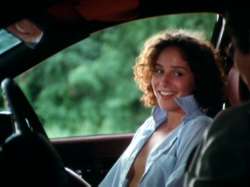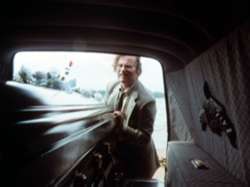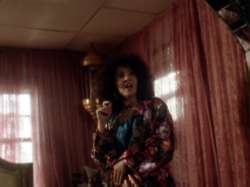
Color, 1977, 97m. / Directed by Lucio Fulci / Starring Jennifer O'Neill, Marc Porel, Gabriele Ferzetti, Gianni Garko, Evelyn Stewart / Severin (US R1 NTSC) / WS (1.85:1) (16:9)


The final film in Lucio Fulci's '70s giallo cycle before he turned to innard-splattering supernatural epics, 1977's underrated Sette Note in Nero (retitled The Psychic for its U.S. release) functions as a clever, surprisingly restrained summation of his thriller career to date while anticipating a few ideas yet to surface in the following decade. The film kicks off with an outrageous suicide reprise of the finale from Don't Torture a Duckling as a woman hurls herself from a cliff, her face smashing against the rocks on the way down to the sea. The horrific event is telepathically witnessed by her young daughter, Virginia, who grows into an adult (now played by Jennifer O'Neill) happily and wealthily married to Francesco (Garko). One afternoon while driving through a tunnel, she has another chilling psychic vision involving a dying woman walled up alive, a cigarette, and a magazine cover. When Francesco goes away on business, she decides to surprise him by redecorating his old house -- which frighteningly resembles the murder scene in her vision. With a handy pickaxe, she whacks away some drywall to expose a long-decomposed cadaver; not surprisingly, the police quickly arrest her husband upon his return. However, Virginia becomes convinced that portions of her vision have yet to pass and enlists the aid of her therapist, LUca (Porel), to uncover the sinister truth.

Though promoted as a horror film, The Psychic is a much trickier beast as it navigates between a genteel drawing room mystery, a pulse-pounding traditional thriller, and Poe-inspired gothic horror. This wasn't the first Italian thriller to lift from Poe's The Black Cat (Sergio Martino beat Fulci to the punch by a couple of years), but the narrative gimmick is nicely carried over here and sets up Fulci's later return to the same story with 1981's The Black Cat. Fans of Fulci's One on Top of the Other and A Lizard in a Woman's Skin will find a few subtle echoes here as well, though the lack of overt sadistic violence or sex has often confounded newcomers expecting another black-gloved special. Instead viewers are given surprisingly rich and committed performances by O'Neill and the late Porel, a knockout music score by the triad of Frizzi/Bixio/Tempera (later reprised prominently in the hospital sequence of Kill Bill), a tight and twisty narrative, and a nicely ambiguous resolution. Unfortunately the American ads blatantly gave away the film's big mid-story twist, but it still stands up well even with the key reversal exposed. Many of Fulci's best collaborators are in fine form here, with prolific scribes Dardano Sacchetti and Roberto Gianviti offering a much more coherent and literate script than usual for a late '70s Italian exploitation film and talented cinematographer Sergio Salvati making skillful use of shadows and sparing colored lighting for maximum dramatic effect.

Many sources claim The Psychic was heavily butchered for its U.S. release, though most of the missing running time can be attributed to the fact that the opening titles (complete with a wonderfully kitschy theme song) were hacked away by more than half and the end titles were removed entirely. The bulk of the film remained intact, though the poor prints and absolutely wretched VHS incarnations from Vestron Video did little to win the film over with North Americans. It was one of the first Fulcis to receive a truly prominent stateside release, though, and its great Giger-inspired poster art managed to lure in a few ticket buyers. (Indian filmmakers must have been impressed, too, since they hilariously remade it almost scene-for-scene in the '80s as 100 Days.) Gray market buyers had to resort to tracking down uncut, widescreen Japanese dupes (under the wonderful title of Murder to the Tune of the Seven Black Notes), and eventually a remastered French DVD (under the title L'emmurée vivante) popped up without any English-friendly options.

Severin's American release offers the best of all possible worlds with the original English language track (the preferable one as this was how the film was obviously shot, even though many of the supporting cast were looped by other voice performers later) and a cleaner, more skillfully compressed presentation of what seems to be the same anamorphic transfer (albeit with a different title card). Color and sharpness look just fine, and the framing appears ideal. (The transfer is interlaced but seems to play just fine even bumped up to HD progressive, for those whose DVD decisions live or die by that.) The disc includes the rarely-seen U.S. trailer, in scratchy but colorful condition, which makes vivid use of the poster art and the Frizzi score, and a half-hour featurette, "Voices from the Black," using audio interviews (with various video clips to cover the footage) with Sacchetti (who has some clearly mixed feelings about his Fulci collaborations), editor Bruno Micheli, and costume designer Massimo Lentini, all of whom share stores about working with one of the grand fathers of Italian horror. Highly recommended, and a solid start for anyone wanting to enter the bloody waters of Lucio Fulci without getting soeaked too heavily.


Color, 1969, 103m. / Directed by Lucio Fulci / Starring Marisa Mell, Jean Sorel, Elsa Martinelli, John Ireland, Faith Domergue, Alberto De Mendoza / Severin (US R1 NTSC) / WS (1.85:1) (16:9)


"Nude is not enough. It needs to be disgusting!" So proclaims a minor character early on in Lucio Fulci's Una sull'altra, better known in English as One on Top of the Other and christened on DVD under its even more lurid European title, Perversion Story. Stylish, sexy, and unpredictable, it marked a turning point for the director after churning out a series of comedies and historical dramas. Perhaps inspired by writing a thematically similar Edgar Wallace adaptation, the quasi-giallo Double Face with Klaus Kinski, Fulci begins the film in San Francisco with wealthy Dr. George Dumurrier (Short Night of Glass Dolls' Sorel) tending to his ailing asthmatic wife, Susan (Mell), whose sleeping and respiratory medications cannot be taken together or else she will - gasp! - expire horribly. Naturally she drops dead in the first reel, leaving poor George fingered for her possible murder when he winds up inheriting her mult-million dollar insurance policy. As if George's life weren't complicated enough, his partner and brother, Henry (De Mendoza), is prone to arguing with him about the state of their clinic and their various medical announcements to the press. When George and his unhappily married mistress, Martha (Martinelli), decide to get away from it all by visiting an upscale strip club, he's transfixed by dancer Monica Weston (also Mell), a dead ringer for his wife who does a sultry striptease astride a motorcycle. When he follows Monica to her place, they fall into the sack together... but when he discovers she has the same sleeping medication as his late wife, George becomes suspicious. Unfortunately, the authorities quickly gather enough evidence to land George behind bars in San Quentin, so he and Martha must race against time to unravel the mystery before he winds up in the gas chamber.

A pivotal giallo long circulated on the gray market, Perversion Story benefits from excellent performances by its cast, with the frequently undraped and multi-wigged Mell especially having a field day in two - or is it three? - roles. Sorel also gets to exercise his thespian skills more than usual as the caddish George, who goes through the wringer during the course of the labyrinthine story. American actors John Ireland and Faith Domergue pop up in minor supporting roles, but it's really the European actors' show all the way. Riz Ortolani also contributes a scorching jazz and lounge score that's been an established Euro soundtrack favorite for years, and Fulci keeps the story moving along and surprising at every turn with some wonderful mod touches thrown in like wild multi-split-screen effects and colorful strip sequences bursting with psychedelic colors.

Anyone who's viewed this film in its past VHS incarnations (or miserable-looking US prints) will be flabbergasted by Severin's DVD transfer, a beautifully pristine presentation that lays waste to every version before it. This edition comes complete with the much snazzier Italian opening titles, which dynamically cut and shift across the screen Psycho-style rather than the comparatively drab English credits. This also represents a significantly different edit of the film, clocking in with an extra four minutes of saucy footage missing from prior English releases. It would be bad form to list the details, but let's just say that Mell and Martinelli fans will be very happy with what they see-- and anyone annoyed by the film's relative lack of sexiness considering its title will find this release much more satisfying.

The familiar English dub track is present here and is serviceable enough despite the flat dubbing of Sorel. (Whoever dubbed Mell certainly jumped in with gusto!) However, the Italian track feels more organic to the film, has more dialogue than the English track, and uses Ortolani's score much more prominently, though the final scene with the radio reporter still plays better in English. (For some reason Mell's first scene always has her clearly speaking in a hallway without any words coming out on both versions, which appears to be sloppy sound editing in the original film.) It's really a toss-up between the two, but newcomers may find the Italian track with its more complete and literate English subtitles the more accessible option. As for extras, you get the very long and spoiler-laden English theatrical trailer (as One on Top of the Other), which touts this as the first film to realistically show the incarceration and execution process at San Quentin, and a bonus soundtrack CD containing the full 11-track version of Ortolani's score.


Color, 1971, 103 / 98 / 96m. / Directed by Lucio Fulci / Starring Florinda Bolkan, Jean Sorel, Stanley Baker, Alberto De Mendoza, Leo Genn, Anita Strindberg, Georges Rigaud / Media Blasters (US R1 NTSC), Federal (Italy R2 PAL) / WS (1.85:1) (16:9) / DD5.1


Following his audacious giallo debut with Perversion Story, Lucio Fulci upped the ante to a feverish intensity with his next thriller, A Lizard in a Woman's Skin,, which reteamed him with star Jean Sorel, cast again as a suspicious husband. This time the film encountered considerable censorship hassles in nearly every country in which it was released (with the American AIP version, Schizoid, suffering the most), and Fulci and FX creator Carlo Rambadli were even hauled into Italian court over one shocking sequence showing breathing, dissected (but fake) dogs mounted to a wall. Fortunately the film itself proved strong enough with withstand such tinkering, and Fulci felt free to pursue his increasingly extreme visions of violence in the finale of his classic giallo trilogy, Don't Torture a Duckling.

Plagued by unsettling dreams involving an erotic tryst with a spooky blonde woman (Strindberg) and naked copulating people riding public transit, fragile English housewife Carol Hammond (Bolkan) reveals his inner anxieties only to her psychiatrist (Riguad), who theorizes it's her subconscious method of acting out against her oppressive marriage to buttoned-down and adulterous Frank (Sorel). However, in the middle of more disturbing visions, Carol also experiences a vivid murder scenario in which she repeatedly stabs the mystery woman in the abdomen with a letter opener. When the identical slaying of her neighbor is reported afterwards, Carol finds herself the subject of scrutiny from a police inspector (Baker) and the subject of harrowing encounters with a mysterious knife-wielding hippie, bats, and the mysterious devils hidden in her own mind.

Best viewed in tandem with Fulci's other efforts in the genre, Lizard is in many ways his most outlandish film (at least until The Beyond) and finds him refining the techniques established in his previous giallo, particularly his ambitious use of split screen and a storytelling method of loading most of the exploitative thrills in the first half with the narrative payoff emerging in the second. Brazilian-born Bolkan, who was already a solid international name thanks to her work in films like The Last Valley and The Anonymous Venetian, delivers a wonderfully nervous performance that foreshadows her similar, even more impressive turn in the sadly neglected Euro-horror masterpiece, Footprints. Sorel isn't given much to do this time, but future Eurosleaze staple Strindberg and her distinctive breast implants make a powerful impression in their brief appearances. Also worthy of note is the dreamy, appropriately spacey score by Ennio Morricone, sadly in his only collaboration with Fulci, and the impressively atmospheric cinemtagraphy by the always great Luigi Kuveiller (Deep Red). The only real debit is that, from a mystery standpoint, the film cheats a bit by having the guilty parties behave in a manner inconsistent with later revelations, even when they're alone and have no reason to do so (a charge that could also be leveled at Perversion Story); much has been made by some critics concerning Fulci's odd treatment of hippies, drugs, and homosexuality, which could be read as anything from blindly naive to flat-out ugly and bigoted. However, given the context of the mysteries, they're probably just devices he used to find a way of unwinding the various knots of his narratives while delivering a little sensational juice in the process. Oddly enough, given his supposed conservatism, he clearly gives adultery a free pass in both films, a contradiction very prevalent in Catholic-influenced Italian filmmaking at the time.

The endless censorship which plagued Lizard extended well into its first, long-delayed DVD release from Media Blastes, a controversial two-disc platter containing the heavily truncated US version (as Schizoid) with an AIP logo in a mostly impressive anamorphic transfer, hampered only by one reel of decidedly lesser and very constrasty quality. The absence of most of the lesbian-related footage and the dog-dissection scene make for a very frustrating experience, and the English track is presented in the original mono and an overly remixed 5.1 track. Also included is a longer Italian version, taken from a bleary-looking full frame print with much cropping on the sides, with optional English subtitles. The biggest extra is a half-hour featurette, "Shedding the Skin," featuring interviews with Bolkan, Sorel, actors Mike Kennedy and Penny Brown, and the FX crew, all of whom speak highly of Fulci and remark on how they participated in the film. Other goodies include the English theatrical trailer, two radio spots, a gallery containing the pressbook and photos, and bonus Fulci trailers for Zombi 2, City of the Living Dead, Touch of Death, House of Clocks, Sweet House of Horrors and Demonia.

After much fan grumbling following an improved, longer, anamorphic transfer released on DVD in Italy (with no English language options), Media Blasters wisely returned to the well for an additional single-disc edition of the film containing a much-improved presentation that runs even longer than either version in the prior release, clocking in at a hefty 103 minutes. It's easily the most complete version released on DVD (apparently a few alternate frames here and there were present in the French cut, but there's much more missing from that version restored here), with all of the druggy nudity and violence restored to its proper place. Apart from some fleeting element damage and few telltale signs of that one inferior reel, this fascinating and much-needed assemblage of footage from all extant versions is a very satisfying relief for Fulci fans. Judging from the AIP logo at the beginning, some of the AIP negative remains here with the additional footage from the various European versions interpolated back in, without any signs of editing surgery to be found. Bravo!

The soundtrack represents the best of all possible worlds thanks to the original English dub (which generally works best given the presence of English actors in supporting roles and the leads speaking their parts in phonetic English, albeit looped by other voice performers later); however, viewers who bristle at dub tracks may prefer the Italian track, which features a more aggressive music mix. Also of interest is the "psychedelic" 5.1 mix, which is preferable to the earlier one and does a mostly solid job of spreading the score out to the rear and front channels. Still, audio purists may want to stick with the English mono track for the closest approximation of the film's intentions. However, Euro horror buffs will still want to hang on to the previous release, as this one retains none of its supplements (apart from the bonus Fulci trailers and the alternate Italian credits lifted from the earlier full frame transfer), instead adding two featurettes with Italian writer Paolo Albiero, who talks about Fulci's career in a very thorough and appreciative half-hour overview and then a five-minute explanation of the history behind the film's rocky history with censors in its native country and elsewhere.


Color, 1984, 90m. / Directed by Lucio Fulci / Starring Olga Karlatos, Ray Lovelock, CLaudio Cassinelli, Cosimo Cinieri / Media Blasters (US R1 NTSC), Marketing-Film (Germany R0 PAL) / WS (1.66:1) (16:9) / DD2.0


Apparently when you're a director like Lucio Fulci, the usual standards of cinema don't apply. You can stage any kind of tasteless atrocity for the camera involving bodily dismemberment, child endangerment, or sexual mutilation, and the audience will eat it up; however, if you bore them, watch out! That's the fate that befell Murderock, a pop-horror giallo that owes more to music videos than Bava.

At a New York dance academy obviously inspired by a recent viewing of Fame, tough-love dance instructor Candice (Zombie's Karlatos) pushes her aerobicizing charges to new heights of glory when three spots open up at a prestigious agency. Unfortunately their routines are disrupted when one young lady winds up getting a long metal pin fatally shoved into her breastplate during a nocturnal shower in the lockerroom, and everyone becomes a suspect. Meanwhile Candice suffers from surreal dreams in which she's chased by a sinister man (Lovelock) whose face happens to pop up on a billboard. A little detective work reveals he's a waning actor with ties to the victim, and soon the body count rises. Who's responsible? And who will live to dance another day?

Fulci got a lot of flack over the years for this one, primarily for its back-to-back opening musical sequences which segue from an ill-advised breakdance routine (intercut with shots of the Big Apple skyline) to a Flashdance-inspired class number, both to songs that will linger forever in your memory ("Streets to Blame" and "Tonight Is Your Night," for the record). In the film's defense, it pretty much throws out the whole '80s dance fixation after that and goes into proper thriller mode, complete with the illogical plotting and flat-as-paper characterizations you might expect. The plot is really a thinly-veiled rehash of Fulci's New York Ripper (complete with a similar dream-motivation tactic and red herring ploy), but this time Fulci leaves the gore back in Italy and focuses instead on lots of nudity that can't be classified as gratuitous since, well, the killer likes to poke the dancers in the chest. Prog rocker Keith Emerson returns from Inferno for his second Italian horror score, and... well... it's certainly memorable, though no one will ever confuse it with his Argento masterpiece. Easily the most successful aspect of the film is the striking cinematography by Giuseppe Pinori (Contamination), who uses strobing lights and filters to a surprisingly rich effect throughout in a manner similar to The Fifth Cord.

Fortunately after years of substandard video transfers (and complete dismissal in America after a fleeting theatrical release as The Demon Is Loose), Murderock looks just fine on Media Blasters' DVD edition. The anamorphic transfer is rich and colorful, with some of that '80s grain still intact where it should be. Note that the opening credits tend to scrape very close to the bottom of the frame, so depending on your set's overscan settings, you might have some issues there. Audio is presented in a fine but dated English stereo mix (canned but appropriate since it matches most of the actors' lip movements) and the original Italian mix, which features much less channel separation and is pretty much indistinguishable from the ancient Domovideo VHS tapes. No English subtitle options are provided, so really the English track is the only way to go.

Media Blasters has somehow managed to bless this unlikely title with a double-disc set, and the results are definitely more satisfying than their previous Lizard in a Woman's Skin. Along with the film itself, the first disc contains an audio commentary with Pinori and writer Federico Caddeo (in Italian with optional subs) that covers the basics of the film's productions and memories of working with Fulci. You also get a fake, video-era Murderock preview from the European release (too bad as the real Japanese trailer is far superior -- and did an American one ever even exist?), plus a fantastic international trailer for Witchery and promos for other titles including The Being, Hiroku the Goblin and Shadow: Dead Riot. Disc two features a half-hour tribute video to Fulci entitled "Tempus Fugit," with a variety of luminaries including Dario Argento (via phone), Luigi Cozzi, Claudio Simonetti, Ray Lovelock, writer Antonio Tentori and others sharing their memories of the director, albeit most of them briefly given the compact running time. Lovelock gets more breathing room in a separate 16-minute piece reflecting on his work with the director, and it's a nice companion piece to his appearances on previous Italian genre releases. (Someone should do a comprehensive interview on all of his horror and sexploitation roles, pronto!) Pinori also returns for a video interview, mostly rehashing material from the commentary but also covering his views on the entire industry as a whole during a period when Italian horror was generally considered to be going downhill (and is now unfortunately pretty much extinct). Other extras include a small photo gallery of promotional art and, similar to their Joe D'Amato titles, a continuous selection of Fulci trailers including Zombie, City of the Living Dead, Touch of Death, A Lizard in a Woman's Skin, Sweet House of Horrors and House of Clocks.


Color, 1988, 82m. / Directed by Lucio Fulci / Starring Brett Halsey, Ria De Simone, Al Cliver, Sacha Darwin, Zora Kerova, Marco di Stefano / Media Blasters (US R1 NTSC), EC Entertainment (Holland R2 PAL)


After a string of financial disappointments and numerous health problems, director Lucio Fulci seemed incapable of returning to the glory days of his gore-spashed scope extravaganzas in the early 1980s. However, he certainly gave it his best shot before his death, suddenly cranking out several pictures per year both for the big screen and small. Most of this output remained unreleased (legally) outside Italy and Japan, but fans eager enough could track down such oddities as Aenigma and Demonia to see how Lucio tried to adapt his style for the increasingly diminishing Italian horror market. Perhaps weirdest of all were two black comedies, A Cat in the Brain and Touch of Death, both featuring former Hollywood glamour boy and occasional European sleaze actor Brett Halsey. Neither of these turned out to be terribly good, but there's a certain morbid fascination in watching Fulci go for morbid wit and slapstick while spraying his sets with stage blood.

Originally shot under the far more evocative title of Quando Alice ruppe lo specchio (When Alice Broke the Mirror), this nasty tale charts the exploits of compulsive gambler and debtor Lester Parson (Halsey), first seen disposing of his latest female victim by chainsawing her naked body to bits (accompanied by upbeat music), then turning the offal into slop for his pigs and making a nice human steak he shares with his kitty. Lester's come up with the perfect scheme of crusing the lonely hearts scene for rich women, all of whom display some physical or behavioral annoyance, and bumping them off when their cash is at hand. Thus he woos and butchers a variety of grotesques, including a hairy and mole-laden matron and an incessant opera singer (a bit blatantly stolen from Bluebeard with Richard Burton). Unfortunately, someone seems to be planning his downfall by planting clues pointing to him; who could it be? You won't believe the outcome, but at least give Fulci a few points for sheer chutzpah.

Certainly sick but never really funny, Touch of Death suffers from its cheap, claustrophobic environment and the smug sense that acting goofy while killing ugly women automatically generates high comedy. Halsey gives it all he's worth (including one of the least appealing sex scenes in cinematic history), but Fulci simply isn't a very good comedy director. His execution of the very wet gore scenes is as gleeful as ever, and a handful of individual scenes certainly pack a punch; however, as with A Cat in the Brain, the whole thing is so shapeless and erratic that it never coheres into an entertaining whole. Fulci desperately wants to remake Chaplin's lady-killing comedy Monsieur Verdoux for the Fangoria set, but the wit and budget necessary to pull off such a concept never quite materialize. Still it's one of the more outrageous and unusual efforts from Fulci's later career and certainly merits a place in any die hard's library.

First released on Dutch DVD by EC Entertainment in a drab, washed-out transfer with the original Italian title card, Touch of Death appears exactly the same on Shriek Show's DVD. The search for better elements has been ongoing for years, but none of the worldwide licensors seem to be able to turn up anything usable. A shame, and until someone cracks into the vaults at Cinecitta to liberate the original negative, this will have to suffice. Both discs feature the awkward English dub track and, with optional English subtitles, the equally hollow, canned Italian version.

Though the EC disc offers nothing besides a still gallery, the Shriek Show disc easily stomps it into the ground with a host of worthy extras that alone justify picking up the disc. Fulci contributes an almost-feature-length "commentary," basically an in-depth interview about his pre-Zombie career conducting in Italian with optional English subtitles, playable over the main feature. Actress Zora Kerova, best known for her sensitive encounter with a pair of meathooks in Cannibal Ferox, appears for a short and sweet interview in which she talks about some of her most famous exploitation roles (except for the Fulci film, oddly enough!). Paolo Albiero, a Fulci scholar, appears for another interview in which he discusses the film and Fulci's later career in quite insightful detail. Also included is a photo gallery (different and longer than the EC one), a newly created Touch of Death promo trailer, and previews for various other international Media Blasters horror titles including the usual suspects like Zombi 2, Warlock Moon, Choking Hazard, and The Oracle.


Color, 1989, 80m. / Directed by Lucio Fulci / Starring Cinzia Monreale, Pascal Persiano / Shriek Show (US R1 NTSC) / WS (1.85:1) (16:9)


A made-for-TV companion piece to House of Clocks, this gory oddity finds Fulci returning to the theme of haunted children explored in his more widely seen House by the Cemetery and Manhattan Baby, among others. As this is later period work for the director, the film's execution is bumpier than his golden age classics but still bears the unmistakable stamp of his gore-soaked obsessions.

Things start with a bang, literally, as a married couple is slaughtered in their home, with the husband's head pulverized against a wall and the wife viciously knifed. The children of the deceased, Sarah and Marco, become the charges of their aunt and uncle, Marcia (Cinzia Monreale) and Carlo (Jean-Christophe Bretigniere), at the family estate. Unfortunately the grounds seem to be haunted, much to the childrens' delight, and cruel mishaps befall visitors including a real estate agent and the neurotic gardener (Demonia's Lino Salemme). Marcia is terrorized by the ghostly presence, which appears to manifest itself as a glowing, animated swirl of light; however, the spirits turn out to be as protective as they are ruthless, and the true villain is soon unmasked.

Apart from the sadistic opening (which is replayed later for good measure), Sweet House of Horrors is a competent but fairly restrained ghost yarn. The murder mystery angle is no great shakes, with the culprit unmasked and dispatched in an offhand manner long before the wind-and-thunder finale. Unlike House of Clocks, this film suffers from one of the most grating dubbing jobs in recent memory; though the actors often appear to be speaking English, the looped voices are so disembodied and inappropriate they constantly detract from Fulci's modest visual achivements. The children are a particular embarassment, voiced by lousy adult voice performers who just yell in a high pitched tone. It's enough to make the dubbing of Bob in House by the Cemetery almost sound seamless.

Shriek Show's DVD sports the usual lavish extras for what once amounted to a throwaway title relegated to the graveyard of Japanese home video and bootleg traders. The letterboxed image quality looks very good overall, and the hazy '80s cinematography (a trademark of most of Fulci's work from the period) registers well enough with only a couple of darker scenes betraying any mild digital flaws. Extras include an introduction from the lovely Monreale (probably shot the same time as her interview from Beyond the Darkness, while video interviews go to Bretigniere, Salemme, and actress Pascal Persiano, all of whom offer their own recollections of working with Fulci. (For some reason, Bretigniere is mentioned nowhere on the box's special features.) Salemme has surprisingly little to say considering his oddball genre experience (both Demons films, for example), but the others are cheerful and more than forthcoming. Also included are the usual trailers, including an incredibly clumsy, bleary-looking promo for Sweet House could single-handedly account for its lackluster international distribution.


Color, 1989, 80m. / Directed by Lucio Fulci / Starring Keith Van Hoven, Karina Huff / Shriek Show (US R1 NTSC) / WS (1.85:1) (16:9)


Designed as part of a four-film series for Italian television entitled Houses of Doom, the quasi-metaphysical House of Clocks is certainly gorier than most countries' concept of made-for-TV fare and makes for minor but enjoyable late-period Fulci viewing. Wisely kept to a small scale and limited to a single remote country location, this modest effort delivers some gruesome goodies to satisfy hardened Luciophiles.

An elderly couple, Victor (Paolo Paoloni) and Sarah (Bettine Milne), passes the time by collecting clocks, ambling around their nicely appointed country home, and killing off those who prove to be inconvenient, such as the nosy maid (Carla Cassola). Meanwhile three semi-young delinquents stop off to loot the house by pulling a Clockwork Orange traffic accident story and then raiding the premises, killing the husband and wife along with the devoted handyman, Peter (Zombie's Al Cliver). However, the guard dogs prevent the homicidal trio from leaving; even worse, all of the clocks begin to turn backwards as time itself reverses, bringing the dead back to life...

Though it makes little to no sense (especially the pointless "gotcha!" final scene), House of Clocks ambles along well enough for most of its running time and features some halfway competent dubbing, unlike Fulci's other TV movie, Sweet House of Horrors. Naturally the characters are all one-dimensional pawns in a game ultimately proven to have no point, but the central conceit is an intriguing one and makes one ponder what Fulci might have done at the peak of his powers with this material. Some nice gothic touches like the cadavers stashed in the cellar bounce nicely off the suitably gory effects, including some nasty shotgunnings and an effective nod to the malicious hands-in-the-lawn scene from Mario Bava's Shock.

Previously released only in Japan (with lots of hazy-looking bootlegs generating in years since), House of Clocks receives an unlikely and surprisingly lavish American welcome with Shriek Show's DVD. Considering the preponderance of filters used throughout the film, the DVD looks relatively good with stable colors and only a few compression-generated problems cropping up during some dark hallway scenes in the film's midsection. Extras include a strange, noisy-looking trailer with video-generated text, as well as trailers for Zombi 3, Sweet House of Horrors, House on the Edge of the Park, and Eaten Alive. Paolini and Cassola turn up for video interviews running 5 and 9 minutes respectively; both seem to have fond memories of working on the low budget production, with the special effects and make-up receiving most of the attention. R. Ian Jane contributes an overview of the House of Doom series on the printed insert's reverse side, though the black on dark red type causes more than a little eyestrain.


Color, 1988, 96 mins. / Directed by Lucio Fulci / Starring Derian Sarafian, Beatrice Ring, Ottaviano Dell'Acqua / Shriek Show (US R1 NTSC) / WS (1.85:1) (16:9), Vipco (UK R0 PAL) / WS (1.85:1)


As Italian horror began to wane in the late 1980s, word of a sequel to Lucio Fulci's seminal Zombie (known as Zombi 2 in Europe) helmed by the maestro himself caused fans to salivate in anticipation. Unfortunately circumstances caused by either health or disinterest forced him to reportedly leave the production, and the, um, idiosyncratic Bruno Mattei took the reins to complete the film. The disbelief which met the final product largely sprang from the Fulci name emblazoned on the credits, though if approached as more of an unofficial sequel to Mattei's Hell of the Living Dead filtered through the slumming sensibility of late-period Fulci, Zombi 3 is much easier to, well, digest.

Driven more by gleeful insanity than cinematic skill, Zombi 3 kicks off with the theft of a top secret freezer unit via helicopter which results in a deadly toxin leaking across the countryside. The military attempts to cover up the potential disaster but, thanks to the handy process of cremation (shades of Return of the Living Dead), produces a flock of contaminated birds which spread the contagion. Soon both the military and zombies are rampaging through the jungle while a ragtag band of survivors - namely a trio of G.I.s and some hapless teenage girls - fend for their lives against the flesh-munching dead while a local disc jockey offers profound commentary.

Basically one long chase scene punctuated by outrageously giddy dialogue and such oddball sights as a flying, skin-chomping zombie head, Zombi 3 falls short when it comes to such disposable factors as coherent dialogue and continuity. As with the similarly junky Nightmare City and Mattei's previous fleshmuncher favorite, the zombies themselves provide most of the fun as they seem to change behavioral patterns and raison d'etre every five minutes. They shamble, leap from rafters, craftily hide in haystacks, and go leaping after helicopters, much to the audience's amusement. Aside from obviously being affordable, the Philippines shooting location (supposedly in the same village from Apocalypse Now) provides a variety of settings and allows the story to cross-cut to its heart's content even when there's no actual reason for it. Dippy, badly dubbed fun to be sure, though the bizarre downplaying of gore is impossible to excuse. There's some munching, hacking, and bullet squibs, to be sure, but given both director's track records, it's peculiar to see the comparative dryness of the end result. It certainly can't hold a candle to the original and unforgettably moist Zombie, a precursor in name only.

Zombi 3 never enjoyed the widespread release of its predecessors. Most fans became acquainted with its dopey charms via bootleg copies and the scarce Japanese release, which featured a three and a half minute opener detailing the revival of an encased corpse. (It's also the most stylish sequence of the film, drenched in Argento-like reds and blues.) Other video releases simply kicked in with the main titles, which doesn't do much damage to the already senseless story but feels too abrupt all the same. Shriek Show's DVD grafts a one-inch video edition of the prologue (the only surviving element, apparently) onto a superior anamorphic transfer of the film's interneg. The difference is noticeable of course, especially on larger displays where herringbone patterns plague the video segment, but at least it's there. The rest of the film looks solid and film-like, though the visual dullness of some sequences is a flaw inherent in the original photography. Expect lots of greens and browns here, folks. (For some reason a handful of shots near the one hour mark appear to be lifted from a one-inch instead of film as well, though the distractions are fleeting.) Whether it's considered a late period Fulci or a middle of the road Mattei, Zombi 3 looks like standard late '80s low budget Italian product with its dull cinematography and hamfisted editing style. The audio sounds fine considering the canned voices, which sometimes match the lip movements and spout out one quote-worthy inanity after another. The droning and hilariously dated synth score, which sounds like outtakes from The A-Team, is also well rendered for what it is.

The old adage about making lemonade from lemons certainly applies to Shriek Show's DVD, which offers a fascinating and sometimes hilarious look at how a potential Eurohorror classic could derail so completely. Mattei ("I think all of my films are ugly"), writer/producer Claudio Fragasso, and actors Ottaviano Dell'Acqua, Massiomo Vanni, and Marina Loi are all on hand to offer on-camera interviews about their experiences with the film, which was seemingly cursed from its inception. They finally set the record straight about Fulci's involvement; he shot a 70-minute film and declared it completed, but only 50 minutes of his work was usable. When Fulci refused to return for reshoots, Fragasso recruited Mattei for some emergency cinematic surgery. Mattei takes credit for the footage of men in white contamination suits and sundry other details, but apparently the bulk of the film can legitimately be credited to Fulci. Fragasso has the longest interview (18 minutes), while the others range between 6 to 10 minutes each. The actors mainly offer friendly anecdotes about shooting, with Fulci described as alternately witty and monstrous. Other extras include a gallery of posters and lobby cards and the lively theatrical trailer.


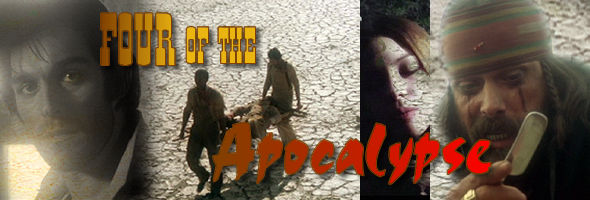
Color, 1975, 104 mins. / Directed by Lucio Fulci / Starring Fabio Testi, Lynne Frederick / Anchor Bay (US R1 NTSC) / WS (1.85:1) (16:9)
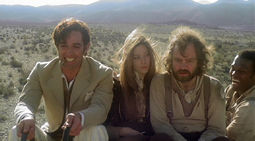

Though ostensibly a western, the grisly and bizarre Four of the Apocalypse fits more snugly with director Lucio Fulci's gothic horror outings than most of his other work outside the genre. Many of the collaborators who would shape some of Fulci's most nightmarish visions, such as composer Fabio Frizzi and cinematographer Sergio Salvati, demonstrate how significant their contributions were even this early in the game, and for once, Fulci seems to be engaged enough in the proceedings to experiment with his visuals and narrative form in some unexpected ways. Though possibly a difficult place to start for newcomers, Apocalypse is a must see for Fulci fanatics and proves once again that his grisly excesses were grounded in a firm stylistic approach.
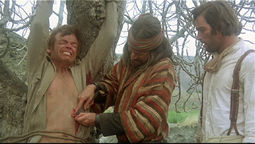
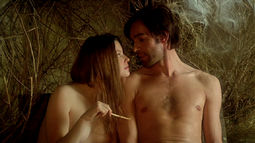
In the late 1800s, con artist Stubby Preston (Fabio Testi) arrives in Salt Lake City and promptly winds up tossed overnight in prison, with his marked cards consigned to a fireplace. In the cell he meets three fellow misfits: young pregnant hooker Bunny (Schizo's Lynne Frederick), town drunk Clem (Michael J. Pollard), and delusional slave Bud (Harry Baird), who has an unusually friendly relationship with cemeteries. A brutal attack by masked gunmen leaves the town back under the thumb of the law, so the sheriff (Zombie Holocaust's Donald O'Brien) ejects them from town into the desert. Along the way to a new destiny they meet Chaco (Tomas Milian), who seems like a nice guy until he gets everyone stoned on booze and peyote, then proceeds to blow out Clem's kneecaps and rape Bunny while Stubby and Bud are tortured and left tied to the ground. The four manage to escape and resume their trip to the promised land, only to encounter something far different from what they expected. After a number of sacrifices and tragedies, fate finally allows events to come full circle as Stubby decides to seek revenge against Chaco.
Spaghetti western fans expecting cool, mysterious gunmen shooting in out against mythic landscapes will be shocked by this downbeat, deliberately paced portrayal of the West as a merciless land capable of swallowing men's souls without leaving a trace. The criminally underrated Testi is excellent in the lead role, which allows him to transform both physically and emotionally several times throughout the course of the sprawling narrative. However, Milian also swipes his precious minutes of screen time as the memorable villain, a nightmarish figure whose sadism hits a fever pitch when he skins off one unlucky victim's stomach and pins a sherrif's star into his the flesh of his chest. The always eccentric Pollard (best known for Bonnie and Clyde) really doesn't have much to do; he made a much stronger impression as a western figure in 1972's rarely seen oddity, Dirty Little Billy. Like many other '70s spaghetti western scores (most obviously Keoma), this one sports a freakish mixture of vocals and experimental instruments interrupted by crooning folk tunes which are, shall we say, best appreciated as irony.

The back cover for Anchor Bay's DVD of Four of the Apocalypse promises the inclusion of footage deleted from all circulating prints of the film, with the reinstated dialogue in Italian with optional English subtitles. These scenes include the aforementioned Chaco torture routine as well as a greatly expanded version of Bunny's rape (though only the former contains subtitled dialogue). The only previous English language release in Japan looked watchable despite these studio-imposed cuts, but the DVD's quality is tremendously improved. Though detail is hampered by some of Salvati's soft focus compositions, particularly during the misty opening scene, the transfer looks as good as one could expect, with accurate color reproduction. The only significant debit is a tiny vertical line running through a few scenes near the right side of the screen, similar to the flaw in the negative of Fucli's The Black Cat. The film can also be played with its entire Italian language soundtrack, though alas no English subtitles are provided. The Italian track contains several notable variations from the English version, including the (thankful) absence of an opening narration.

Extras include the nicely edited English language European trailer, cast and crew bios (including some illuminating anecdotes about Testi), and a compact but informative featurette, Fulci of the Apocalypse, in which Milian (in English) and Testi (in Italian) reminisce about working with the notorious director, whose questionable behavior is one of the primary focuses. Milian also offers some hilarious stories, expanded further into an Easter Egg on the special features menu.


Color, 1988, 84 mins. / Directed by Lucio Fulci / Starring Brett Halsey, Meg Register / Shriek Show (US R1 NTSC) / WS (1.66:1)


An ambitious but ultimately failed attempt to recapture the mood of Lucio Fulci's gore-drenched gothic masterpieces from the 1980s, Demonia is arguably the most frustrating of the director's attempts to recharge the Italian horror industry. Less demanding than A Cat in the Brain and certainly more compelling than Zombi 3, this is an odd footnote in its creator's career but a fairly worthwhile outing for less discriminating fans of onscreen bloodshed.

Our supernatural yarn begins appropriately with an extended historical flashback in which a group of Sicilian nuns winds up crucified and burned by locals in a cave underneath their convent. The ordeal is relived as a dream by Liza (Meg Register), an archaeologist who goes on a dig in the same area with Professor Evans (Brett Halsey). Liza discovers the walled in skeletal remains of the nuns, which leads to a series of inexplicable and gruesome deaths. A fellow researched winds up harpooned and decapitated, a spike trap wipes out a pair of Irish diggers, and Liza becomes pulled deeper into a centuries old mystery which has now returned to take its toll on the present.

The structure of Demonia closely follows the models of such favorites as The Beyond and City of the Living Dead, but the sense of irrationality and foreboding which characterized those masterpieces is awkwardly fumbled here. The lackluster performances, flat cinematography, and watery electronic music sap away most of the potential suspense, but on the positive side, Fulci does cut loose with a few anarchic gore scenes to goose viewers awake. In the most memorable (and puzzling) of these, one character is wishboned in half while tied between two trees, a sequence done earlier (and more convincingly) in Ruggero Deodato's Cut and Run. The most extended death finds a poor soul impaled through the neck with a meathook and his tongue nailed to a table for good measure, but the effects keep it from reaching the delirious heights reached by the likes of FX maestro Gianetto de Rosi. Oddly, the most shocking and memorable moments comes during a mid-film flashback, in which a simple knife to the throat during the throes of lovemaking is filmed in a very unexpected fashion. Finally, the puzzling finale seems to follow City's example but comes off even more confusing in the process.

Media Blasters, a company best known for its Japanese anime and fantasy film releases, has made a solid attempt at enterting the Eurohorror DVD sweepstakes with the first North American video release of Demonia. The DVD finally offers fans the chance to appraise the film outside of a fuzzy, third generation VHS bootleg, and overall it's hard to imagine the film looking much better. Apart from some grain and flickering dirt during the opening sequence and a few mist-laden moments in the crypt, the transfer and overall presentation is fine. Considering the budget, the film may have been shot in mono originally (though the lack of official video releases makes this hard to verify); assuming it was originally mixed in single channel sound, the audio is fine apart from the painful dubbing. The disc comes with as many extras as one could expect for an essentially unreleased film. "Fulci Lives!" is a four minute camcorder documentation of the director at work on the tree scene, as he stands around answering questions about his recent work. Interestingly, he pegs Aenigma, House of Clocks, and Sweet House of Horrors as his favorites. A print interview offers a chat with Brett Halsey (who also appeared in several other Fulci films around the same time, most significantly The Devil's Honey), and the disc is rounded out with a Fulci biography and, printed on the back of the chapter listing, a Fulci filmography.


Color, 1982, 87 mins. / Directed by Lucio Fulci / Starring Christopher Connelly, Martha Taylor, Brigitta Boccoli, Giovanni Frezza, Cinzia De Ponti, Carlo De Majo / Anchor Bay (US R1 NTSC) / WS (2.35:1) (16:9)


Essentially the last film in Lucio Fulci's amazing streak of supernatural '80s horror films, Manhattan Baby is perhaps the most problematic and should be approached by those who have already developed a tolerance for Fulci's cinematic flights of fancy. The film's reputation has suffered over the years due to poorly framed pan and scan transfers and only one showstopping gore scene, but the maestro's ability to render poetic visuals from the most mundane settings turns this patchwork homage to the horror genre into a quirky, challenging visual feast.

While archaeologist George Hacker (Christopher Connelly) and his assistant explore a dark Egyptian tomb, his daughter, Susie (Brigitta Boccoli), is approached outside by a white-eyed blind local woman who utters "Tombs are for the dead" and hands the girl a jeweled amulet. Shortly thereafter, George is struck blind by a supernatural blue light within the tomb, and the entire family returns to New York. Mysterious apparitions involving scorpions, desert sands, and interdimensional passageways plague the family as Susie and her annoying little brother (House by the Cemetery's blond anti-moppet, Giovanni Frezza) appear to become the pawns of an ancient Egyptian evil. George's eyesight returns, but Susie's mental and physical condition rapidly deteriorate thanks to a case of apparent possession. With the aid of a wise antiquarian named Adrian Marcato (Laurence Welles) - can you identify that character name, genre buffs? - George races against time to turn back the curse which is slowly consuming his family.

The specters of past Fulci films hang heavily over Manhattan Baby, thanks in no small part to a driving music score comprised of original Fabio Frizzi compositions (excellent as usual) and disorienting passages lifted from The Beyond and City of the Living Dead. Fulci's love for marauding animals is once again present, as actors are menaced by cobras, scuttling scorpions lurking in office furniture, and most memorably, a stuffed bird which comes to life during the squishy, downbeat climax. The opening sequence of the film is arguably its strongest, with minimal dialogue and Frizzi's theme accompanying a striking succession of interlaced visuals depicting Connelly's tomb defiling and his daughter's own corruption. Unlike Fulci's gore epics, the horror here seems to exist on the periphery: a wall splits open to disgore a pair of monstrous hands, a man is trapped in an elevator which splits open into a bottomless abyss, a room's ceiling transforms into a blue-lit desert landscape, and a splash of blood on a wall spreads across the screen with a life of its own. Very little of this makes much sense, but Italian horror regulars should already expect that.

Manhattan Baby (whose title means nothing really) was the last Fulci film to receive a notable theatrical release, under the title of Eye of the Evil Dead (complete with a poster depicting a blonde lass in a bikini standing in front of some pyramids!). Lighting Video issued an eyesore VHS release, and overseas versions were little better, turning the lyrical scope photography into a senseless jumble of eyeballs and out of focus location shots. Not that it had much competition, but Anchor Bay's DVD looks as good as one could expect and completely restores the correct framing. Fulci's use of the zoom lens produces some unsightly excessive grain in a few shots, but otherwise the colors and detail are stable and pleasing to the eye. The disc also includes the European theatrical trailer (which has already appeared on numerous Japanese releases) and a nice video interview with screenwriter Dardano Sacchetti, who collaborated with Fulci for the last time on this film after a number of smash international hits. He has some interesting things to say about the film, which was plagued with difficulties but remains an oddly compelling entry in the last golden age of Italian horror.


Color, 1980, 92 mins. / Directed by Lucio Fulci / Starring Mimsy Farmer, Patrick Magee / Anchor Bay (US R0 NTSC) / WS (2.35:1) (16:9)


Though it will never be a fan favorite on the order of Zombie or The Beyond, Lucio Fulci's The Black Cat fits comfortably within his magnificent run of gothic essays during the early '80s despite its relative absence of graphic gore. Ably proving his skill as a visual director capable of generating atmosphere without buckets of blood, Fulci reportedly shot this one quickly without much passion involved, but as fans of Mario Bava's Five Dolls for an August Moon can attest, impersonal and rushed projects can sometimes provide the most interesting results.

A small English village is being terrorized by mysterious deaths all linked by the presence of a black cat belonging to the antisocial professor, Robert Miles (Patrick Magee), who leaves tape recorders in graveyards to capture messages from the dead. One unfortunate man is compelled to smash his car into a bloody, fiery wreck, another plunges onto a series of sharp spikes inside a farmhouse, and a young horny couple suffocates inside an abandoned building. Nosy photographer Jill Trevers (Mimsy Farmer) begins to suspect something unnatural between Miles and his pet kitty after paying them a visit, and she relays her suspicions to out of towner Inspector Gorley (David Warbeck), who has come to investigate the deaths but finds more than he bargained for. Is the true villain here Mr. Miles, who shares an odd psychic bond with his pet, or the sinister black cat itself?

More of a mood piece than a standard Fulci rollercoast, The Black Cat benefits greatly from a wonderful cast of Eurosleaze veterans, including the always watchable Dagmar Lassander (who looked like hell the next year in House by the Cemetery) and the perpetually abused and unclothed Daniela Doria. The unusual English setting is wonderfully realized by Sergio Salvati's evocative scope photography, which prowls along the ground, soars over rooftops, and creeps into dark, dusty corners when it's not too busy flashing back and forth between close ups of actors' (and cat's) eyes. Composer Fabio Frizzi takes a break this time, leaving the underrated Pino Donaggio to provide a catchy, lyrical score which remains sadly unreleased to this day. The story bears little resemblance to the Edgar Allan Poe original apart from the title creature and the claustrophobic, ambiguous finale (lifted semi-effectively from Fulci's earlier Seven Notes in Black, a.k.a. The Psychic), but the gothic mood is well in keeping with the literary master. Watch it back to back with Dario Argento's "The Black Cat" from Two Evil Eyes for the full effect (and two contrasting Donaggio scores, to boot). Not all curious fans of European horror will like this film, which moves at a deliberate pace and could be an acquired taste at best, but Fulci fanatics should find enough to savor.

Various companies like Media and Rhino have issued unwatchable pan and scan transfers of this film over the years, while Redemption presented the only bona fide widescreen VHS edition (in PAL), also briefly available on VCD. Anchor Bay's DVD easily eclipses them all with a razor sharp, breathtaking widescreen transfer, with details so sharp you can see each cobblestone. Most of the DVD Fulci transfers have been impressive, but this may be the most welcome and satisfying of the bunch so far. As with the previous letterboxed version, a thick vertical line appears during a handful of shots on the extreme right of the frame during the opening five minutes, but considering this flaw also appears in the excellent theatrical trailer (included on the disc as well), the glitch was an inherent part of the original negative. The nifty animated menus, complete with cat yowls and Donaggio's main theme, are a nice bonus, and the rather clumsily printed liner notes (craftily hidden on the back of the sleeve) by Travis Crawford offer a nice reappraisal of the film.


Mondo Digital ReviewsMondo Digital LinksFrequently Asked Questions